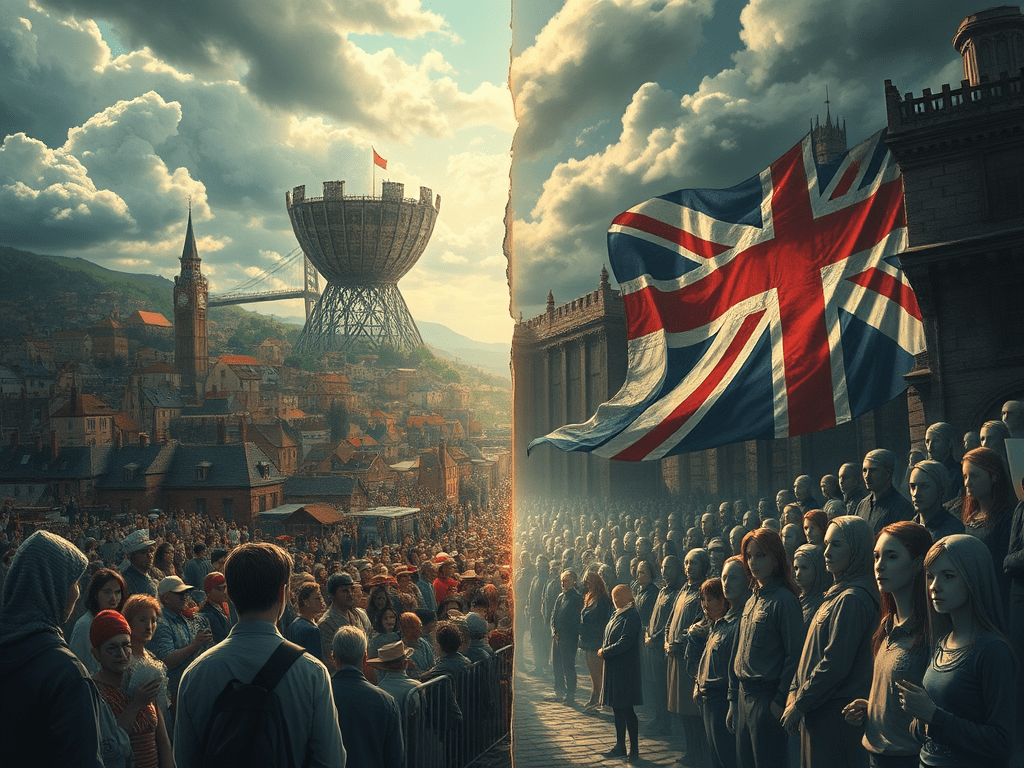
In a moment of shocking clarity—possibly brought on by accidentally reading his own speech—PM Sir Keir Starmer declared Britain an “island of strangers” and vowed to prioritise “control, selection and fairness” in migration policy. Naturally, this caused widespread offense, confusion, and a mild existential crisis across political lines. But let’s not kid ourselves: he’s not wrong. After decades of Conservative chaos and Labour’s bureaucratic limbo, Britain has become an island where nobody knows their neighbour, their rights, or who’s actually in charge of anything.
🗺️ The United Kingdom of Amnesia and Alarm Bells
It’s almost poetic: the only time Keir Starmer drops a truth bomb, he gets scolded like a naughty prefect misreading the assembly notes. But the awkward part? He’s echoing what both Labour and the Tories spent the last 25 years engineering. Fragmented communities. Suspicion over solidarity. Policies that turn newcomers into headlines instead of humans.
And now, Starmer—armed with a PowerPoint soul and a moral compass on airplane mode—wants to play the “adult in the room” on migration. Translation: say something bold, vague, and slightly offensive, then backpedal into focus-grouped platitudes. But here’s the kicker: if Britain is an island of strangers, it’s not immigration that made it so. It’s the politics of neglect, austerity, and algorithm-approved soundbites.
We’ve got people fighting over who’s to blame while dodging potholes the size of government credibility. Maybe the real stranger danger is a political class that’s so out of touch, they need a sat-nav to find the working class.
Challenges
Are we really mad at the “island of strangers” comment—or just upset he finally said something that rings true? Is it time we faced the uncomfortable truth about the UK’s social fabric? Sound off below. Challenge the spin. Decode the real message. 🧠💣
👇 Like, comment, share. Tell us who the real strangers are in this political soap opera.
The sharpest takes get featured in the next issue of the magazine. 🗞️💬


 Chameleon Magazine
Leave a comment