Read Time: 5 minutes — Best paired with black coffee and a sharply raised eyebrow
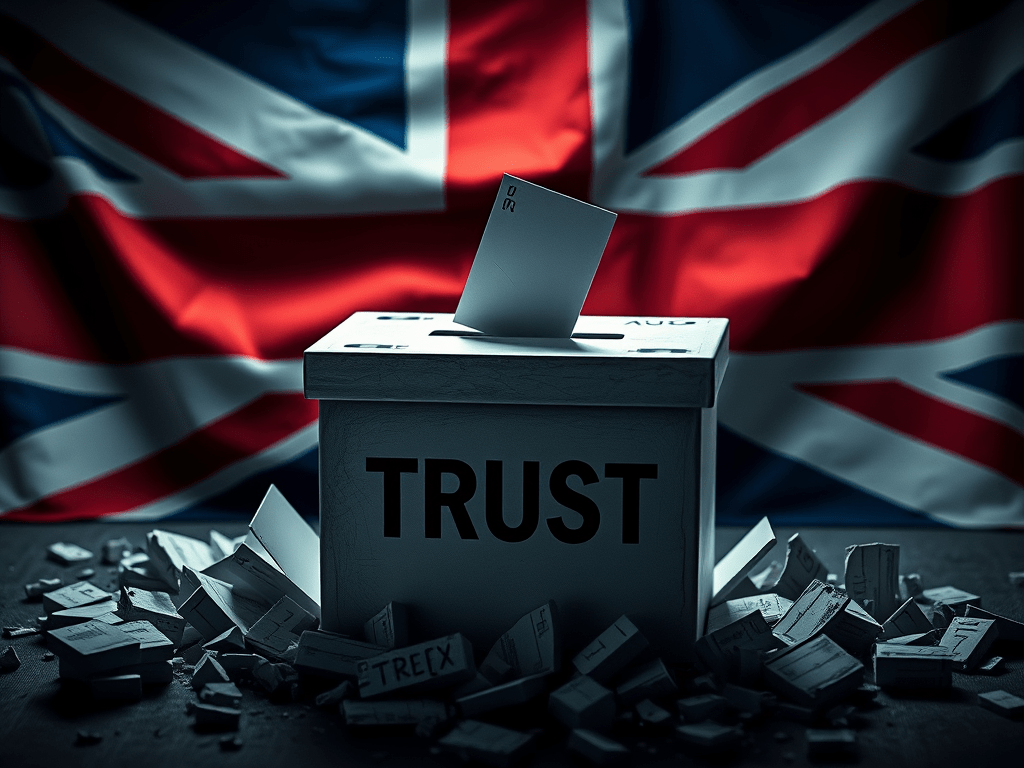
Let’s not sugarcoat it: when a government chips away at public trust — especially on an issue as seismic and symbolic as Brexit — it’s playing with fire.
Trust in politics isn’t just a nice-to-have. It’s the bedrock. It’s the glue that holds the democratic contract together. When we vote, we do so under the belief that our voice matters, that our choices are binding, and that the people we elect are, if not always perfect, at least accountable.
So when that trust starts to erode — quietly, gradually, behind closed doors — the consequences don’t stay neatly in the realm of political theory. They spill out into the real world: low voter turnout, rising cynicism, the rise of populism, extremism, or apathy. And those things? They thrive in the cracks left behind by broken promises.
Brexit: A Test Case in Trust
Brexit wasn’t just a policy shift. It was a national expression — messy, impassioned, and highly personal. People didn’t just vote Leave or Remain; they staked something of themselves on the outcome. Hopes, fears, futures.
That’s why the current drift — this quiet re-alignment with the EU without open debate or renewed consent — feels less like a policy adjustment and more like a breach of contract.
It’s not just about what’s being done. It’s how it’s being done.
Governments Can Make Mistakes — But They Can’t Take Trust for Granted
To be clear, governments are not fortune tellers. Circumstances change. Global pressures shift. What made sense in 2016 might look different in 2025. Course correction is not inherently bad — in fact, it’s necessary in a functioning democracy.
But how a government adapts matters. Transparency, consultation, and honesty are the tools of ethical leadership. Anything less starts to look like manipulation, or worse, technocratic arrogance: We know better now. Sit down and let the grownups fix it.
That’s not democracy. That’s paternalism with a PR budget.
The Danger of Eroded Trust
Once trust is gone, it’s brutally hard to rebuild. Just ask anyone who’s ever tried to win back a disillusioned voter, or a teenager who caught their parent lying.
When governments overstep, people don’t just lose faith in that particular leader or party — they start to question the whole system. “They’re all the same.” “Why bother voting?” “It doesn’t matter what we say.”
And that opens the door to movements and voices that promise to burn the whole thing down — not out of hope, but out of rage.
So, Should a Government Get That Opportunity?
No. Not without being held to account.
Not without facing the public, explaining the shift, and making the case for change.
Democracy doesn’t stop after the vote. It demands participation, scrutiny, and sometimes uncomfortable conversations.
Trust isn’t a blank cheque. It’s a renewable contract — and we, the people, have the right to demand better terms.
Your Turn:
What does political accountability look like to you? Would you support a public inquiry into Brexit’s implementation? A new referendum on alignment with the EU? Or do you believe governments sometimes need room to act without consulting the crowd?
Comment, share, or challenge — just don’t let silence do the talking.


 Chameleon Magazine
Leave a comment