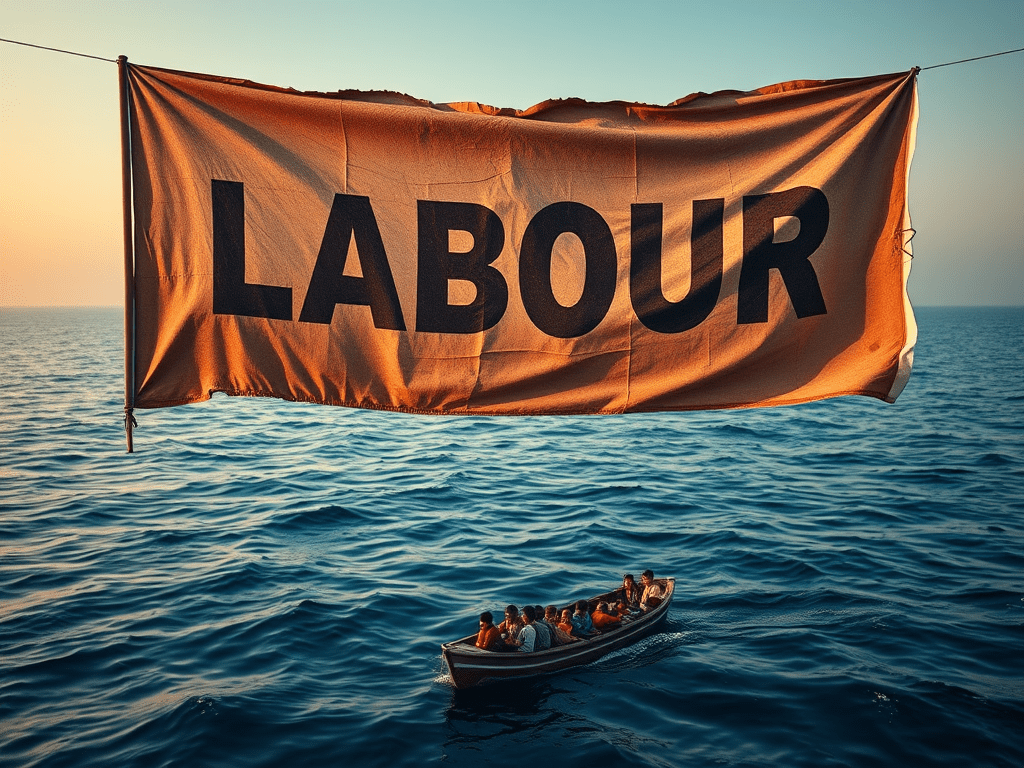
Over 14,700 people have crossed the English Channel in small boats so far in 2025—a staggering 41% increase from the same period last year. That’s not just a bump in statistics. That’s a resounding alarm bell. The English Channel, long romanticized in poetry and politics, has become the frontline of one of the UK’s most fraught policy failures: migration management.
With the waters calm and the weather warm, people smugglers have pounced on the opportunity—small boats now fill the Channel with heartbreaking regularity. But as the boats keep coming, the same question floats stubbornly to the surface: what is the UK government actually doing about it—and is it working?
Spoiler: not really.
A £33 Million Band-Aid on a Bullet Wound
Let’s start with the big announcement. Prime Minister Keir Starmer, seeking to strike a firm tone, has promised £33 million to deploy British prosecutors to countries like France to crack down on people-smuggling networks. It’s a move that sounds decisive on paper. In reality, it’s about as effective as sending a lawyer into a forest fire armed with a water pistol.
Smuggling networks aren’t neat criminal empires waiting to be unraveled by a couple of sharp barristers. They are fluid, decentralized, and technologically agile. Many operate like startups, pivoting strategies at the first sign of heat. Prosecution? Sure. But let’s not pretend you can litigate your way out of a humanitarian and geopolitical crisis.
Human Rights: A Convenient Scapegoat
Home Secretary Yvette Cooper has entered the ring with another bold suggestion: reviewing human rights laws to “strengthen UK border controls.” The implication? That pesky human rights framework is somehow the reason boats are arriving.
This line of thinking is as cynical as it is hollow. The idea that tightening human rights laws will magically deter desperate people from crossing the sea ignores both logic and lived reality. The majority of migrants aren’t combing through UK legal codes before stepping onto a dinghy. They are fleeing persecution, war, climate change, and economic collapse. Many are young men, yes—but many are also future sponsors for families left behind, acting out of duty, not delinquency.
Framing human rights as the problem is not only misleading—it’s dangerous. It distracts from the real issue: a profound failure to establish safe, legal, and functional routes for asylum.
The French Question: All That Money, Not Much to Show
Since 2018, the UK has forked over hundreds of millions to France in the name of joint patrols and surveillance. In theory, this should have curtailed crossings. In practice, it’s done the bureaucratic equivalent of a shrug.
Interception rates have fallen. Coordination remains patchy. And smugglers, ever resourceful, simply move a few miles down the coast and launch anew. The UK’s investments haven’t bought success—they’ve bought plausible deniability.
The French authorities are under no political obligation to prioritize British migration concerns. And without a unified European asylum framework that actually works, these cross-Channel handshakes are more PR than policy.
The Big Missing Piece: Legal Routes and Real Solutions
Here’s the painful truth: no amount of enforcement can stop irregular migration if people have no regular paths to take.
The UK’s asylum system is still mired in backlog. Safe and legal routes remain the exception, not the rule. For many refugees, especially from conflict zones like Sudan, Afghanistan, and Syria, there simply is no accessible way to claim asylum in Britain without physically arriving on UK soil—which, ironically, becomes illegal because they arrived outside of a sanctioned route.
The government’s failure to address this is a policy void, not just a political oversight. It’s what creates the demand for smugglers in the first place. Criminal networks don’t invent desperation; they monetize it.
The Optics War: Posturing Over Policy
Much of what we’re seeing from the Starmer government appears designed to win headlines, not solve the problem. Prosecutors in Paris. Law reviews in Westminster. Funding announcements with dramatic flair. All of it looks like motion. Very little of it feels like momentum.
What’s absent is a long-term vision—one that treats migration not as a war to be won, but a challenge to be managed through humanitarian pragmatism, regional cooperation, and legal integrity. Until that emerges, the boats will keep coming—and the government will keep floundering.
Your Turn:
What’s your take? Is the UK right to focus on cracking down, or is it time to fundamentally rethink the system? Should the government prioritize safe routes—or are hard borders the only viable response?


 Chameleon Magazine
Leave a comment