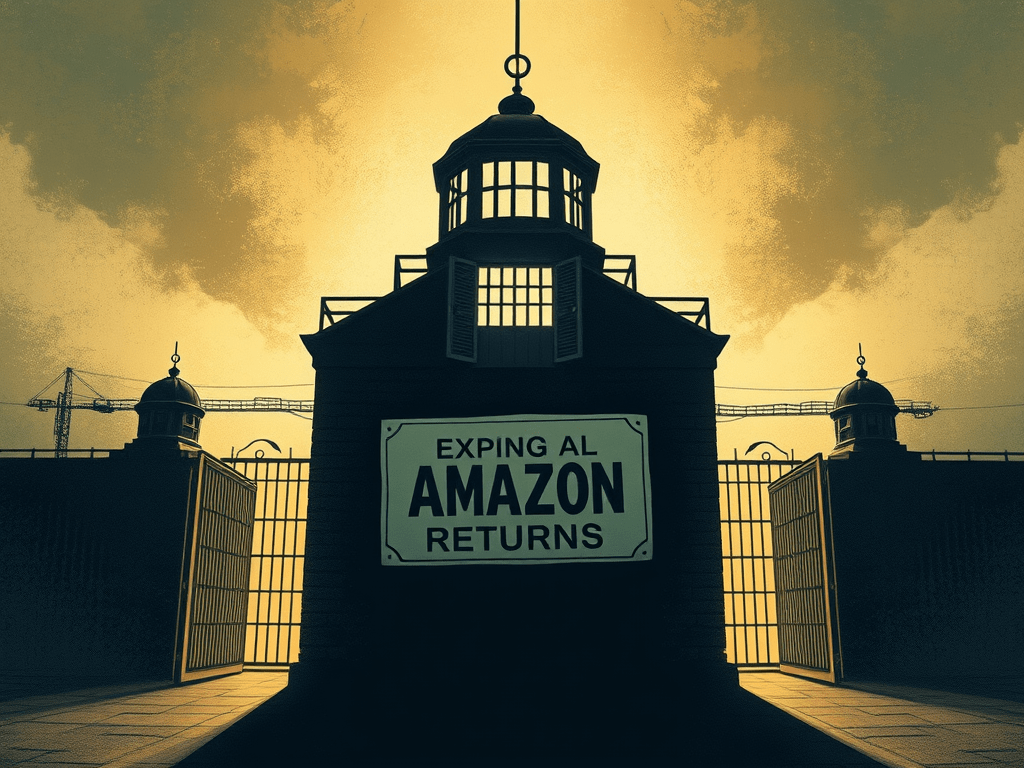
Britain’s prison debate just took a weirdly colonial turn, courtesy of far-right firebrand Tommy Robinson and a few anonymous aristocrats whispering sweet nothings about international inmate shipping. Yes, apparently prison reform now means “send the scary ones abroad and hope for the best.” Buckle up — the British justice system may be outsourcing more than its morals.
“We Can’t Control Them, So Let’s Pretend They’re Not Ours”
Tommy “I’m the real victim here” Robinson has returned from prison with exactly the level of humility you’d expect — none. Instead of a quiet reflection on the consequences of his actions, he’s gone full “prison prophet,” warning that inmates are running the asylum and the state’s lost the keys. And his solution? Well, not his directly — he’s more about dodging shanks than drafting policy — but some Lordy-lord is now floating the idea of sending high-risk prisoners overseas. Because if we can’t manage extremism, let’s… export it?
Apparently, British prisons are now radicalisation recruitment centres with meal plans, and the only way to save our precious “controversial figures” is to wrap them in bubble wrap and a Union Jack, slap on a “Fragile: White Nationalist” sticker, and ship them to some “allied” facility. What could possibly go wrong?
Let’s be real: this isn’t a reform. It’s a glorified “return to sender” scheme for criminals who scare the establishment more than they scare each other.
And if you think Tommy was in danger, spare a thought for the guards, many of whom are underpaid, under-equipped, and now expected to moonlight as ideological de-radicalisers while dodging shanks made from toothbrushes.
The irony? We’re exporting prisoners because we can’t handle the ideological rot our own society nurtured. All while pretending this is a “security solution” and not a geopolitical game of hot potato with convicted extremists.
Prison Tourism, But Make It Geopolitical
The offshore idea isn’t even new — it’s just a darker sequel to the “send asylum seekers to Rwanda” plan, but this time with less paperwork and more riot gear. If your country has a beach, a dictator, or a discount deal on detention, you may soon qualify as Britain’s new inmate Airbnb.
But let’s be crystal clear: this is a logistical fantasy built on legal quicksand and moral indifference. Who decides which prisoners get the passport-to-peril package? How do you ensure rights, safety, or even jurisdiction? Oh, right. We don’t. We just cross our fingers and hope the tabloids say it’s “tough on crime.”
Meanwhile, what exactly are we fixing? Prisons? Radicalisation? Violence? No, we’re just tossing problems across the border like political Frisbees.
From “Prison Reform” to “Prison Ejection”
The Ministry of Justice is already tap-dancing on a crumbling infrastructure — overcrowded cells, exhausted staff, and budget cuts so deep even the rats have moved out. Add in ideological extremism, and we’ve got ourselves a homegrown pressure cooker.
Robert Jenrick wants better armour and new riot gear. Great. That’s like giving the Titanic crew better life jackets while ignoring the iceberg. The problem isn’t equipment. It’s the entire philosophy of incarceration in Britain: reactive, outdated, and too afraid to admit it’s fundamentally broken.
And Tommy? Let’s not mistake self-preservation for self-awareness. He’s framing himself as a canary in the coalmine, but he’s the guy who brought dynamite to the mine in the first place. If even he’s sounding alarms, you know the system’s gone from “cracked” to “crater.”
Challenges
Is offshoring extremists a necessary evolution — or just elite escapism dressed in diplomatic doublespeak? Is Robinson exposing real rot, or just auditioning for a Netflix docudrama called White Noise: My Prison Memoirs?
Tap your brain and your rage. Drop your take in the blog comments. Don’t just react on Facebook — we want your boldest takes in the comment section.
Hit comment, hit like, hit share. Tell us if you’d export Tommy, the Lords, or the whole justice system.
The sharpest comments will be featured in the next issue of the magazine.


 Chameleon Magazine
Leave a comment