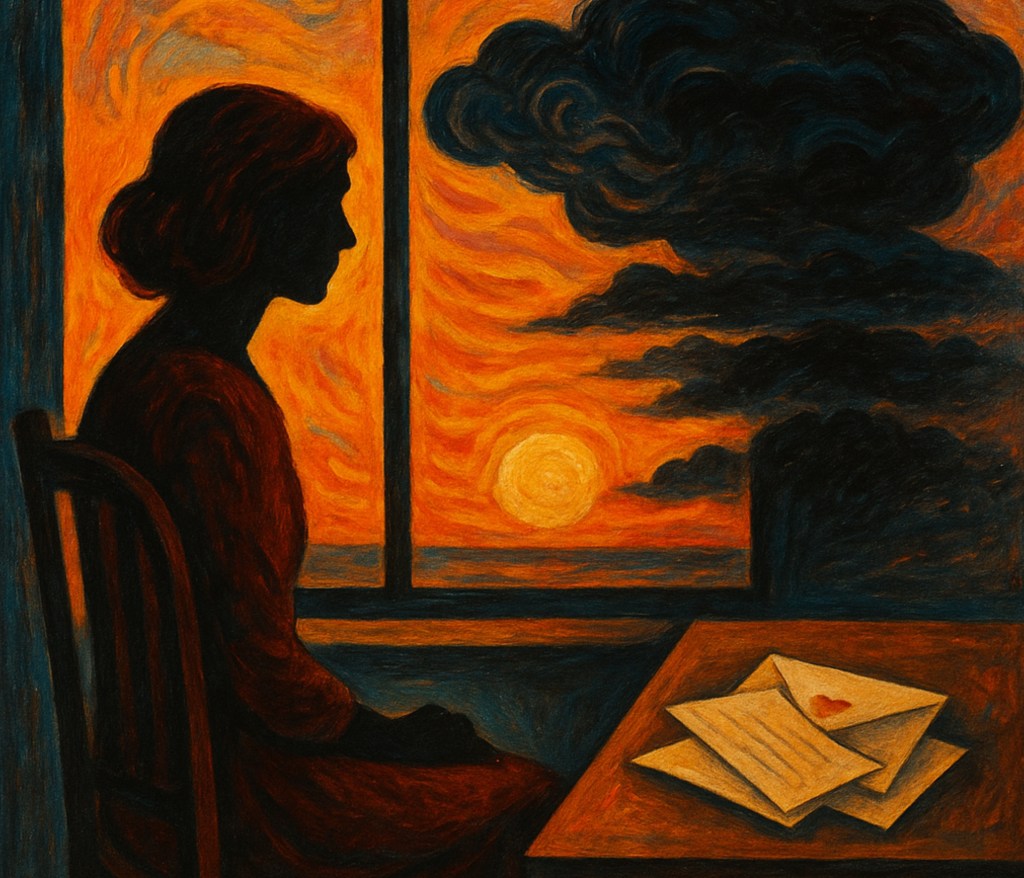
The sun had barely begun to stretch its golden arms across the sky when Maria Jensen sat at her bedroom window, wrapped in her late grandmother’s quilt, the fabric soft from decades of love and use. Her hands, now thin and trembling, cradled a mug she could barely lift anymore. Chamomile, as always. It soothed the spasms, a little. It steadied her hands just enough to write a few more lines in the notebook she kept hidden behind the radiator.
She wrote slowly. Each letter carved in effort. Each word, a goodbye.
Maria was 42. Once a nurse with strong arms and a laugh that filled entire rooms. Once the woman who ran barefoot in the rain with her children, chasing them through puddles, all shrieking joy. Once a mother who read three stories every night because “one more” always turned into “okay, last one, I promise.”
Now, she was a whisper of who she’d been. Her body, ravaged by a rare degenerative neurological disorder, had turned on her. Muscles wasted. Voice faltering. Pain like lightning under her skin. Every breath—sharp. Every movement—calculated agony. She hadn’t hugged her kids properly in months. She hadn’t danced in years.
But she remembered.
And it was that memory of life—real life, full life—that made the waiting unbearable.
Her son, Daniel, had asked a few nights earlier, “Mom, will you still be able to come to my football match in the fall?” She smiled, her lips barely keeping the tremble hidden. “I’ll be there however I can,” she said. And she meant it. But she also knew. She would not be there. Not in the way he hoped.
Because Maria had made a decision. One that gutted her. One that tore through her mother’s heart like glass. But one that, she believed, came from a deeper place of love than any choice she’d ever made.
She was going to end her life.
Not because she wanted to die. No. God, no. She loved living. She craved it. The smell of her daughter’s hair when she hugged her. The way her husband, Jakob, still looked at her like she was whole. The ritual of pancakes on Sundays. Music on low volume. Wind through an open car window. She wanted every last piece of it.
But the disease was devouring her.
Maria knew what came next. She had seen it in others with her condition—drawn-out suffering, inability to speak, choking, diapers, drool, terror in the eyes of someone trapped inside their own skull. She would become unrecognizable to her children. A figure of fear, confusion, and helplessness instead of warmth and safety.
She could no longer lie to herself: staying alive would soon mean abandoning everything that made her “Mom.” Everything that made her Maria.
And still—still—what made it all harder was that she had to do it alone.
In her country, assisted dying was illegal. No doctor could help her. No friend could safely stay beside her. The law didn’t care that she was terminal, or in constant pain, or lucid and begging. It treated her wish for peace as a crime.
So Maria planned in silence. In solitude. With guilt, and sorrow, and a kind of courage most of us pray we’ll never need.
In one letter, she wrote:
“I am not leaving because I don’t love my children. I’m leaving because I love them too much to make them watch me disappear piece by piece. I will not let their final memories be of me unable to speak, unable to smile, screaming silently behind broken eyes. They deserve more than that. I deserve more than that.”
Maria left notes for everyone. She recorded a video for Daniel and Rosie—smiling through tears, voice shaking but warm. Telling them that no matter what, she would always be proud of them. That this wasn’t their fault. That this was her gift to them: a goodbye made with clarity and grace, not trauma and horror.
She died on a Monday. Alone.
Her husband came home to a house that smelled faintly of lavender and candle wax. Her favorite music playing softly. The children were with her sister for the weekend. She had timed everything so that they wouldn’t be the ones to find her.
The world didn’t stop. But it cracked.
Jakob found her letter to him tucked inside their wedding album. In it, she asked him not to be angry with her. To know that she had fought for every extra moment. That the hardest thing she’d ever done wasn’t dying—it was choosing to leave before her body could finish what her soul never wanted.
The media caught wind. Protests stirred. Politicians gave their usual speeches. Advocacy groups rallied, adding Maria’s name to the growing list of the silenced. But the laws remained unchanged.
Her children still ask questions. “Why couldn’t someone help her?” “Why did she have to be alone?”
And what can anyone say?
That sometimes, love lives in impossible choices? That sometimes, a mother’s final act of devotion is also the most misunderstood?
A Challenge for You, Reader:
Sit with this. Imagine being Maria. Or Jakob. Or Rosie, years from now, watching that video again. Ask yourself: what kind of courage does it take to fight to the bitter end—and what kind of courage does it take to say goodbye?
And then ask: do our laws honor that kind of love? Or do they only honor survival?
If this story moved you, speak it. Share it. Argue about it. Write your own letter. Because staying silent is a luxury Maria never had.


 Chameleon Magazine
Leave a comment