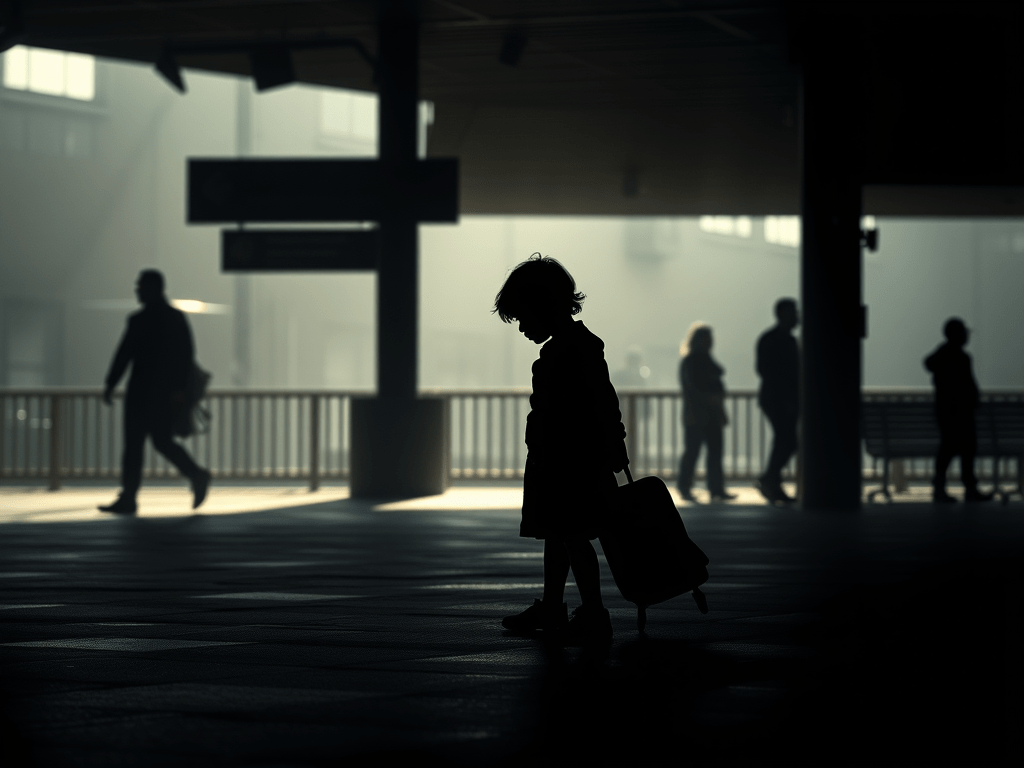
Turns out, Britain’s real disappearing act isn’t Brexit—it’s kids. 100,000 children vanish each year in the UK, and somehow, this isn’t plastered across every front page like a royal wardrobe malfunction. If you’ve ever lost your TV remote and panicked, imagine a nation misplacing tens of thousands of actual human beings—year after year—while the establishment politely shrugs.
🏚️ Hide and Seek, Sponsored by Institutional Neglect
Welcome to the UK, where children in care are more likely to go missing than to receive an actual hug. You’d think a “care” system might care, but no—it’s more of a revolving door with a press release attached. Children who’ve already been chewed up by abuse, trauma, or abandonment are being failed again by the very institutions meant to protect them.
And for unaccompanied asylum-seeking kids? Disappearances are met with the same urgency as a lost sock. Over 200 of these children have vanished, likely trafficked, while government agencies offer little more than “concern” and a spreadsheet.
The reasons these kids go missing are a grotesque greatest hits album of Britain’s failings: sexual exploitation, trafficking, mental health crises, domestic abuse. Imagine living in a world where a child can be raped, run from home, and be labelled as “just another statistic.”
Still not mad? Maybe the fact that many kids go missing from government-approved accommodations will do it. The state is essentially renting out trauma storage units and calling it a safeguarding strategy.
But by all means, let’s keep debating the “crisis” of young people being too woke.
Challenges
Why aren’t we shouting louder? Why isn’t this leading every news bulletin until something actually changes? Drop your anger, insight, or side-eye in the comments below. 📢👀
💬 COMMENT. 👍 LIKE. 🔄 SHARE.
Let’s stop pretending we don’t know. Let’s stop letting them vanish in silence.
Top comments will be featured in the next issue of the magazine.


 Chameleon Magazine
Leave a comment