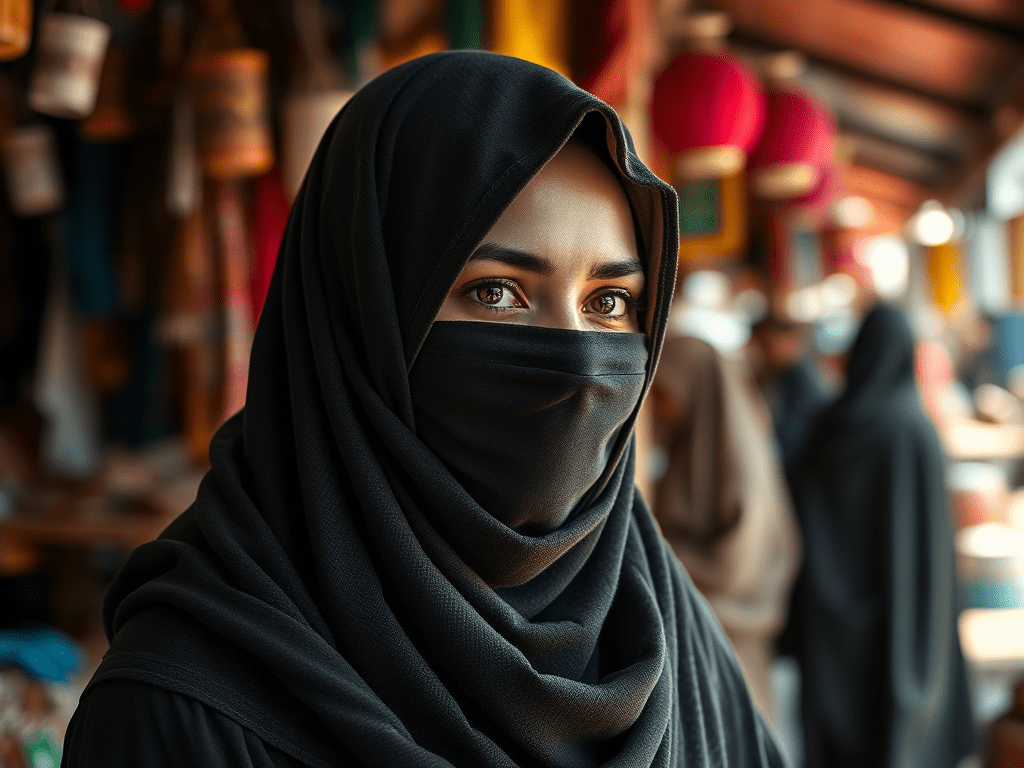
This is a complex and sensitive question, and the answer depends on the historical, cultural, and personal context in which the burqa is worn.
1. Religious Origin and Interpretation
The burqa is a form of covering associated with modesty in some interpretations of Islam. The Qur’an instructs both men and women to dress modestly, but it does not specifically mandate the burqa. Over time, different Islamic cultures developed various practices around veiling—ranging from the hijab (headscarf) to the niqab (face veil) to the burqa (full-body covering with mesh over the eyes).
So:
Some Muslims view it as a sincere expression of faith and devotion.
Others see it as a cultural tradition, not a religious requirement.
2. Tool of Control or Choice?
In certain societies, the burqa has undeniably been used as a tool of control over women. In places like Taliban-era Afghanistan, wearing it was mandatory by law, and women faced severe punishment for non-compliance. In such contexts, yes—the burqa functioned as a means to restrict and control women’s visibility and freedom.
But it’s not always that simple:
Many women choose to wear the burqa voluntarily, as an act of piety, privacy, or identity.
In liberal societies, some women report feeling empowered by the choice to veil, as it allows them to assert their values in a world they perceive as hyper-sexualized or objectifying.
3. Western Perceptions vs. Lived Realities
Western views often frame the burqa as inherently oppressive. This can be:
True in certain political contexts, especially when veiling is enforced.
But also misleading when applied universally, ignoring the voices of Muslim women who wear it by choice and do not feel oppressed by it.
Conclusion:
The burqa can be a religious tool, a cultural artifact, or a symbol of control—depending on who is wearing it, why, and under what conditions.
To claim it is only a tool to “keep women in their place” oversimplifies the issue and denies agency to the many women who make that choice consciously.


 Chameleon Magazine
Leave a comment