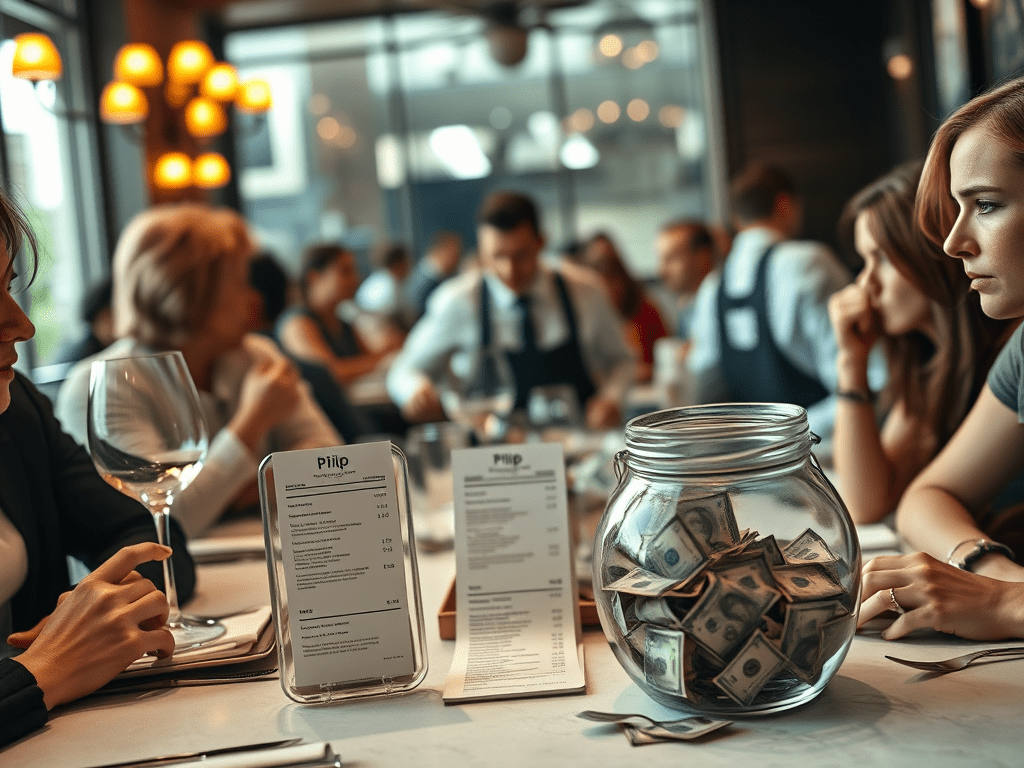
Ah yes, tipping — America’s favorite way to disguise wage theft as a gesture of generosity. The land of the free and the home of the brave, where the bill comes with a side of existential guilt and a math test. While most countries pay workers actual salaries, the U.S. has embraced a centuries-old aristocratic hand-me-down system where diners are deputized to ensure someone can afford rent. It’s not a system — it’s a vibe. A broke one.
🧾 When Your Dinner Bill Includes an Ethics Exam
Tipping is that uniquely American ritual where your mood, wallet, and social anxiety dictate someone else’s groceries. Why pay your workers when you can guilt strangers into doing it for you? Restaurants have mastered this art. “Welcome! Please enjoy your $16 burger — and while you’re at it, fund our labor model.”
Tipping didn’t originate here — we imported it like smallpox and reality TV. Born out of European feudalism and lovingly nurtured in the post-slavery American South, tipping was the economic version of “don’t worry, they’ll figure it out.” The federal tipped minimum wage? Still $2.13/hour since 1991. You know what else was happening in 1991? CDs were revolutionary. And yet, somehow, the idea of paying workers a living wage is still in beta testing.
Let’s not pretend this is about rewarding good service. Studies show your tip is more likely to reflect the server’s appearance or their ability to pretend they’re not dying inside. And all this “but it keeps menu prices down” nonsense? That’s just corporate speak for “we’d rather you subsidize our business model than us pay people like humans.” You don’t get a discount at the dentist for polishing your own teeth, do you?
In a country where tipping is a cultural norm and also universally loathed, you’d think we’d rethink the whole arrangement. But no, we just keep doubling down. Want a coffee? Tip. Bagel? Tip. Self-checkout? Tip. Your dog looked at the barista? You better tip, monster.
🤹♀️ Wage Lottery: Now Playing at Every Restaurant Near You
Tipping turns service jobs into performance art meets panhandling. Servers can make $250 on a Friday or $35 on a snowy Tuesday — and you wonder why half of them are quitting to become TikTok therapists.
Even customers are cracking. 65% say tipping culture has spiraled into absurdity. Half would prefer built-in wages or service fees. But abolishing tips? Only if someone else goes first, thanks. This is capitalism’s finest magic trick: convincing people they hate a thing while defending it with their lives.
And restaurants? They’ll flirt with no-tip models until customers see a 30% price hike and go into Yelp-induced cardiac arrest. Servers flee, everyone panics, and it’s back to the comfort of “suggested gratuity: 25%, 30%, or your soul.”
🥴 A Country Held Hostage by Its Own Social Contract
The real kicker? We’ve normalized the idea that workers shouldn’t just do a job — they should also emotionally seduce us for financial survival. “Be nice or starve” is not a vibe. It’s a hostage situation.
And here’s the million-dollar question no one wants to answer: If you wouldn’t want your paycheck to depend on the whims of strangers, why is it okay for anyone else?
Because let’s be honest — tipping isn’t about kindness anymore. It’s economic duct tape holding together a rotting business model with the illusion of choice. We’re not patrons. We’re unpaid wage distributors in a nationwide restaurant cosplay economy.
Challenges
Ready to rage-scroll your way into a moral crisis? Here’s your moment. Should tipping go extinct like landlines and Blockbuster, or is it a charming relic worth saving? Drop your take. Roast the system. Tell us your worst tipping horror story or your boldest hot take. 💥💬
👇 Smash that comment button, throw us a like, and share this with your most tip-averse uncle.
The best reader burns will be featured in the next issue of the magazine. 🔥📝


 Chameleon Magazine
Leave a comment