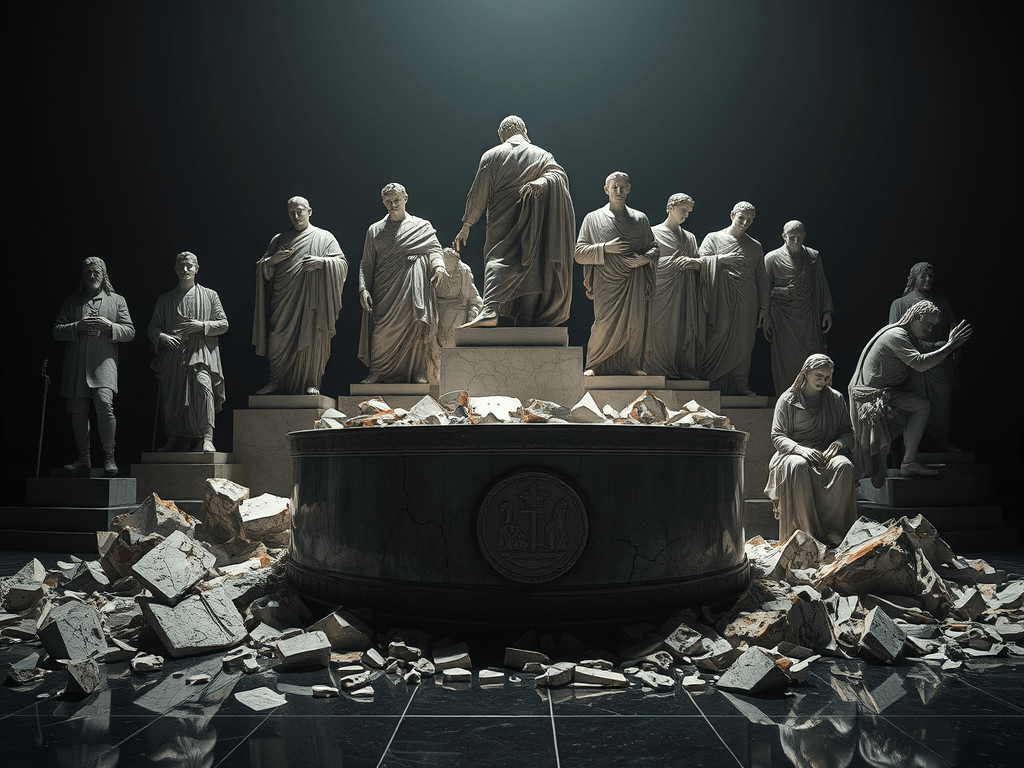
A deep dive into the grief, confusion, and uncomfortable self-reflection that happens when our idols crumble — and what that collapse really says about us.
💔 “Say It Ain’t So!” and Other Useless Prayers to the Cult of Celebrity
Oh no. Not them. Anyone but them. But yes — it happened. The actor you loved? Turns out they treated assistants like chew toys. The genius innovator who “changed the world”? They were also changing NDAs into silencing weapons. That activist you quoted endlessly? They were busy punching down behind the scenes.
Welcome to the post-heroic era, where every pedestal has a trapdoor and every applause track is followed by an exposé. It’s not just a cancellation — it’s a cataclysm. Not because we didn’t see it coming, but because we didn’t want to.
And when that moment hits, we don’t just lose a role model — we lose a part of ourselves. The good version of us that thought we could spot the good in others. The naïve version of us that believed talent came with character. And the hopeful version that thought the people we admired might actually be… worth it.
Let’s break it down.
Stage One: Hero Down — Initiate Emotional CPR
“Wait… WHAT?” you whisper to no one in particular as your phone glows with a headline that makes your stomach drop. You scroll. You squint. You search for that reassuring caveat — “Allegedly.” “Sources claim.” Maybe it’s a smear job. Maybe it’s a misunderstanding. Maybe your favorite public figure just tweeted like it’s 1953 again by accident?
Nope. They said it. They did it. And suddenly your brain is sprinting the marathon of mental gymnastics: Is there context? Did they grow? Was it just one time? Do I have to cancel my tote bag collection?
This phase is equal parts heartbreak and denial. Because their work made you feel seen. Their speeches, their songs, their films — they lit something up in you. So if they’re guilty… does that light go out?
Stage Two: Can I Still Listen to the Playlist of Shame?
Here comes the philosophical ping-pong match: Can you separate art from the artist without accidentally becoming a monster apologist?
Is dancing to a problematic banger the same as endorsing bad behavior? Is quoting a writer who turned out to be a creep just lazy ethics? And what about watching that movie just one more time for nostalgia’s sake?
Some people go full scorched earth. Others double down in defense. And the rest of us? We stew. In the muck. Because we know deep down that we’re not just debating the artist — we’re debating ourselves. Are we willing to let go of what once inspired us, just to prove we’re virtuous enough now?
Spoiler: There is no universally “right” answer. Just your conscience… and your playlist.
Stage Three: Identity Crisis, Table for One
This is the part nobody tweets about. When you lie in bed, staring at the ceiling, and think: What does this say about me?
You didn’t just like this person — you wove them into your worldview. Maybe you modeled your work after them. Maybe their quotes pepper your journal. Maybe they helped shape the values you now have to defend from… their ghost.
And that’s the bitter truth: When idols fall, it’s not just a cultural reckoning — it’s a personal unraveling. If you were wrong about them, what else have you been wrong about? Who else have you excused? And are you actually making your own decisions, or just outsourcing your ethics to people with better hair and publicists?
Stage Four: Piecing It All Back Together (Minus the Hero Worship)
Eventually, the emotional debris settles. No one sends a memo saying it’s time to move on, but you do. Sort of. You start building a new map — messier, more nuanced, with fewer glittering landmarks and more real-world coordinates.
You might find new voices to admire. Not spotless ones, but honest ones. You might keep engaging with the flawed works of flawed people — but this time, without pretending it’s uncomplicated. You might even start admiring ideas more than individuals.
And if you’re lucky? You stop needing your idols to be gods — and let them be humans instead. That’s not cynicism. That’s growth. Because blind faith is a brittle thing. But informed admiration? That’s a muscle worth flexing.
Challenges
Ever loved someone’s work only to find out they were one step away from full villain origin story? 🎭 How did you deal with the fallout — denial, deletion, or dangerous rationalization? Did it change how you see yourself, or just change your Spotify settings?
💬 Share your heartbreak, your hypocrisy, your healing — right in the blog comments (not just Facebook, ya cowards). What does a modern role model look like now? Are we ready to stop worshipping and start thinking?
👇 Tap that comment button. Smash the like. Sling this to a friend still clinging to their nostalgic DVD collection.
The best responses get immortalized in the next issue of the magazine. 🏆📝


 Chameleon Magazine
Leave a comment