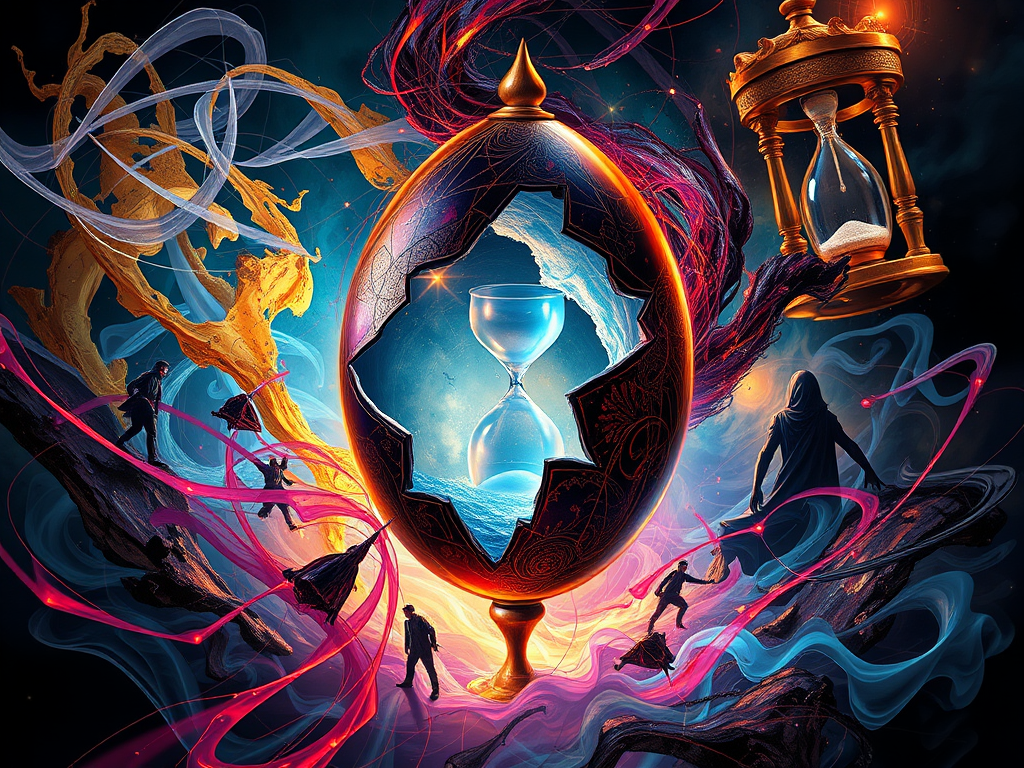
Because why write a normal story when you can make your reader question their existence, their Wi-Fi password, and whether they’re dreaming in someone else’s dream?
🌀 Narratives That Moonwalk Through Your Brain 🧠✨
Writing a mind-bender is not for the faint of plot. It’s for literary anarchists armed with metaphysical grenades and a thirst for delightful confusion. These six steps aren’t just instructions—they’re psychological booby traps disguised as storytelling advice.
Let’s break it down like the space-time continuum after a third coffee and a Nolan film marathon.
1. Certainty? Smash It Like Discount Ikea Furniture 🪞
Start with a clean, believable world—then crack it like a Fabergé egg with a quantum hammer. Readers want stability… right before you slap them with a “wait, this was a dream inside a memory inside a lizard’s daydream?” moment. Certainty is the bait. Chaos is the hook.
2. Lies Dressed for a Black-Tie Gala 🎩🥀
Truth is out. Deception is in—layered, perfumed, and possibly wearing sunglasses at night. We’re talking inception-level inception. Let your plot lie so convincingly, even you start wondering what’s real. Then pull the rug, replace it with a hologram, and set it on fire.
3. Time Is Just a Suggestion—and You’re Ignoring It ⏰💥
Linear narratives are for amateur time travelers and history textbooks. A proper mind-bender treats time like Silly Putty left in the sun. Events don’t follow—they echo, collapse, invert, and occasionally scream. Just make sure the emotional core is real, or you’re writing a plot pretzel nobody asked for.
4. Add a Beating Heart to the Acid Trip ❤️🫀
Yes, readers want to be mentally vaporized—but they also want to feel things, damn it. Sneak in a tearjerker amid the paradoxes. A haunting smell, a touch of lost love, or a cat that remembers you across dimensions. The weirder the story, the more human it needs to be.
5. End It Like a Philosopher with a Grudge 🌀🔚
Your twist should be so devastating and obvious in hindsight that readers feel personally betrayed—and love you for it. The goal is existential whiplash. They shouldn’t just finish the book—they should re-enter it, questioning everything, including that sandwich they ate at chapter six.
6. Put the Mirror in Their Hands (and Back Away Slowly) 🪞😵💫
This is not a book. It’s a trap. A game. A dare. Let the reader become part of the conspiracy. Break the fourth wall like it owes you money. End it with a question they can’t shake off. The book doesn’t end on the last page—it echoes in their sleep paralysis for weeks.
🧩
Challenges
🧩
Ever read something that made your brain fog like a haunted lava lamp? That’s the magic we’re talking about. Drop your favorite plot-twists-gone-feral, WTF endings, or writing attempts that spiraled into existential dread. Share the confusion. Stoke the chaos. Let us know what warped your mind and why you loved it.
👇 Tap that comment section like it’s a time loop exit. Like, share, or throw your own meta-ending into the mix.
The most delightfully broken thoughts will be featured in the next issue of the magazine. 🧠🔥


 Chameleon Magazine
Leave a comment