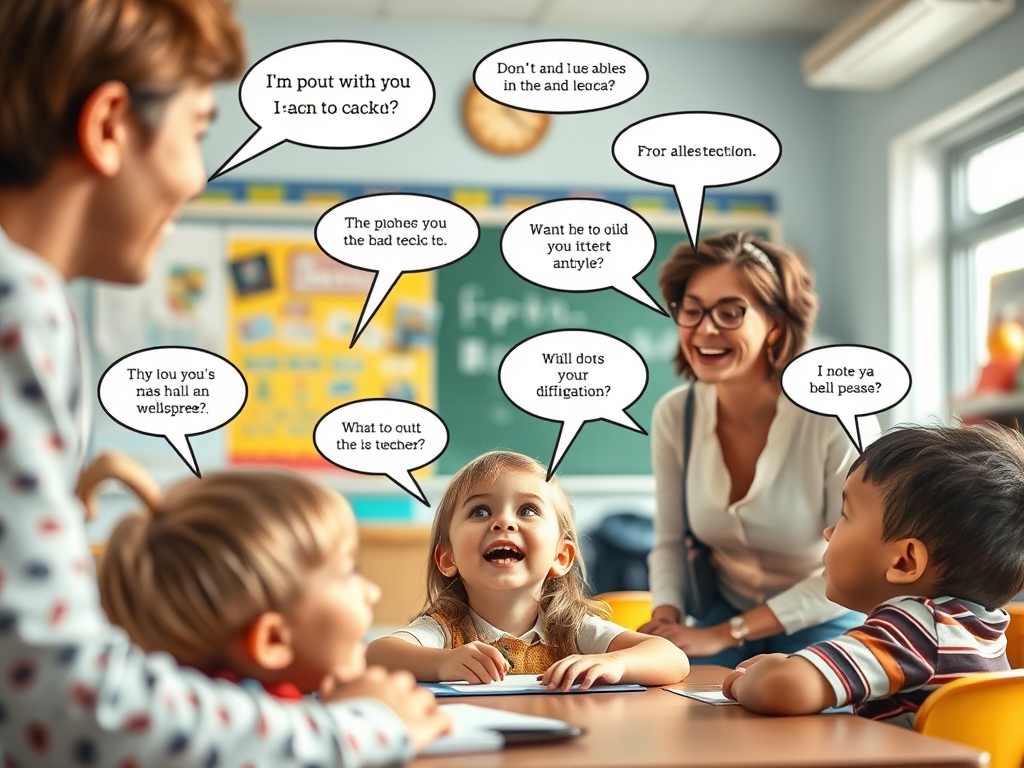
When Logic, Literal Thinking, and Listening Go Wildly Off-Script
There’s something disarmingly funny—and quietly profound—about the way children communicate. Their logic is pure, their answers are sincere, and their misunderstandings? Well, those are often more accurate than we’d like to admit.
Take a look at these real (or real-enough) classroom conversations:
Teacher: How old is your father?
Kid: He is 6 years.
Teacher: What? How is this possible?
Kid: He became father only when I was born.
That’s logic. Faultless, terrifyingly honest logic. In the child’s world, time doesn’t stretch backward. There’s no “before me,” only “because of me.” You can’t argue with that kind of confidence.
But this is more than just funny—it’s the perfect microcosm of miscommunication.
The Literal Mind vs. The Abstract World
Teacher: Glenn, how do you spell crocodile?
Glenn: K-R-O-K-O-D-I-L-E.
Teacher: No, that’s wrong.
Glenn: Maybe it is wrong, but you asked how I spell it.
Glenn is right. The teacher wanted the spelling; Glenn gave his spelling. It’s the kind of answer that makes you pause and question: were we being clear? Did we really ask what we meant?
This is the heart of miscommunication. Not people refusing to understand—but people understanding exactly what was said, just not in the way it was intended.
When Instructions Meet Interpretation
Teacher: Donald, what is the chemical formula for water?
Donald: HIJKLMNO
Teacher: What are you talking about?
Donald: Yesterday you said it’s H to O.
In Donald’s ears, “H to O” became a range of letters. Fair enough. It’s a perfect reminder that context matters—a lot. When we assume everyone shares the same references or knowledge base, we set the stage for confusion.
And sometimes, for magic.
The Comedy of Clarity
Teacher: Clyde, your composition on My Dog is the same as your brother’s. Did you copy his?
Clyde: No, sir. It’s the same dog.
Honesty wrapped in cleverness. Clyde isn’t dodging the accusation—he’s answering it more directly than expected. Again, the misunderstanding isn’t about meaning; it’s about assumption. The teacher assumed dishonesty, Clyde assumed shared reality.
When Children Teach Us Communication
Children don’t play social games the way adults do. They don’t hedge, spin, or soften. What they hear is what they answer. What they say is what they mean. Which is why they’re often the best accidental philosophers in the room.
Miscommunication happens not because people are dumb or lazy, but because language is imperfect. We pack tone, history, culture, bias, and intent into a few shaky syllables and hope they land where we mean them to.
And when they don’t? We get Glenn spelling crocodile his way. We get Donald mistaking chemistry for the alphabet. We get kids who answer better than we asked.
Final Thought: Learn to Love the Gap
Miscommunication isn’t just an error—it’s an invitation. A chance to laugh, clarify, connect. Instead of rushing to correct someone, pause. Ask: What did they hear? What did I actually say?
And maybe—just maybe—next time someone answers your question with unexpected brilliance, you’ll smile like that teacher should have and say,
“Fair enough. I did ask.”
Let the world misunderstand you—just be interesting when they do.


 Chameleon Magazine
Leave a comment