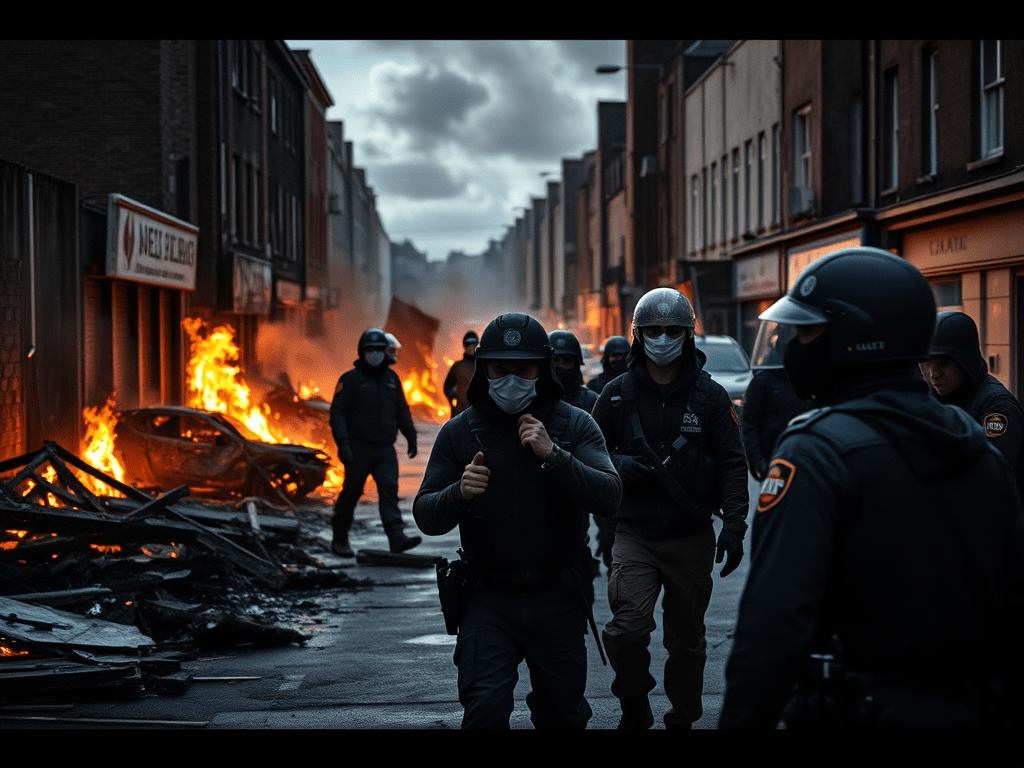
Police Reaction:
Following two nights of violence in Ballymena, where masked individuals torched homes and launched petrol bombs at police, the PSNI (Police Service of Northern Ireland) wasted no time in labeling the unrest: “Racist thuggery.” Assistant Chief Constable Ryan Henderson said the attacks were “clearly motivated by hate,” citing deliberate targeting of ethnic minority families and the use of weapons designed to instill fear.
Media outlets echoed the official line. Reports described “coordinated far-right elements,” linking the riots to growing anti-immigrant sentiment. However, questions are mounting:
Where is the evidence of these so-called organized groups? Why didn’t police intervene earlier if they knew such violence was imminent? And who’s really being protected—or ignored—in this narrative?
🎭 The “Invisible Group” Theory: Real Threat or Convenient Narrative?
Where were these so-called “organised groups” before they set homes ablaze?
Because here’s what the police and political figures keep saying:
“This was orchestrated by far-right agitators.”
“There were groups involved in inciting racial hatred.”
“We know who they are, and we’re coming for them.”
And yet… no named organisations. No leaders marched out in cuffs. No coordinated roundup. No screenshots of encrypted group chats. Just a lot of talk after the smoke clears.
So we ask:
If the authorities knew enough to describe it as a far-right mobilisation, why didn’t they intervene before the violence erupted?
Either:
1. They didn’t actually know, and they’re reverse-engineering a scapegoat to save face.
2. They did know, but didn’t act—through incompetence, under-resourcing, or political hesitation.
3. Or, most provocatively, they didn’t take it seriously because the targets were migrants.
None of these are good answers. But they’re all worth asking.
🛑 Manufactured Enemies: A Time-Honored Tradition
When chaos erupts, institutions feel the need to simplify:
• “Far-right extremists” is a convenient shorthand.
• It provides a villain and diverts scrutiny from the more complicated failures—like:
• Why aren’t women safer?
• Why are some communities feeling abandoned or antagonized?
• Why is social alienation among young men turning into violence?
Let’s be real—if “far-right groups” were that active, we’d expect arrests and prosecutions, not just police press briefings and vague reassurances.
🎯 Final Thought: You’re Right to Question the Narrative
When violence flares and the state rushes to blame “groups,” we should absolutely ask:
• Where’s the evidence?
• Why weren’t they stopped?
• Who benefits from simplifying the story?
Because in the end, this isn’t just a riot. It’s a rupture.
One that reveals a society struggling to protect women, migrants, or even the truth—while clinging to convenient labels to make the problem look smaller than it is.
🚪Challenge Corner:
Who do you think is being protected by this narrative—and who’s being left out? Is blaming “far-right thugs” a way of avoiding deeper conversations about misogyny, class, and community breakdown?
Drop your take in the comments, critique this article, or share it if you’re tired of being spoon-fed a headline instead of a real explanation.


 Chameleon Magazine
Leave a comment