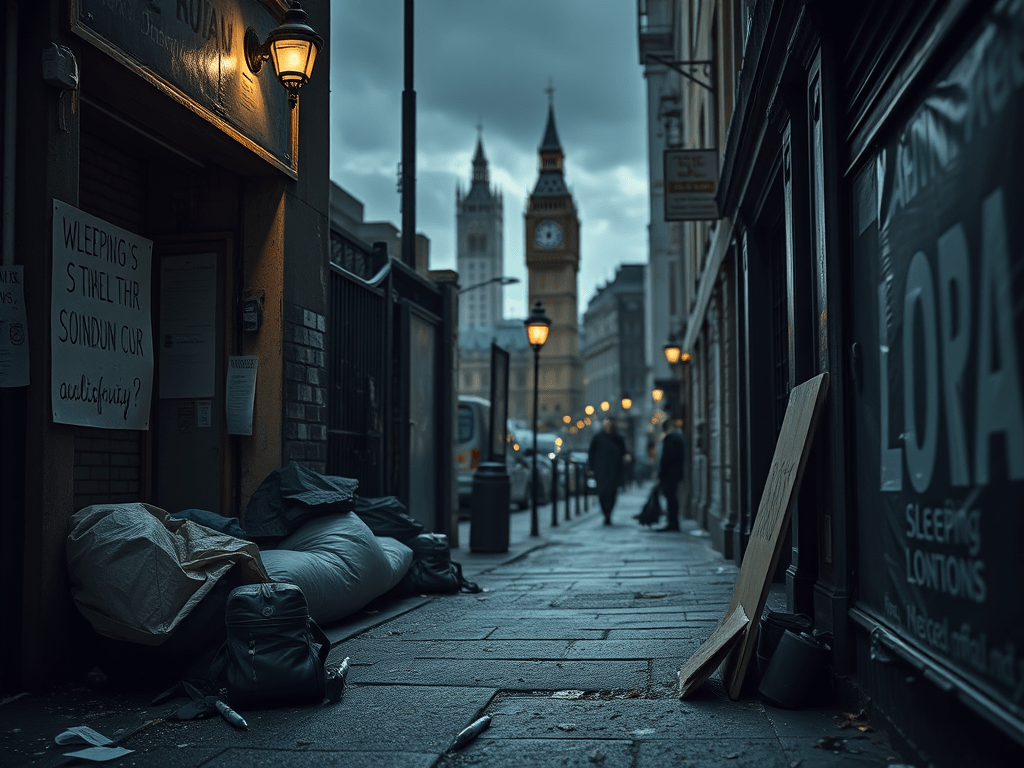
They used to say the streets of London were paved with gold. It was a myth, of course — but at least it used to be a comforting one.
Now? The streets aren’t paved with gold. They’re paved with something else entirely:
- With crumpled sleeping bags shoved into doorways.
- With the cardboard signs of the forgotten.
- With syringes tucked into alley corners and the metallic smell of fear that rises after dark.
The London of postcards is long gone — if it ever truly existed. What we have now is a city that limps on, dressed in expensive branding, but hollow at the core.
Walk down Oxford Street and you’ll find boarded-up shops, scammers at every corner, and the uneasy feeling that no one’s really in charge anymore.
Try taking the Tube after midnight. That sinking dread in your stomach? That’s not paranoia. It’s experience. It’s knowing you’re on your own.
We don’t talk about it much — but the truth is, people don’t feel safe anymore. Not women walking home. Not elderly pensioners riding the bus. Not even young men with their hoods up and headphones in. There’s a hum of threat in the air, and everyone hears it, even if no one admits it.
And the police? Either invisible or uninterested. You’re more likely to get a fine for riding the train without a ticket than for mugging someone in broad daylight.
This isn’t just about crime. It’s about neglect. Collapse in slow motion.
The soul of the city is being traded off — chipped away in budget cuts, sold to developers, drowned in bureaucracy. What’s left is a metropolis held together by Uber rides, Deliveroo orders, and people too tired to fight back.
The truth? London isn’t a global city anymore. It’s a cautionary tale in plain view.
So no — the streets of London are not paved with gold.
They’re paved with broken systems, broken trust, and broken promises.
And unless something changes soon, they may not be walkable at all.


 Chameleon Magazine
Leave a comment