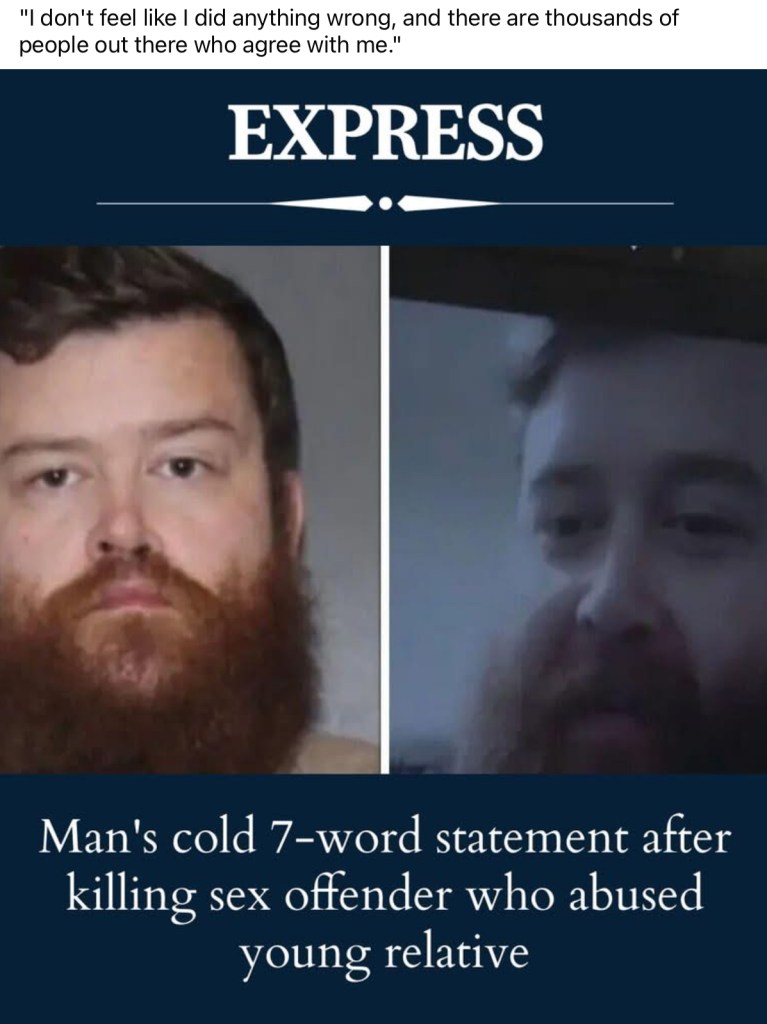
Legally, what he did was wrong. Taking a life, no matter the context, is murder. That’s the rule we’ve all agreed to live by.
But morally?
This is where it gets murky—fast.
If someone harms a child, permanently shattering innocence and trust, should they ever be allowed back into society? Is prison enough? Can therapy truly “rehabilitate” a predator? And when the courts offer what looks like leniency, how can a parent—or uncle, or sibling—not feel rage boil beneath the surface?
We’re told to trust the process. But when that process feels colder than the crime, people stop trusting. That’s when the vigilante becomes a symbol of what justice should feel like: raw, direct, and unflinching.
🛡️ Who’s Really Protecting the Children?
Let’s be honest: this conversation isn’t just about punishment. It’s about protection.
- We put up fences around schools.
- We teach “stranger danger.”
- We install parental controls on devices.
But when a child is violated by someone close, someone known, someone who’s supposed to be trustworthy—the protection wasn’t enough.
So when a man erases that threat with his own hands, is that the wrong action? Or is it the final, desperate act of a society that’s grown tired of second chances for the worst among us?
⚠️ The Dangerous Precedent
Here’s the real dilemma.
If we excuse this killing, we open the floodgates. Suddenly, anyone with a grudge and a tragic story might claim the same right. Justice becomes personal. Emotional. Unchecked.
We risk replacing courts with chaos. Because what if the accusation was wrong? What if the wrong man is punished because someone felt “sure” he was guilty?
This is why we built legal systems in the first place—to resist our darker instincts. But if the system doesn’t evolve to reflect our moral compass, those instincts come roaring back anyway.
🧠 Can We Hold Two Truths at Once?
Yes, the killing was wrong—legally.
And yes, we understand why he did it—morally.
Both can be true. And acknowledging both might be the only way forward.
We don’t need to glorify vigilante violence. But we must ask why so many feel it’s the only justice that makes sense. Maybe it’s not about vengeance. Maybe it’s about feeling safe again.
🔍 What Needs to Change?
- Harsher, irreversible sentences for crimes against children?
- Transparent public registries that actually empower communities?
- Therapies and protections that center on the victims—not just the rights of the perpetrator?
We need a system that feels like justice, not just reads like law.
🕯️ Final Thought
If the system won’t protect the vulnerable, someone will.
And when that someone acts, don’t be surprised when society cheers.
That cheer isn’t just for the man—it’s a cry for change.
Because deep down, we’re not asking whether what he did was legal.
We’re asking something far more painful:
“Would I have done the same… to protect my child?”
And if your answer is “yes,” even quietly—then the problem isn’t the man.
The problem is the system that made him necessary.


 Chameleon Magazine
Leave a comment