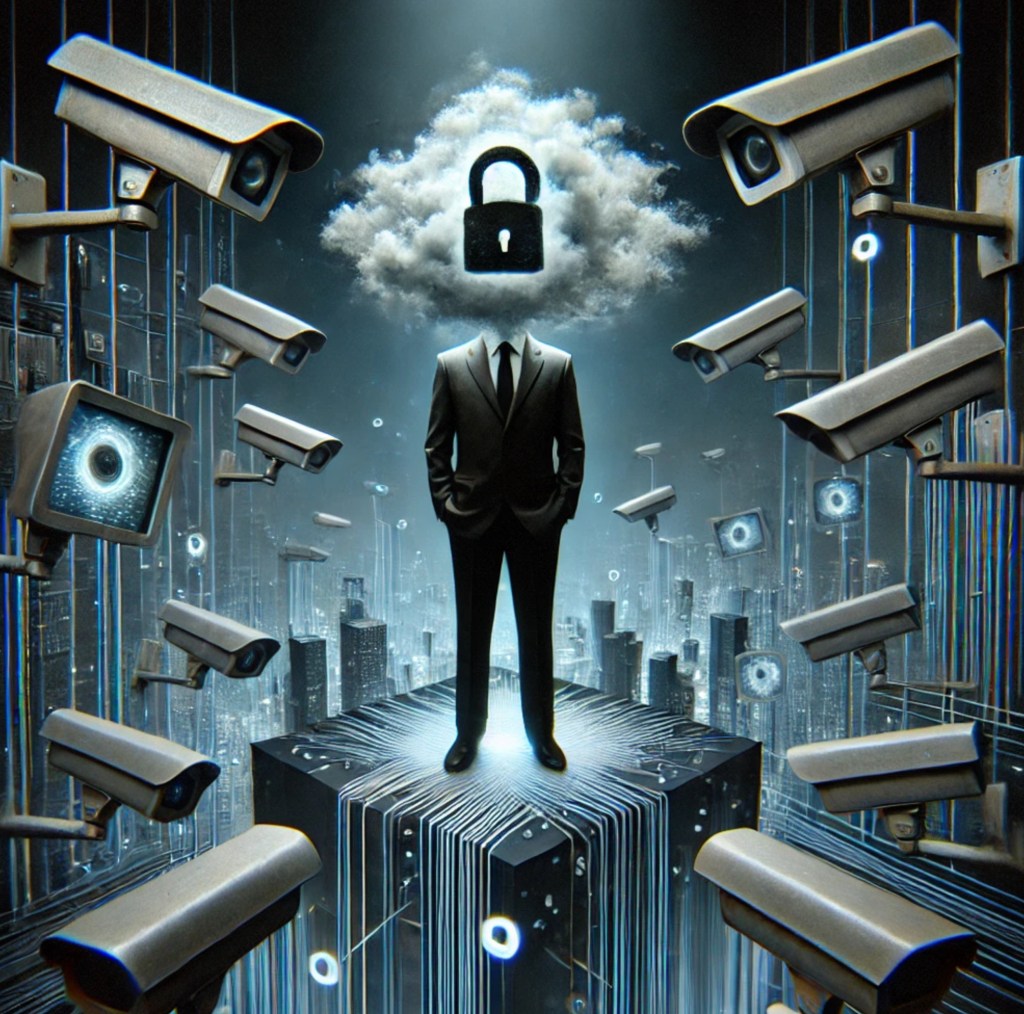
The most dangerous phrase in modern surveillance culture sounds harmless — like it belongs stitched onto a decorative pillow in a government break room:
👉 “If you have nothing to hide, you have nothing to fear.”
It’s the ultimate gaslight. A comforting lullaby sung by authoritarians in sweatpants and Silicon Valley lanyards. But beneath its innocent surface lies the logic of control — and a dangerously naive view of privacy, speech, and power.
Spoiler: privacy isn’t about hiding — it’s about being human.
🧠 “Nothing to Hide” Is the Most Weaponized Whisper of the Surveillance Age
This phrase isn’t a shield for the innocent — it’s a sword for the powerful.
Because once we accept that only the guilty want privacy, we’ve already handed over the right to define guilt. And that’s how censorship slithers in — not with tanks, but with shrugs.
Take Victor Petrini, the fictional professor in Cel mai iubit dintre pământeni.
His downfall? A letter. Too philosophical. Too abstract. Too weird for the censors. So they made up their own meaning and tossed him in prison.
Not because he did something wrong — but because the state couldn’t understand him, and what the state can’t understand, it fears. What it fears, it silences.
Sound dramatic? It’s not. It’s a road map. One we’ve been sleepwalking down for decades.
🚫 Censorship Doesn’t Come With Sirens Anymore — It Comes with Concerned Emails
Today, censorship doesn’t arrive in jackboots. It arrives with HR-approved language and community guidelines.
“We’re just making the internet safer.”
“We’re removing disinformation.”
“We’re protecting users from harmful content.”
Translation?
“We don’t like what you said — and we’re afraid someone else might agree with you.”
Modern censorship hides behind vibes. It’s not about facts, it’s about feels. If someone somewhere might be offended, misunderstood, or “impacted,” the content must go.
Truth is now optional. Consensus is king.
And if your ideas don’t flatter the emotional weather of the day, prepare to be “deprioritized into oblivion.”
🌲 Speech Is an Ecosystem — Kill the Critters, Kill the Forest
Think of free speech as a wild, chaotic forest.
Yes, there are weird mushrooms. Yes, there are creatures you’d rather avoid.
But every voice — even the annoying ones — plays a role in keeping society intellectually alive.
Pull out every uncomfortable opinion, every cringe post, every spicy comment?
You don’t get harmony. You get stagnation. You get echo chambers. You get AI-generated safe-speak that says nothing.
Silencing bad speech doesn’t destroy bad ideas — it just drives them into dark corners, unchallenged and unexposed.
You want to beat nonsense? Use better words. Sharper ideas.
Not bans. Not blackout curtains on nuance.
👁️ Privacy Isn’t a Luxury — It’s a Line Between You and the Algorithm
Let’s get personal.
You think “I have nothing to hide” makes you virtuous? It makes you vulnerable.
Because that only works until the rules change. And the rules always change.
Ask whistleblowers. Ask journalists. Ask teachers who read banned books. Ask protesters. Ask artists. Ask anyone who’s ever been misquoted, mistranslated, or misunderstood by someone with more power.
Privacy isn’t about secrecy — it’s about control.
Your control. Over your words. Your intentions. Your context.
Take that away, and your life becomes open-source trauma for bureaucrats and bots.
🎤 Real Freedom Is Risky — That’s Why It Works
Freedom of speech isn’t safe. It’s not supposed to be.
It’s unpredictable. Messy. Sometimes ugly. But that’s the tradeoff for authenticity.
It means we tolerate voices we hate so we don’t accidentally silence the ones we love.
It means the philosopher gets to write confusing letters — and the state doesn’t get to invent crimes out of confusion.
You want a world without offense? Move into a mirror.
You want a world with growth, challenge, progress? Buckle up. You’ll get uncomfortable. But you’ll also get better.
💣 The Real Threat Isn’t What You Say — It’s Who Gets to Say You’re Wrong
This isn’t about having something to hide.
It’s about who gets to decide what’s worth hiding.
If power gets to define what’s suspicious, then anything unfamiliar becomes a threat.
If algorithms filter your thoughts, then creativity dies on the first draft.
We protect speech not because it’s easy — but because one day, your words might be the ones they misunderstand.
And if the only thing standing between you and silence is a keyword filter? Good luck.
📢 Don’t Wait to Speak — Or One Day You Won’t Be Able To
So next time someone says, “Relax, if you’re not doing anything wrong, what’s the problem?”
Look them dead in the eye and say:
“Says who? And who gets to decide what’s wrong?”
Because the most dangerous thing isn’t the speech we outlaw.
It’s the speech we never say — because we’ve been trained not to.
⚠️ Challenges
When have you felt the urge to self-censor? Ever been misunderstood in a way that nearly cost you something? Do you believe any speech should be silenced — and who should make that call?
💬 Drop your story in the comments. Share this with someone who thinks surveillance is “no big deal.” Let’s have the hard conversation while we still can.
👇 Like, comment, share — and shake the cage.
Top responses will be featured in the next issue of the magazine. 🧠🔥


 Chameleon Magazine
Leave a comment