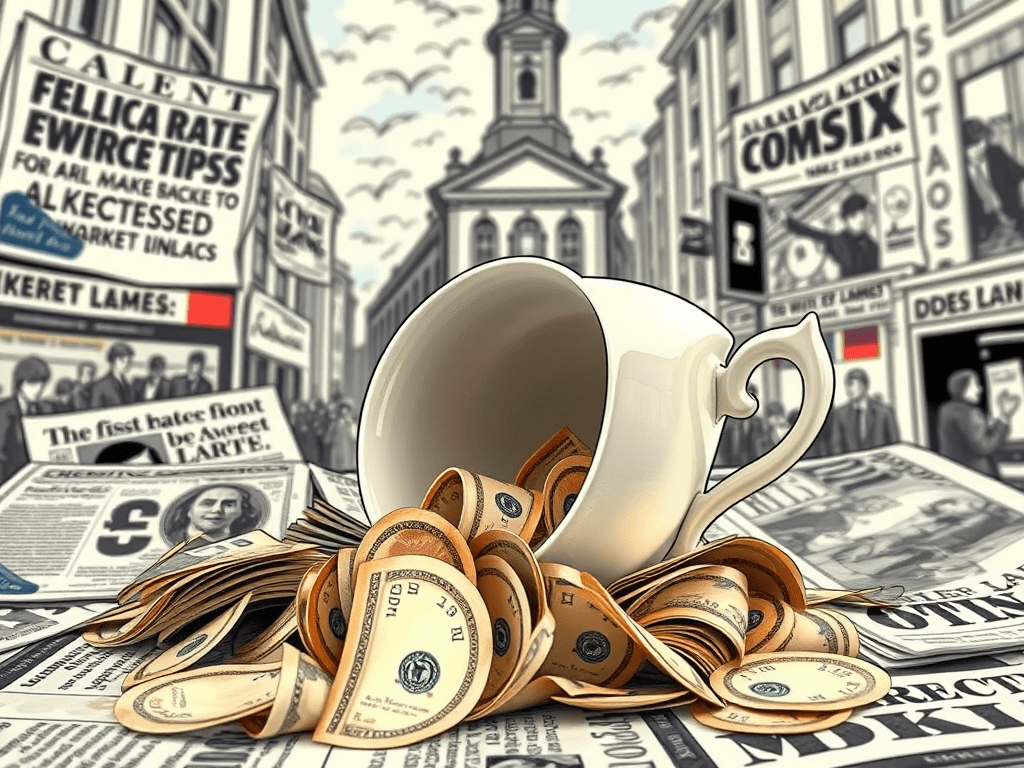
While Andrew Bailey tiptoes through interest rate hedging like a librarian with a hangover, the pound drops half a sandwich and the financial world loses its ever-loving mind. Again. It’s just another day in the economic panic room we like to call Britain.
💸 The Pound Trips Over Its Cravat (Again)
Let’s get something straight: a “three-week low” in the pound is not the second coming of Black Wednesday. It’s barely the economic equivalent of stubbing your toe in a Waitrose. Yet somehow, it triggers a financial media seizure that makes Eurovision coverage look tame.
Governor Bailey’s remarks were the verbal equivalent of a shrug in a tweed jacket: maybe—maybe—rates will be cut if job numbers keep looking like a Netflix account with too many users and not enough productivity. And because nuance is toxic to markets, traders did their usual interpretive panic dance. 💃📉
What Bailey actually said:
“We may cut rates if the data continues to support such a move.”
What the markets heard:
“BAILEY FLINGS POUND INTO VOLCANO, ORDERS TEA FROM HELL.”
Cue the pound face-planting into a three-week low, which, in currency terms, is basically tripping over a damp crumpet. But it felt like drama. And in a post-Brexit, still-inflating, rent-crushing Britain, the feeling of crisis is half the economy now.
And don’t worry, there’s always a guest villain ready to spice things up. Enter Donald Trump, flapping across the stage like a trade-policy banshee, threatening EU tariffs because… Tuesday? The man’s allergic to peace and loves nothing more than sprinkling global trade with a bit of Brexit déjà vu.
Meanwhile, tabloids shriek about recession like it’s panto season and Bailey just cancelled Christmas. Despite inflation easing and the economy doing that “slow, sideways crab shuffle toward recovery,” they’re acting like we’re seconds from selling Buckingham Palace to fund gas bills. 🏰💷
🏦 Central Bankers and the Art of Saying Nothing Very Carefully
To be fair, Bailey’s job is part oracle, part tranquilizer. He must soothe the markets, confuse journalists, and bore the public into economic compliance—all without saying anything actionable. It’s the kind of performance that would make even RADA graduates sweat.
What we’re seeing here is classic central bank theatre:
- Say vague things slowly
- Add footnotes to the footnotes
- Let the markets overreact for sport
If productivity doesn’t pick up, rate cuts are on the table. But if it does? Rates might stay. And if inflation starts climbing again? Well, then we’re back to rate hikes. It’s like playing economic Twister blindfolded while someone changes the mat.
🧠 The Pound’s Self-Esteem Issues
Let’s talk about the pound like it’s your flaky mate from university:
- Overreacts to everything
- Gets moody for no reason
- Always involved in unnecessary drama
- Somehow still going strong
The pound’s mood swings aren’t new. It’s been through Brexit, Trussonomics, multiple prime ministers, and more GDP contractions than a budget airline seat. And yet—somehow—it’s still here, still fighting for relevance between the euro and a cryptocurrency with a dog on it. 🐶💰
And every time it sneezes, the media unleashes a plague of “UK in Crisis?” headlines like a financial episode of EastEnders. Because nuance doesn’t sell papers, and neither does reminding readers that a currency drop of less than 1% isn’t a national emergency—it’s Tuesday.
🍵 Calm Down, It’s Not the End
So where are we really?
- Inflation is easing like a patient exhale.
- Jobs data is soft, but not catastrophic.
- The Bank of England is doing exactly what it’s supposed to: watching, waiting, and occasionally muttering cryptic things to keep hedge funds sweating.
- And the pound? It’s not plummeting—it’s pirouetting.
For the average Brit, this may all feel distant. But here’s the kicker: if rates do get cut, mortgage-holders could breathe easier. First-time buyers might have a chance to buy a flat the size of a dishwasher. And businesses, already clinging to post-pandemic scaffolding, might finally see credit loosen. For savers? Sorry, your ISA is still doing the economic limbo.
But overall, this isn’t panic—it’s theatre. And in Britain, we’ve always loved a bit of drama with our tea.
🔥
Challenges
🔥
Are you buying the crisis narrative, or is this just media pyrotechnics wrapped in a spreadsheet? Can central banks be less cryptic, or do we secretly enjoy decoding their haikus of doom? Let it out in the blog comments — and bring the sarcasm, economics nerds. 📉🎭


 Chameleon Magazine
Leave a comment