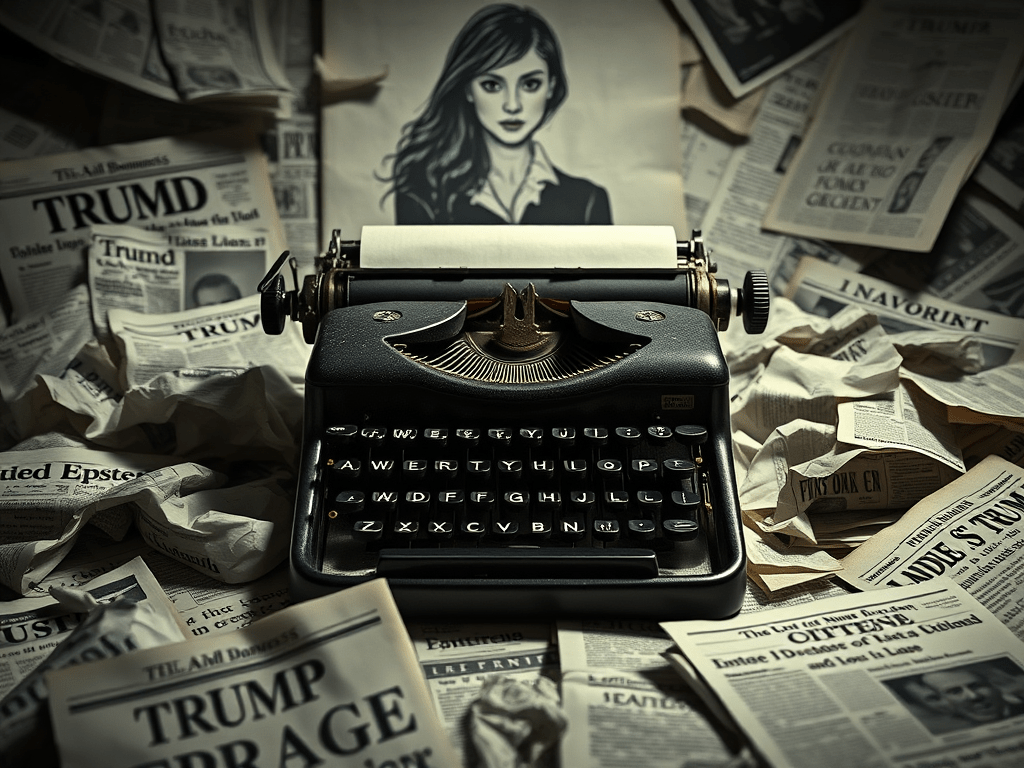
What Happened?
Former President Donald Trump has denied a sensational claim published by The Wall Street Journal, which alleges he sent a birthday letter to convicted sex offender Jeffrey Epstein in 2003. According to the article, the note included a typewritten message accompanied by a crude sketch of a naked woman. The silhouette was reportedly drawn by Trump himself, with his signature allegedly stylized as pubic hair.
Trump responded swiftly and strongly, saying: “These are not my words, not the way I talk. Also, I don’t draw pictures.”
The story, lacking hard evidence and based on a decades-old note, quickly went viral. But in the age of hyper-politicized media, it’s worth asking: What’s really going on here?
The Performance of Outrage
This isn’t journalism. It’s political theatre. And not the thoughtful, investigative kind—it’s a chaotic sideshow, where implication equals guilt and headlines eclipse substance.
Let’s be direct: If evidence of criminal wrongdoing exists, it should be thoroughly investigated and addressed through legal channels. But dragging out an alleged drawing from 2003 to imply misconduct without context, corroboration, or any clear relevance today is nothing short of irresponsible.
This is not about protecting the truth—it’s about controlling the narrative. Media outlets know exactly what they’re doing when they publish stories like this. They stoke controversy to feed engagement, not to serve justice.
It’s a tactic we’ve seen time and again: Dig up something provocative. Link it to a politically polarizing figure. Sit back and watch the country implode in outrage. It’s lazy, corrosive, and increasingly the norm.
The Real Victims: The American People
While elites battle for influence with innuendo and scandal, regular Americans are left disillusioned. Trust in institutions continues to crumble. Many citizens feel trapped in a system more focused on optics than outcomes.
We’re told to pick a side, swallow our doubts, and rage on cue. But something deeper is being lost: our ability to think critically, to wait for facts, to recognize manipulation when it’s right in front of us.
The tragedy here isn’t whether or not Trump drew a crude sketch. The tragedy is that this story is even considered headline-worthy in the first place—while pressing national issues like inflation, public trust, and civic stability are sidelined for clickbait.
This isn’t how a serious country behaves.
What This Tells Us About Power
At the core of this scandal is the uncomfortable truth that modern political warfare no longer requires facts—it only requires suggestion.
A drawing. A phrase. A whisper. That’s all it takes to smear a reputation in today’s hyperconnected culture.
And when the media becomes a tool for political vengeance rather than public accountability, we all lose. We lose faith. We lose reason. And ultimately, we lose each other.
Final Thoughts:
The outrage machine is alive and well. But it doesn’t serve truth. It serves distraction.
Until we demand a higher standard—from our media, our politicians, and ourselves—this kind of circus will continue. And every time we participate in it, we move further away from the America we’re supposed to be.
Let’s stop reacting to outrage and start thinking critically again. If you agree, share this post—and let’s bring the conversation back to substance.


 Chameleon Magazine
Leave a comment