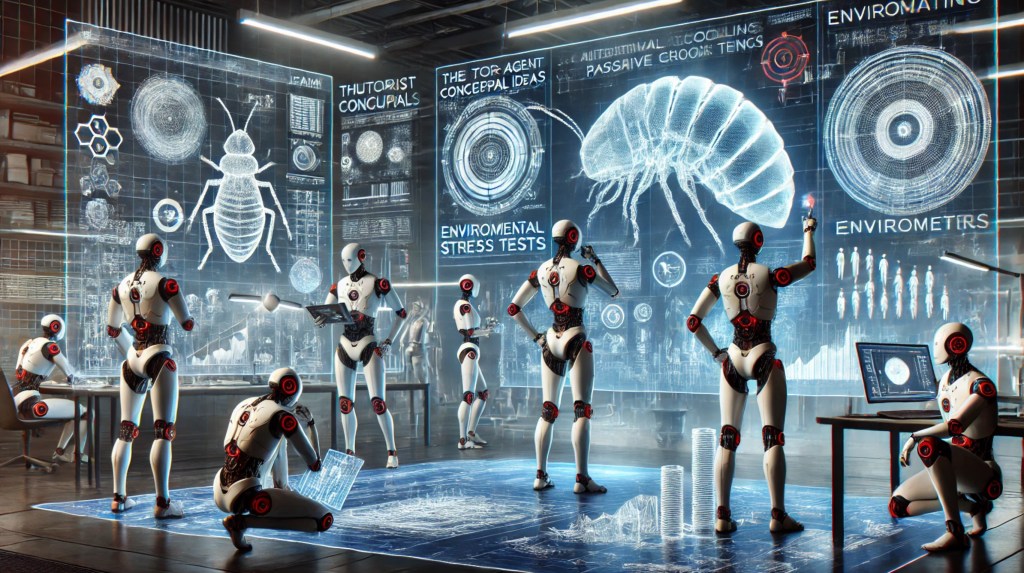
A new generation of artificial intelligence isn’t just assisting engineers — it’s replacing them, collaborating in swarms of machine minds to outthink, outdesign, and outlast human teams. At Carnegie Mellon University, researchers have built PolymathAI, a multi-agent system where each AI takes on a unique role: theorist, critic, designer, tester — and together, they tackle engineering problems that have never been solved before.
🤖 Brainstorm, Debate, Dominate: The Future of Innovation Is Machine-Led
Forget the lonely chatbot. PolymathAI is an AI dream team that holds its own strategy sessions. One agent suggests an idea, another tries to break it, another redesigns it, and a fourth simulates it in hellish conditions just to see if it fails. It’s like a four-way argument between engineers who never sleep, never check their phones, and don’t take coffee breaks.
When given a vague problem like “design a low-energy cooling system,” this virtual think tank didn’t just Google “fans.” Instead, they mimicked termite mounds (yes, the insects), devised a biomimetic fin structure, optimized airflow… and beat human-created models by 21% in thermal efficiency — in a matter of hours.
Even more unsettling? These AIs don’t share the same brain. They’re trained on different data sets, with contrasting reasoning patterns. The “tester” agent literally exists to break designs — like an evil QA engineer with infinite patience.
Now DARPA and civilian labs are exploring how this system could revolutionize everything from disaster response logistics to off-grid space habitats. Say goodbye to creative blocks. Say hello to a relentless, unemotional R&D squad with infinite memory and zero egos.
If this keeps up, your next team meeting could include a machine that doesn’t just “have a suggestion,” but a 40-page feasibility report and a fully simulated prototype.
🔥 Challenges 🔥
Would you trust a bunch of AIs to build your house? Your survival shelter? Your moon base? When machines not only brainstorm but out-perform humans in design and logic, what happens to your seat at the table? 🪑⚡️


 Chameleon Magazine
Leave a comment