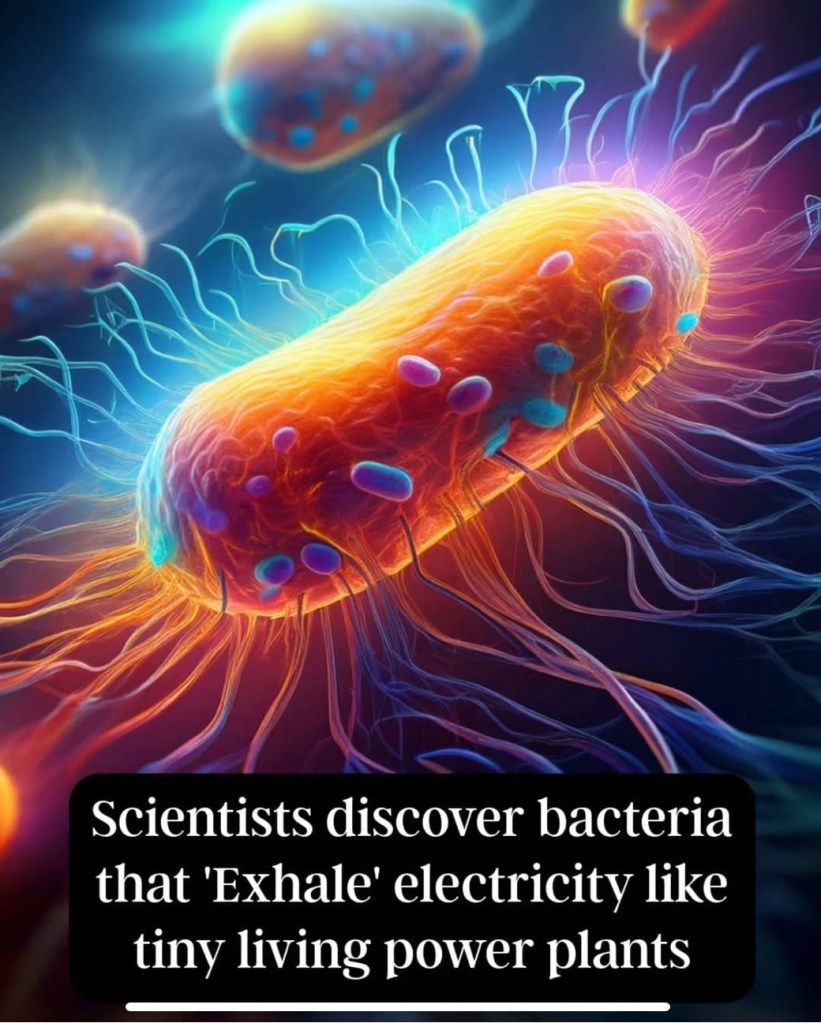
In a move that makes your phone charger look like medieval tech, scientists have discovered bacteria that literally exhale electricity. Found lurking in sludge and seafloor muck, these microscopic power plants aren’t just weird—they’re revolutionary. Say hello to your new bio-buddies: Shewanella and Geobacter.
🔌 Nature’s Tiny Electricians Just Made Your Battery Look Lazy
Forget Tesla. Forget solar panels. The real MVPs of sustainable energy might be gunk-dwelling bacteria that turn trash into power. While we burn coal and debate wind farms, these microbes are quietly zapping out electrons through something called “extracellular electron transfer” (EET)—which is science-speak for pooping out power.
Here’s the scene: Instead of inhaling oxygen like a basic organism, these rebels chomp on organic matter and use external surfaces—rocks, electrodes, maybe your neighbor’s iPhone—as their personal dump sites for spare electrons. The result? A steady, teeny stream of electricity. It’s like if compost had a USB port.
These little dynamos use what scientists are calling microbial nanowires, which sounds adorable until you realize they’re literal bio-cables running juice from cell to surface. That’s not sci-fi. That’s bacteria with better infrastructure than your office Wi-Fi.
And what are we doing with them? Building microbial fuel cells that eat sewage and spit out power. Yes, they can clean your toilet water and charge a smartwatch. Meanwhile, half of humanity can’t even keep their AirPods charged overnight. Evolution has left the chat.
The only thing holding back this bacterial Tesla factory is… well, scientists. They’re still trying to make the bacteria work faster, longer, and in weirder places (aren’t we all?). But once they do, say goodbye to lithium mining and hello to poop-powered gadgets. Nature’s trolling us—and she’s winning.
⚠️
Challenges
⚠️
Are we ready to plug into pond scum for our power? Can a bucket of sludge outdo your fancy power bank? 🪫😏 Let us know what you think about this microscopic miracle. Is this the future of energy, or just another science headline destined to fade like your last iOS update?


 Chameleon Magazine
Leave a comment