🍬🏭
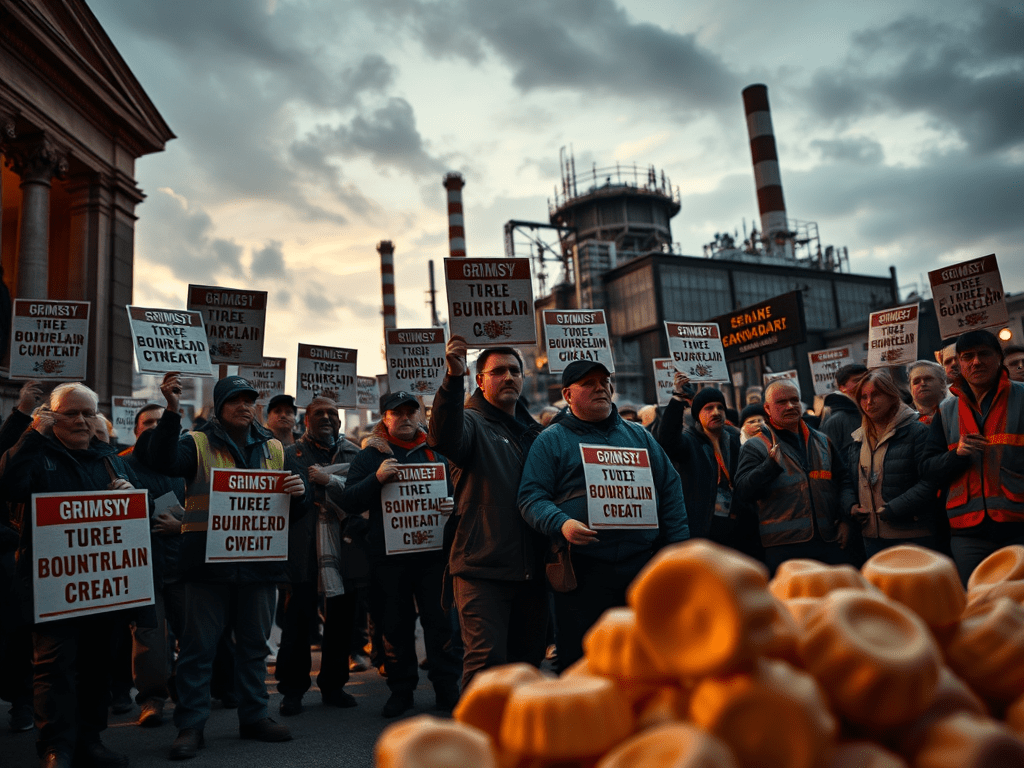
As workers rally outside Grimsby Town Hall and petitions swirl across the internet like a last-ditch SOS, the British government once again finds itself staring blankly at industrial collapse like it’s a mildly confusing Sudoku. This time, it’s a refinery—yes, one that actually produces something—that’s on the chopping block. But instead of bold action, we get press releases sprinkled with vagueness and promises flakier than a Greggs pasty.
🍭 The Death of Industry, Now in Vanilla Flavour
The refinery isn’t just a building full of vats and valves—it’s a pillar of regional economy, a monument to what’s left of the UK’s manufacturing backbone. But to Westminster? It might as well be a forgotten biscuit under a ministerial desk.
Cue the Unite rally and a Change.org petition that’s being passed around like a collection plate at a funeral. Workers are pleading for the government to invest in upgrades, provide tax incentives, or—God forbid—facilitate a sale that doesn’t involve quietly bulldozing the place into corporate dust.
Meanwhile, the political elite are too busy calculating the carbon footprint of their private jet to a climate summit to notice a community circling the drain.
Because we could save the refinery. We could treat these workers like essential cogs in a national machine. But that might mean acknowledging that real jobs in the real economy matter more than shareholder dividends or recycled promises from a spreadsheet bunker in Whitehall. 😐
Why pump public money into industries that make things, employ people, and contribute to GDP—when you can just clap on Zoom and call it economic policy?
💥
Challenges
💥
Will the refinery be saved, or will another vital workplace be sold for scrap while MPs get misty-eyed about “levelling up”? Let’s hear it: is this economic neglect or national sabotage?
Drop your fire in the blog comments (not just Facebook—real rebels type!). 🔥💬
👇 Comment. Like. Share. Tag someone who still believes in British industry.
The boldest takes will be featured in our next magazine issue. 🗞️🔥


 Chameleon Magazine
Leave a comment