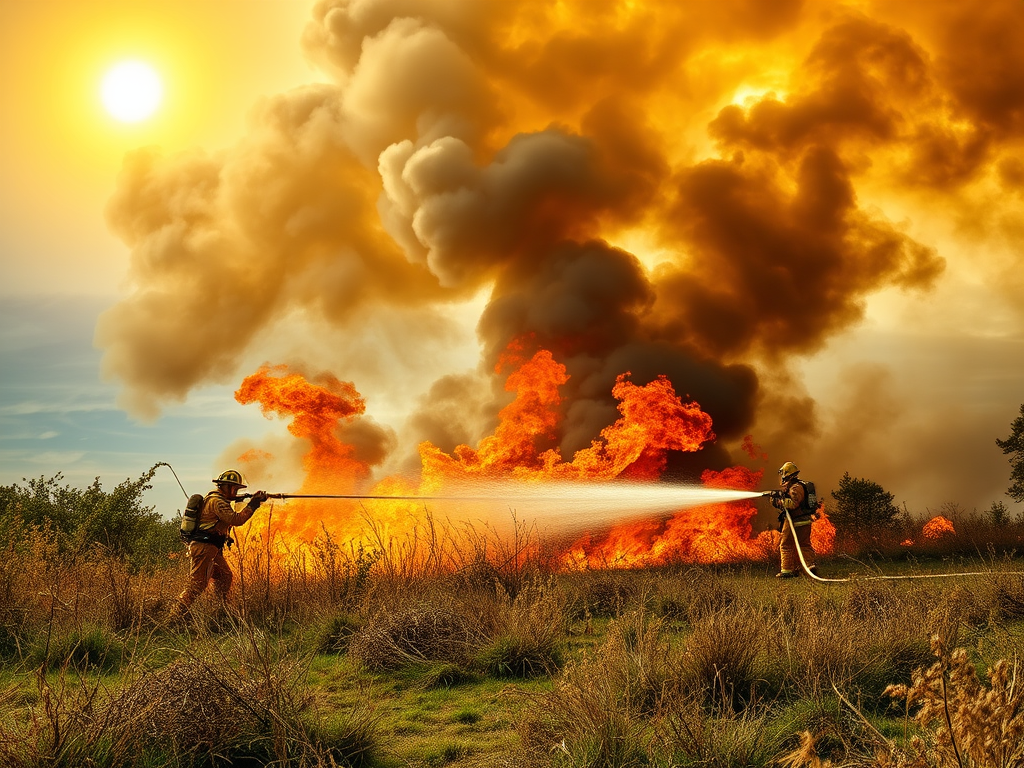
🔥🌾What began as a summer day in the countryside turned into a wall of smoke and fear as a fierce heath fire near Wimborne, Dorset, tore through the landscape, forcing evacuations and drawing in over 100 firefighters to battle the flames.
🚒 A Race Against the Wind
Dry grass, relentless heat, and shifting winds combined to turn the heath into a tinderbox. Flames leapt from one patch to the next, devouring gorse, brush, and anything else in their path. Fire crews worked in gruelling conditions—hauling hoses through uneven ground, dousing flare-ups, and cutting firebreaks in a desperate attempt to stop the spread.
Local residents described the sound of the fire as “like a freight train in the distance”—only the train was getting closer, and fast. Families scrambled to pack essentials, pets were bundled into cars, and the air filled with the smell of burning heather.
🌍 The Bigger Picture
This isn’t just “a bad fire season”—it’s a worrying sign of how British summers are changing. Heathland fires, once rare, are becoming an all-too-familiar threat. Experts warn that hotter, drier weather linked to climate change is leaving our countryside primed for these explosive blazes.
And here’s the kicker: heath fires aren’t just a danger to property—they devastate unique ecosystems, wipe out wildlife, and release massive amounts of stored carbon into the atmosphere.
🔥 Challenges 🔥
How do we protect communities without turning every summer into a rolling state of emergency? Should the UK invest more in prevention—controlled burns, firebreaks, and rapid-response units—before we’re fighting a losing battle each year? Drop your ideas in the blog comments. 🌿🚒
👇 Comment, like, share—because the next “major incident” might not give us the chance to prepare.
The most compelling takes will be featured in the next issue of the magazine. 📝🔥


 Chameleon Magazine
Leave a comment