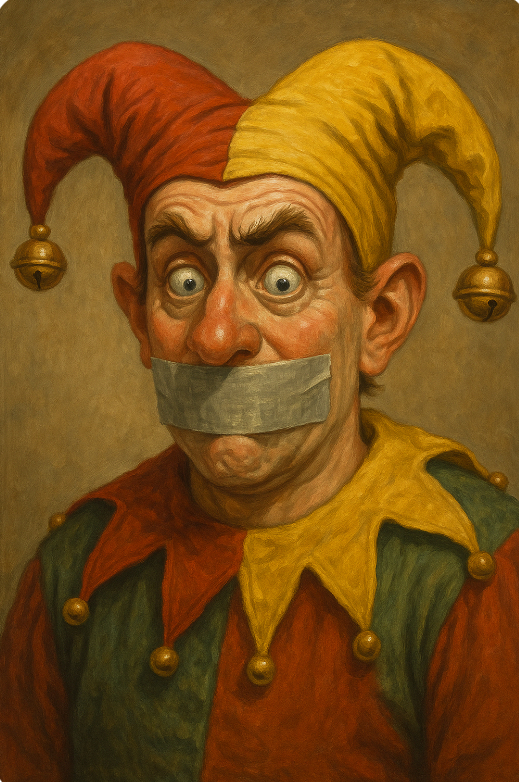
This isn’t just about misogyny, sexism, or any other single issue—it’s about something much bigger: the slow, quiet shift towards a Britain where people no longer say what they think. Not because they’ve suddenly changed their minds, but because they’re afraid. Afraid of cancellation. Afraid of prosecution. Afraid that one badly phrased sentence could see them branded, shunned, or dragged across the digital pillory of social media.
🗣️ When the Mouth Shuts, the Mind Stagnates
Once upon a time, Britain’s great tradition was robust debate—pub arguments, political sparring, satirical lampooning. We poked fun at everything from the monarchy to the man in the corner shop without worrying that tomorrow’s headlines would destroy our lives. Now, self-editing has become second nature. Every comment is mentally run through a legal team in your head before it’s said out loud.
The problem? When you can’t challenge an idea—whether it’s wrong, ridiculous, or just unpopular—that idea goes untested. And untested ideas fester.
🎭 The Death of Lampoon
Humour is one of the last safety valves in a free society. If you can laugh at something, you can strip it of its power. But try lampooning the wrong subject today and you might find your gig cancelled, your job gone, and your inbox full of fury. This means whole areas of public life are becoming no-go zones for comedy. The result is a culture where everyone still thinks what they think, but the conversation moves underground, whispered among trusted friends instead of tested in the open.
🧠 The Illusion of Consensus
When dissent is silenced, it doesn’t vanish—it hides. And when everyone’s hiding what they think, it starts to look like “everyone agrees.” That illusion of consensus is dangerous, because it allows bad ideas to spread unchallenged and turns honest disagreement into something taboo.
🔥 Challenges 🔥
Are we creating a society where no one dares say what they believe until it’s too late to stop what they fear? Do we really want a culture where the only safe opinions are the ones stamped “approved” by the loudest crowd? Drop your take—raw, satirical, or deadly serious—in the blog comments. 💬🔥
👇 Comment, like, share—because if free speech dies in whispers, maybe it can be revived in shouts.
The sharpest replies make it into the next magazine. 📝🎯


 Chameleon Magazine
Leave a comment