🎥💥Anas al-Sharif’s career was short but fearless. Born in 1996 in the Jabalia refugee camp, he rose from a volunteer at a small local network to a Pulitzer Prize–winning journalist with Al Jazeera. He trained at Al-Aqsa University, specialising in radio and television, and spent two years covering Gaza’s most dangerous frontlines.
His reporting was raw, emotional, and human—he didn’t just film the war, he lived inside it. He documented the bombed-out streets, the hunger, the funerals. He stayed when others left, even after his father was killed in an Israeli strike. It made him a voice for a trapped population.
But his death—killed in an Israeli drone strike on August 10, 2025, along with four other Al Jazeera journalists—was not just about silencing one voice. It sits inside a war that began with its own unthinkable act: Hamas’s October 7 attack on Israel.
🔥 How We Got Here
On October 7, Hamas fighters poured over the border into Israel in an assault that shocked the world. Civilians were slaughtered, families were burned alive in their homes, festival-goers were gunned down, and hundreds were taken hostage. The images were as horrifying as anything seen in modern conflict—war crimes broadcast in real time.
Israel’s response was massive and immediate, with the government declaring it would dismantle Hamas entirely. Gaza—densely populated, impoverished, and already under blockade—became the battleground. Airstrikes, siege tactics, and ground operations followed, killing thousands and destroying entire neighbourhoods.
The destruction we see now—the crumbling hospitals, the bombed schools, the starvation—flows directly from that initial Hamas massacre. That single day didn’t just ignite a war, it set in motion a chain of events where every casualty, including journalists like al-Sharif, is linked back to the moment Hamas chose mass murder over any hope of diplomacy.
📰 Journalism in the Crosshairs
Al-Sharif’s work in Gaza during this war was about more than news—it was survival testimony. His footage didn’t shy away from the scale of suffering, even when Israel accused him of being more than a journalist. The IDF claimed he was a Hamas operative, producing rosters, alleged salary records, and photos as “evidence.” But these claims remain unverified and heavily disputed by press freedom groups, who see them as part of a broader pattern—labeling inconvenient reporters as combatants.
His death underscores the most dangerous trend in modern warfare: killing the messenger has become an accepted tactic. And in Gaza, where information is scarce, every silenced journalist leaves the truth more vulnerable to distortion.
🌍 The War’s Brutal Arithmetic
Both sides have paid staggering costs.
- Israel: Over 1,200 killed in the October 7 attack, hostages still missing, communities near the Gaza border shattered.
- Gaza: Tens of thousands dead, over a million displaced, infrastructure destroyed, famine looming.
But the moral and strategic calculus remains grim: Hamas’s initial atrocities ensured Israel’s retaliation would be overwhelming. And in that retaliation, civilians, aid workers, and journalists have paid with their lives.
🐉 A Stark Reminder
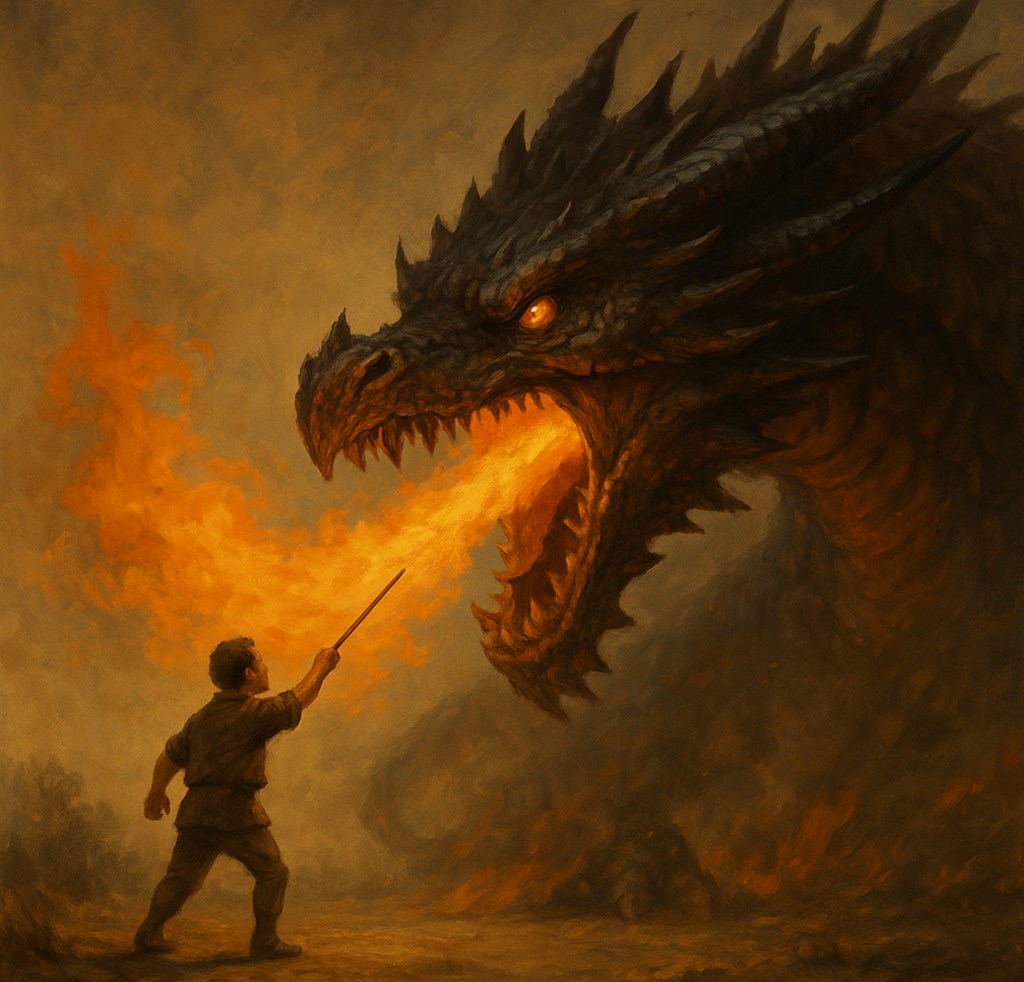
It may feel like a victory when a small group like Hamas—backed by the support of many in Gaza—manages to wound a country like Israel. But the aftermath of poking a dragon is brutally clear. The retaliation is not just swift; it is devastating, and it is the people caught in between who pay the ultimate price.
🔥 Challenges 🔥
How do we protect the truth in wars where both sides see the press as fair game? Can journalism survive when the battlefield itself is designed to bury inconvenient facts? Drop your thoughts in the blog comments. 📝⚡
👇 Comment, like, and share—because remembering how this war began is the only way to understand why it looks the way it does now.
The sharpest insights will feature in the next issue of the magazine. 📢📰


 Chameleon Magazine
Leave a comment