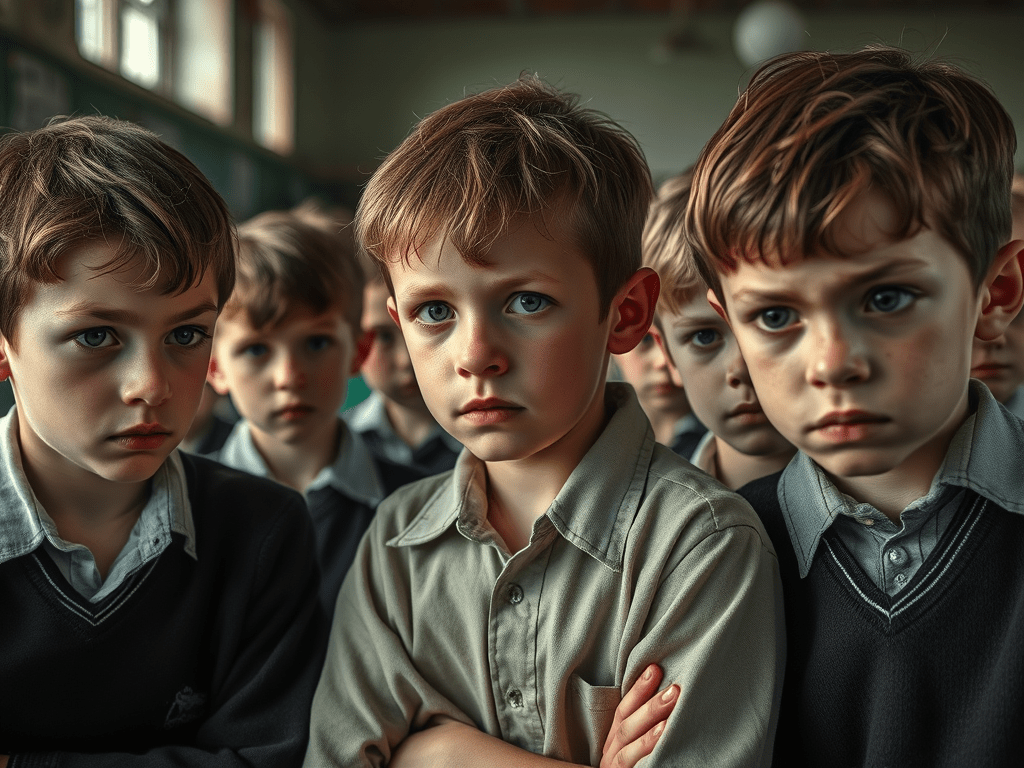
🎯👦Every few years, politicians rediscover the shocking news that white working-class boys are falling behind in education, then proceed to do absolutely nothing about it—except perhaps blame them for everything else wrong in society. Now Education Secretary Bridget Phillipson is at the lectern, but instead of fixing the issue, she’s part of the same machine that’s been happy to label these boys as trouble before they can even spell “opportunity.”
📚 Left Behind and Written Off
The statistics have been grim for years: poorer white boys consistently rank at the bottom for academic achievement, yet they rarely make it into the glossy equality campaigns or targeted funding schemes. They’re not a fashionable cause. They don’t tick enough diversity boxes. So instead of investment, they get moral lectures, low expectations, and the occasional photo-op from a minister who’ll vanish before the ink on the press release is dry.
Phillipson’s department is good at talking about “raising aspirations” but somehow terrible at actually creating conditions where those aspirations are possible. Because tackling the problem would mean facing the ugly truth: the education system is structurally biased against certain groups of kids, and those groups don’t always fit the neat political narratives.
Meanwhile, in the media and politics, white working-class boys are painted as future hooligans, petty criminals, or unskilled labourers—Britain’s bogeymen in tracksuits. We strip them of aspiration before they’ve even had a chance to form one, then wring our hands when they leave school without qualifications.
This isn’t just a national disgrace—it’s a deliberate blind spot. And the longer we keep ignoring it, the more we entrench another generation into the same cycle of low opportunity, low trust, and low outcomes.
🔥 Challenges 🔥
Why is it so hard for politicians to admit this problem without turning it into a culture war? And what would real change look like? Drop your takes—blunt, funny, or furious—in the blog comments. 💬📉
👇 Hit comment, hit like, hit share—before the next minister “discovers” this crisis in 2030.
The best replies will be featured in the next issue of the magazine—school uniform optional. 📝


 Chameleon Magazine
Leave a comment