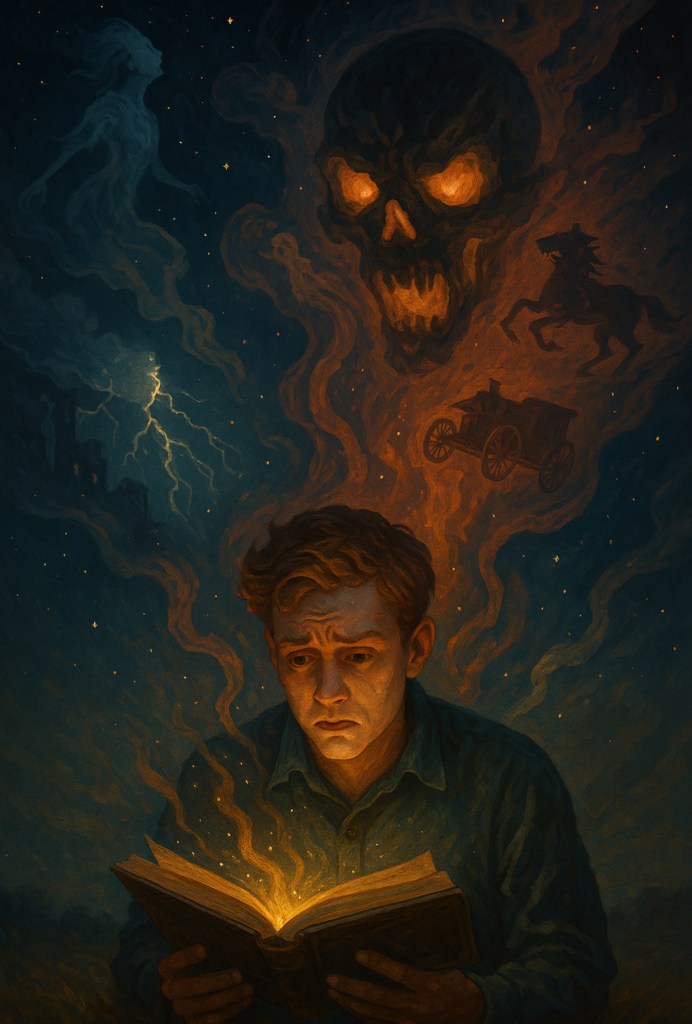
🎬🧠Seneca nailed it 2,000 years ago: “We suffer more in imagination than in reality.”
But try telling that to your brain — the same overzealous director that can turn a minor email from your boss into a full-blown mental blockbuster called You’re Definitely Fired and Probably Going to Live Under a Bridge.
🎭 The Theatre of Worst-Case Scenarios
Your mind is a magician, but not the cute, balloon-animal kind. No — it’s the dark, smoke-filled stage kind that pulls live tigers and unpaid bills out of hats. It takes a perfectly normal Tuesday and runs it through a high-budget disaster filter: storms, betrayals, humiliations, and a cameo from That One Thing You Said in 2009. By the time you’ve imagined every possible calamity, reality — when it finally knocks — usually just wants to borrow a cup of sugar.
🛑 Reality Is the Budget Version
Here’s the thing: reality rarely matches the horror trailer in your head. Most “big scary” moments are more like awkward indie films than Hollywood blockbusters. The job interview? Less gladiator arena, more awkward handshake. The dentist appointment? Not medieval torture, just mild discomfort and an overpriced lecture about flossing.
Our suffering multiplies because we pre-pay it — in full — with imaginary interest. It’s like buying travel insurance for a trip you never take, then paying extra to watch disaster re-enactments in your living room.
✨ The Antidote: Keep the Magic, Lose the Melodrama
The imagination is powerful — it’s what makes us invent, create, and dream. But it’s also what traps us in prisons with bars made of “what ifs.” So keep the magic, but redirect it. Use it to build the things you want instead of rehearse the disasters you don’t.
Because honestly? Reality’s rough enough without paying double for the director’s cut in your head.
🔥
Challenges
🔥
What’s the worst disaster you’ve ever over-imagined — and how boring was the real thing? Drop your stories in the comments so we can all laugh at our brain’s over-the-top special effects budget. 💬🔥
👇 Comment, like, share — and give your imagination a better script.
The most dramatic overreactions will be featured in the next issue of the magazine. 📝🎥


 Chameleon Magazine
Leave a comment