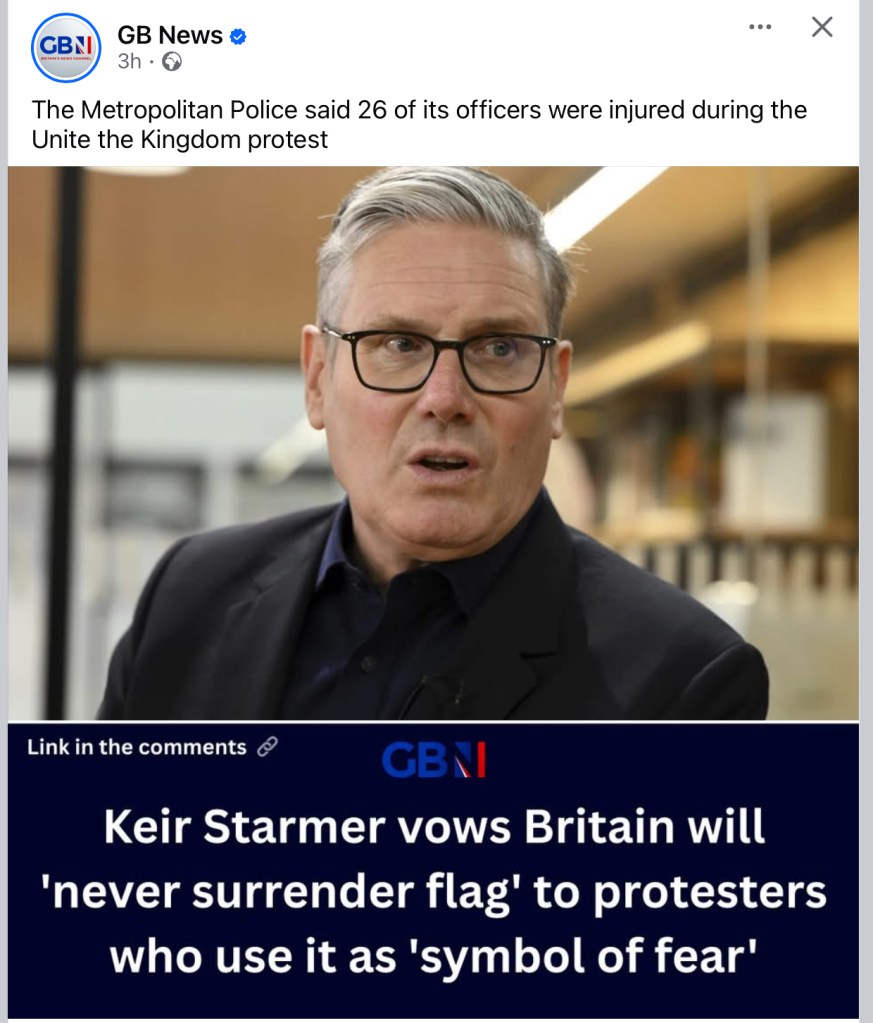
🎭🚩Keir Starmer shouts “never surrender the flag,” and suddenly the nation is under siege—apparently from a few rowdy protestors who managed to bruise some police officers’ egos (and perhaps their knees). Cue the headlines, the solemn anchors, the dramatic front pages. Britain was under attack! From… placards?
Meanwhile, the Notting Hill Carnival racks up 423 arrests like it’s playing Monopoly on hard mode. Serious incidents. Knives. A city stretched to its limit. But was this framed as a national crisis? Nope. Just another “colourful cultural weekend.” The coverage was quieter than a library on bank holiday Monday.
🎪 When Protest Is War, but Carnival Is “Community Spirit”
Here’s the trick: it’s not about numbers, it’s about narratives. Protests get dressed up as existential threats to the nation’s soul—great for pushing law-and-order crackdowns, or for politicians to look Churchillian while pointing at flags. Carnivals, though? Oh, that’s just “tradition.” Nothing to see here, folks—move along before you start asking uncomfortable questions about double standards.
If public safety really dictated outrage, the arithmetic would be simple. 26 injured officers vs. 423 arrests. But arithmetic doesn’t sell. Narrative does. And the narrative is this: protests challenge power, so they get demonised. Carnival doesn’t. So it gets shrugged off, even when it’s a logistical nightmare for police and locals.
It’s not chaos that frightens politicians. It’s dissent. 🎤💥
🔥 Challenges 🔥
Why do we buy into these lopsided stories? Why are “protests” magnified into national emergencies while carnivals are politely tiptoed around? Which version of Britain are we being sold—and who benefits when fear is inflated or deflated on demand? 🤔
👇 Drop your thoughts in the blog comments. Don’t just rant on Facebook where your nan’s only reply is “xoxo.” We want your raw, unfiltered takes.
The sharpest ones will make it into the magazine. 📝⚡


 Chameleon Magazine
Leave a comment