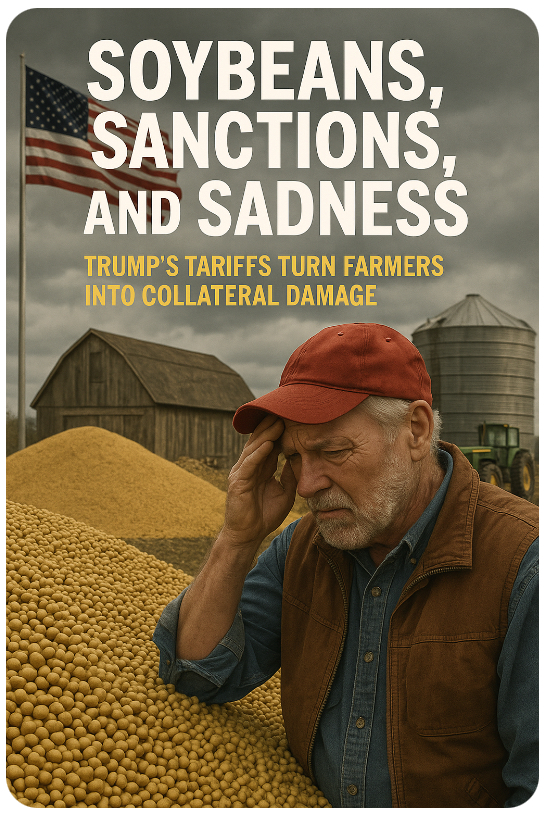
America’s soybean farmers are learning the hard way that trade wars are less “4D chess” and more “setting your own barn on fire and hoping the wind changes.” With Trump’s tariffs sparking retaliation from China—the biggest buyer of US soybeans—Midwestern fields are overflowing with crops no one wants to buy. The soy sits, the bills pile up, and the farmers who cheered for “America First” are discovering it might mean “Farmers Last.”
🫘 From Golden Harvests to Rotting Piles
It’s almost poetic. Farmers who once shipped their beans across the Pacific with the confidence of Wall Street brokers are now staring at silos fuller than a Thanksgiving plate. China, which once devoured over half of America’s soybean exports, didn’t blink. They just turned to Brazil and Argentina, slapped a bow on the deal, and told the U.S. to enjoy their bean buffet at home.
The result? Soybeans are so backed up that traders joke about needing “soy cemeteries.” Except it’s not funny when you’ve got loans, equipment costs, and land payments looming like storm clouds over a drought-stricken field. The irony? Soybeans were supposed to be the golden child of U.S. agriculture—protein-rich, globally in-demand, and a pillar of the rural economy. Now they’re the poster crop for how not to win a trade war.
🚜 Patriotism Doesn’t Pay the Bills
What makes this Shakespearean is the political theater. Many farmers voted for Trump, clapped at his rallies, and believed promises of “tough negotiating.” They got the “tough,” but not the “negotiating.” Instead of prosperity, they’ve been handed subsidies that barely scratch the surface—government handouts dressed up as “patriotic assistance.”
But here’s the kicker: farmers don’t want bailouts. They want buyers. They want markets. They want the freedom to sell soybeans, not pity checks that cover diesel for a month while millions of dollars rot in grain bins.
The administration’s message? “Hang tough. Sacrifice. Be patient.” Which is rich, considering the folks giving that advice aren’t watching their livelihoods ferment into livestock feed. Try telling a banker “patriotism is my payment plan” and see how fast your tractor gets repossessed.
🌍 The Global Soy Swap
China didn’t just shrug off American soy—they weaponized their shopping list. Brazil now sells beans like carnival candy, with farmers there cashing in on America’s political miscalculation. Meanwhile, other global buyers who used to rely on the U.S. have shifted too, because once supply chains move, they don’t just snap back like elastic. That’s the ugly truth: even if tariffs magically disappeared tomorrow, American farmers might not get those buyers back.
The trade war wasn’t a chess match. It was a food fight where the U.S. brought a fork to a bazooka battle.
🥴 Soybean Surrealism
Here’s the picture: barns stuffed with beans no one wants, farmers juggling loans with government checks that feel like Monopoly money, and Brazil popping champagne while American farmers pop antacids. It’s not just bad economics—it’s tragicomic performance art. America’s farmers were told they’d win big. Instead, they’re watching the biggest agricultural market in the world slip permanently out of their hands.
And for what? A headline. A slogan. A red hat.
🔥 Challenges 🔥
Why are hardworking farmers—who literally feed the nation—being turned into disposable pawns in a political stunt? Where’s the line between “tough negotiations” and flat-out sabotage of your own people? And the big one: can rural America forgive being left to choke on its own soy?
👇 Sound off below. Are the tariffs justified sacrifice or just self-inflicted wounds? Drop your hottest takes in the comments, roast the policy, or defend it if you dare. 💬🔥
The boldest burns and sharpest insights will be featured in the next issue of the magazine. 📝💥


 Chameleon Magazine
Leave a comment