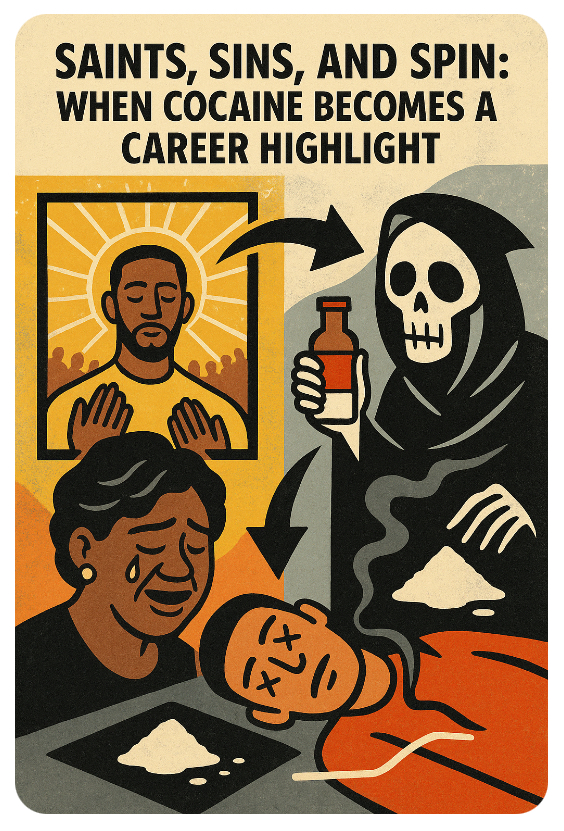
💀✨The British media loves a neat story arc: the dreamer, the achiever, the fallen hero. It’s a script we’ve seen so many times it practically writes itself. But when tragedy strikes, that script often slides from honesty into something far more dangerous — myth-making. And that’s exactly what’s happening with Jamal Edwards.
Brenda Edwards, grieving mother and respected TV personality, is front and centre of this retelling. Her pain is genuine, her love for her son beyond question. But pain and love don’t excuse distortion. What the public is being fed isn’t the truth — it’s a sanitised highlight reel stitched together with grief and good intentions.
Because here’s the blunt fact: Jamal didn’t die battling injustice, he didn’t die serving humanity, he didn’t die making the world a better place. He died after mixing alcohol and cocaine, a fatal cocktail that triggered cardiac arrest. That’s not inspirational. That’s a lesson in consequences.
📺 The Cult of Selective Memory
We live in a country where young men get locked up for a tenner’s worth of weed, where careers are torpedoed for a single drug charge, where politicians still preach “just say no” like it’s a sacred mantra. Yet if you’re successful, talented, and photogenic, suddenly the conversation changes. Suddenly, your drug-fuelled death is softened into tragedy-without-blame, and your life is packaged as a template for “the next generation.”
It’s not just hypocrisy — it’s gaslighting. Society tells working-class kids: “Drugs will destroy you.” Then it turns around and parades someone destroyed by drugs as a paragon of success. What’s the message? That drugs are deadly unless you’ve got an MBE? That your mistakes get erased if your CV is glamorous enough?
And let’s not forget the double standards. If a less-loved public figure dies in a haze of narcotics, the headlines scream downfall, disgrace, shame. But Jamal? We’re spoon-fed words like “icon,” “pioneer,” “role model.” When we erase the ugly truth, we don’t just insult honesty — we risk encouraging others to think the same fatal choices come without cost.
🙅 The Dangerous Myth of Perfection
There’s a reason we’re so obsessed with airbrushing role models. Society craves heroes, and heroes must be spotless. But real life doesn’t work that way. People are messy, complex, contradictory. Jamal did great things: he launched careers, opened doors for British artists, and built a platform that mattered. That deserves recognition. But the very same man made choices that ended his life far too early.
If we can’t admit both sides, we’re not building role models. We’re building statues — brittle, hollow, destined to topple under the weight of reality. And what lesson does that leave for young people? That you can’t make mistakes? That flaws must be hidden? Or worse — that your flaws won’t matter if you’re famous enough to reframe them?
🎭 Grief vs. Truth
Here’s the hardest part: Brenda Edwards is not the villain. She’s a mother protecting her son’s legacy in the only way she knows how. But when grief collides with platform, the truth often gets smothered. ITV isn’t broadcasting raw honesty — it’s producing myth. The media doesn’t do this for the sake of Jamal’s memory; it does it because audiences want stories of fallen angels, not messy human beings.
But if we care about young people — if we actually care about saving lives — then honesty matters more than myth. Celebrate Jamal’s vision, yes. Celebrate his achievements, yes. But to ignore the cocaine is to ignore the very thing that killed him. That’s not just misleading. That’s dangerous.
🚨 Challenges 🚨
So let’s cut the PR. Why do we need saints instead of flawed humans? Why do we plaster over drug deaths with inspirational speeches when the truth could actually save someone else? Should Jamal Edwards be remembered as an icon, a cautionary tale, or both? Drop your thoughts below — no varnish, no filters. 🕶️💬
👇 Comment, like, and share — not on Facebook’s echo chamber, but right here where it counts. The sharpest takes, the most unflinching truths, will be featured in the magazine. 📝🔥


 Chameleon Magazine
Leave a comment