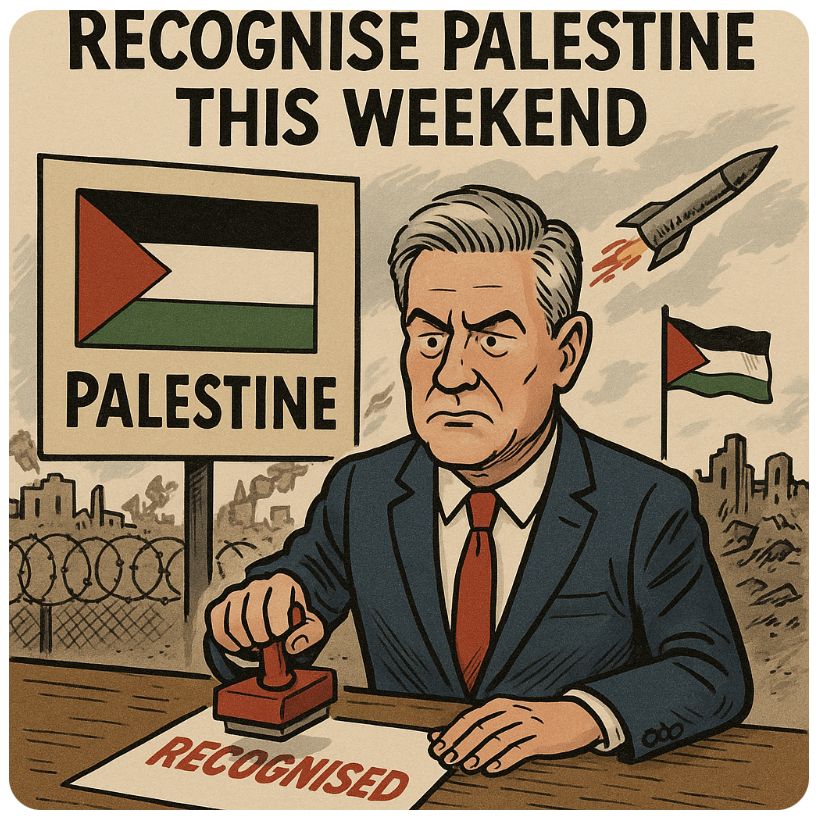
🎤🌍🇬🇧Keir Starmer is preparing to “recognise Palestine” this weekend—as if stamping his approval on a conflict that predates his career is some kind of geopolitical magic trick. Of course, the announcement will wait until Donald Trump’s state visit is done, because nothing says “sovereign decision-making” like scheduling your foreign policy around America’s hotel bookings.
But here’s the question: how many times can Britain “recognise” Palestine before it stops being recognition and starts being performance art? Every few years, a Western leader dusts off the script, nods solemnly, and gestures toward “peace” while both sides carry on exactly as before.
🪓 Loving the Hardship More Than the Hope
The bitter truth? Palestinian leadership has mastered the theatre of suffering while failing their own children. It’s hardship as identity, grievance as currency. Every international “recognition” becomes another round of applause for a leadership more invested in its eternal victimhood than in the messy business of building a stable, functional state.
And yet, Western politicians still show up like stage magicians: “Now you see a nation, now you don’t!” Recognition after recognition, while rockets fly, settlements expand, and children inherit nothing but the same tragic script.
📜 Symbolism Over Substance
Starmer isn’t ending the conflict; he’s lighting another candle in the shrine of symbolism. He knows it, the Palestinians know it, Israel knows it, and Brussels will issue a carefully worded statement to confirm it. Recognition is cheap, and that’s exactly why politicians hand it out.
Meanwhile, the children trapped in Gaza and the West Bank don’t need recognition—they need a future. But that requires leadership that loves life more than martyrdom, and policies grounded in reality rather than eternal grievance.
🔥 Challenges 🔥
Does “recognition” mean anything when it changes nothing? Or is Britain just indulging in political cosplay while real people keep paying the price? Drop your fiercest takes in the blog comments. 💬⚡
👇 Comment, like, and share this post. Call out the empty symbolism, or defend it if you must. The sharpest voices will be published in the next magazine. 📝🔥


 Chameleon Magazine
Leave a comment