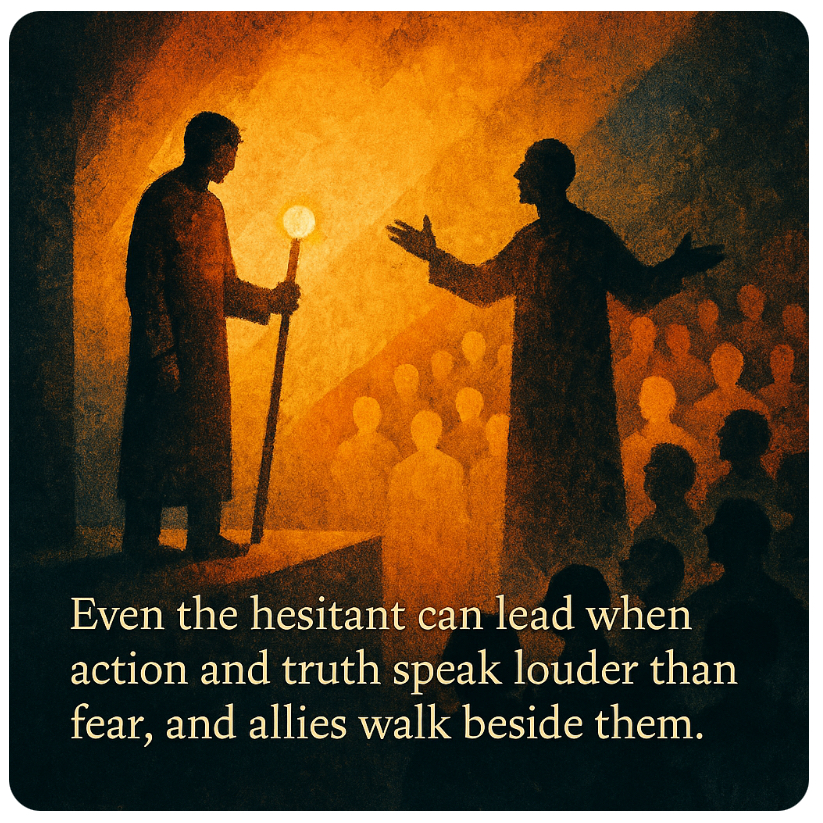
Jordan sat in the back of the community hall, clutching a weathered walking stick. The board had asked him to lead a campaign against the city’s new eviction law, but he shook his head.
“They won’t listen to me,” he said. “I don’t speak well. They’ll laugh me off the stage.”
His mentor leaned forward. “What’s in your hand?”
Jordan glanced down. “This? Just my stick.”
“Throw it.”
He dropped it, and it clattered across the floor, startling everyone. “Pick it up,” the mentor said. He did, and as he lifted it, he saw that the room had fallen silent. Every eye was on him, waiting. For the first time, he realized the stick wasn’t just something to lean on — it was a symbol of every march, every protest, every long walk he had already survived.
Still, he stammered, “I’m not a speaker. I’ve never been.”
“Who made your voice?” the mentor asked. “Take Aaron with you. He’ll speak. You act. Together you’ll move them.”
That night, Jordan returned home and told his partner, Lila, about the plan. She frowned but pulled their son close and whispered, “Then we all go with you.” She packed a bag, though her eyes held fear.
The next day, Jordan and Aaron stood before the tenants and elders of the block. Jordan lifted his stick, Aaron spoke the words, and together they told the people:
“The city has forgotten you, but justice has not. You will not be abandoned.”
And the people, weary from years of being ignored, believed. For the first time in a long while, they bowed their heads — not in defeat, but in reverence for hope reborn.
Even the hesitant can lead when action and truth speak louder than fear, and allies walk beside them.


 Chameleon Magazine
Leave a comment