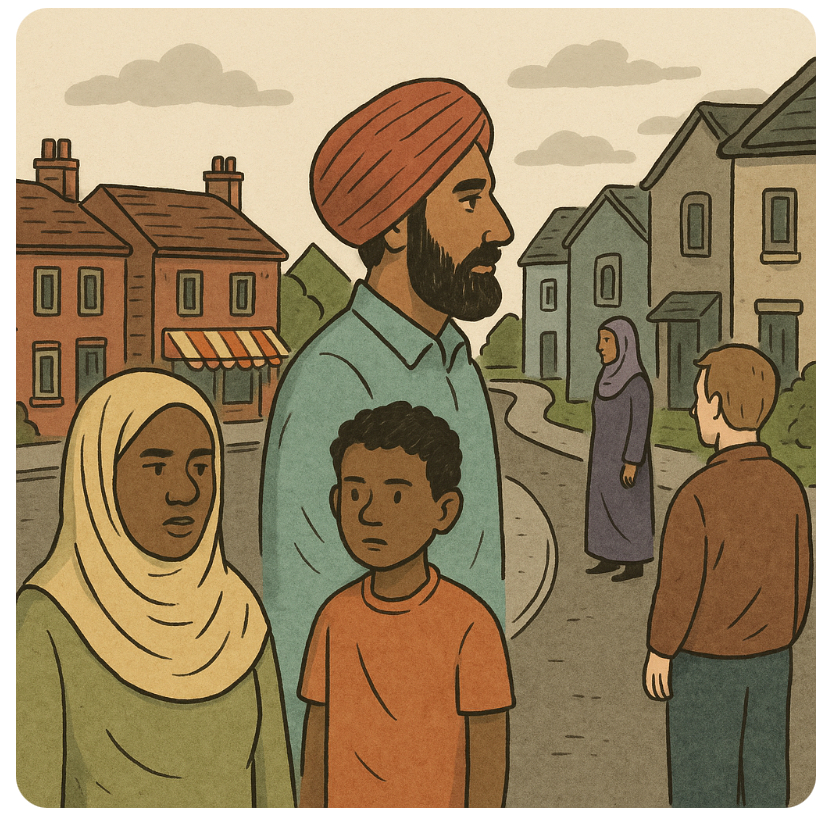
The dream was simple: bring in people from around the world, watch them integrate, innovate, and enrich Britain’s future. But reality has a much harsher punchline. Instead of one united, turbo-charged economy, what we’ve got is a patchwork of “little countries” sprouting up inside our borders—pockets of poverty relocated rather than solved. It turns out moving communities across continents doesn’t magically transform them into tech moguls or entrepreneurs. If anything, it just shifts the struggles from Karachi to Bradford, Mogadishu to Birmingham, Dhaka to Walsall.
🚪 Integration or Isolation?
Government policy sold us on “integration,” but the groundwork was never laid. Schools, housing, jobs, and services weren’t scaled up to handle it. What followed was predictable: communities clustering together, recreating the life they left behind. Shops, languages, food, traditions—beautiful on the surface, but often disconnected from the local economy around them. Instead of blending, Britain got parallel lives.
And let’s be honest—politicians love to pat themselves on the back for “celebrating diversity,” but when was the last time they bothered to create real pathways into innovation, skills, and industries? Culture thrives, but the economy stagnates. You can’t run a country on samosas and slogans.
💸 The Poverty Cycle, Relocated
The harsh truth: if people flee poverty-stricken nations, why would anyone expect them to suddenly become Silicon Valley in Sheffield? Without training, opportunity, or infrastructure, all you’ve done is import poverty, not productivity. Walsall, Bradford, and Middlesbrough aren’t failing because they’re diverse—they’re failing because government dumped people there without any economic scaffolding to support them.
It’s not about blaming communities. People come here for better lives. But instead of creating ladders to climb, Westminster hands them broken rungs and then wonders why they don’t reach the top.
🏚️ Britain’s Silent Segregation
Look at Britain today:
- Bradford – called “Britain’s curry capital,” yet suffers some of the highest child poverty rates.
- Birmingham – home to dozens of global cultures, but riddled with unemployment and underfunded schools.
- Liverpool & Manchester – rich histories of migration, now grappling with poverty levels that rival the 1980s.
The failure isn’t the migrants—it’s the model. Britain imported communities without building the economic engine to drive their futures. We’ve ended up with fragments of the world dotted across our map, stitched together by bus routes and neglect.
🔥 Challenges 🔥
So here’s the uncomfortable question: is Britain’s “integration policy” really just a cover for dumping people into cheap housing zones and hoping for the best? Should we blame migrants for not becoming instant innovators—or governments for never giving them the chance?
👇 Unload your thoughts in the comments: is this cultural enrichment without economic payoff? Or a colossal government failure dressed up as diversity?
The sharpest takes will be featured in the next magazine issue. 🎯📝


 Chameleon Magazine
Leave a comment