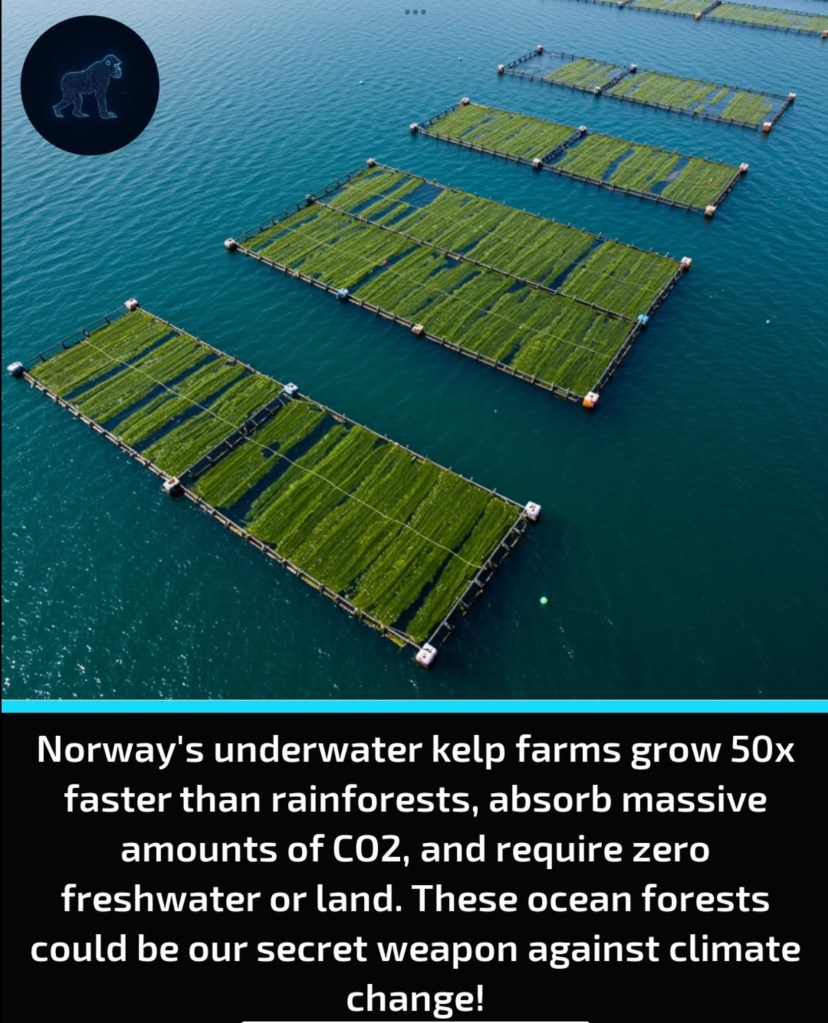
Move over Amazon rainforest—Norway’s kelp farms are here to flex. These slimy underwater superstars grow 50 times faster than rainforests, inhale CO2 like it’s a cheap cocktail, and don’t guzzle a drop of freshwater or hog an acre of land. While politicians are still arguing over paper straws and plastic bags, these ocean forests are quietly becoming the climate crisis MVPs.
🐟 Kelp Is the New Cash Crop (and Climate Savior)
Forget your avocado toast or almond milk lattes—kelp is the real green revolution. Anchored in giant underwater grids, Norway’s seaweed farms are creating vast carbon-sucking jungles that don’t require chainsaws, bulldozers, or displacing indigenous communities. They’re the introverts of the plant world: working hard, asking for nothing, and saving your sorry exhaust-spewing backside while you’re bingeing Netflix.
And let’s not downplay this—if rainforests are the lungs of the Earth, kelp farms are basically industrial-sized oxygen factories on steroids. Each swaying blade is slapping climate change across the face, whispering, “How’s that CO2 level now?” Meanwhile, land-based farming is busy draining rivers, frying soil, and belching methane into the sky like an all-you-can-eat buffet at a cow convention.
But here’s the kicker—kelp farming is still a niche gig. Why? Because it’s not sexy enough for Wall Street. Oil executives won’t swap pipelines for seaweed strings, and governments prefer ribbon-cutting at airports over celebrating floating salads.
🔥 Challenges 🔥
Why isn’t kelp farming on every coast yet? Is it because we’re too obsessed with fossil fuels, or because seaweed doesn’t come with a fancy influencer campaign? Should Norway be leading the world on this, or are we all just waiting until the last iceberg melts? 🌍💥
👇 Drop your thoughts below—will kelp save us, or are we too busy choking on smog to notice? Comment, like, and share.
The smartest, spiciest takes will be featured in the next issue of the magazine. 📝🔥


 Chameleon Magazine
Leave a comment