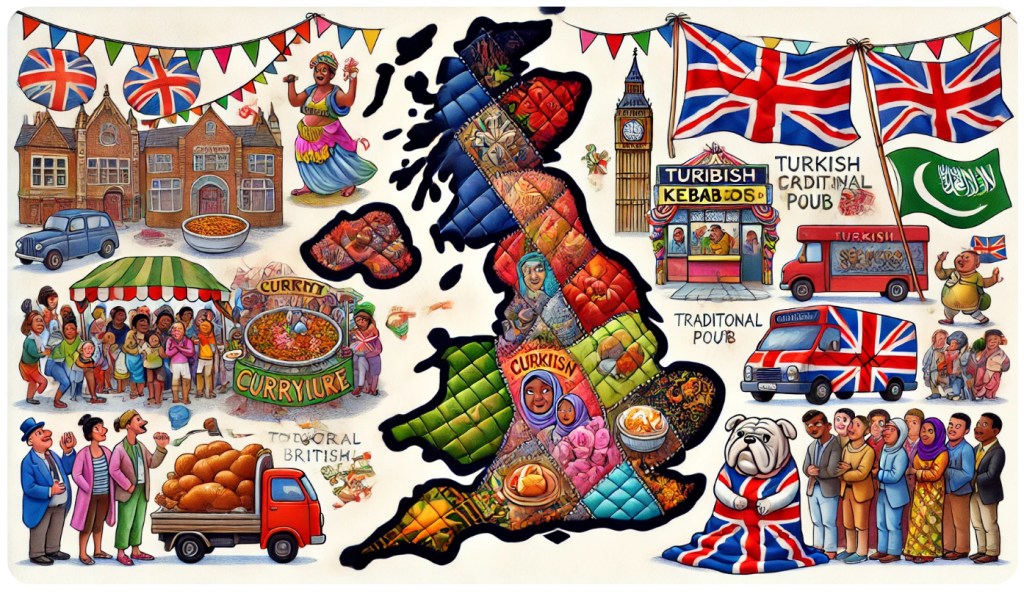
On paper, multiculturalism in Britain is meant to be a celebration of diversity—a patchwork of languages, foods, traditions, and perspectives stitched together under one Union Jack. In reality, for many Brits, it looks more like a series of little “mini-homelands” springing up, each recreating a slice of somewhere else while still cashing in on the perks of being here. The question that lingers like steam off a Sunday roast: is this diversity enriching Britain, or slowly unravelling the fabric that’s meant to hold the place together?
🍛 Curry, Chaos, and Complaints
First, let’s give credit where it’s due. Britain without multiculturalism would be a culinary wasteland. No curry houses, no jerk chicken stalls, no Turkish kebabs at 2 a.m. when chips alone won’t cut it. The country’s music, art, sport, and street culture have all been supercharged by influences from across the globe. From Notting Hill Carnival to the Premier League, Britain’s “brand” thrives on this mash-up of heritages.
But here’s the rub: food and festivals are easy to love. It’s when questions of loyalty, integration, and values crop up that the cracks start to show. Many Brits feel that while people are happy to take the best of Britain—the healthcare, the education, the relative stability—the return gift of loyalty to the flag, shared values, or even just a willingness to blend in feels, well… optional.
And worse, once comfortable, some newcomers start pointing out everything Britain does “wrong.” From how we queue (sacred ritual!) to how we cook meat, nothing escapes critique. It’s one thing to share your culture, quite another to scold your host.
🏡 Parallel Lives or Shared Future?
The bigger issue isn’t about who makes the best biryani—it’s about community cohesion. Walk around certain parts of British cities and you’ll see entire streets, schools, and local economies that function almost entirely in their own bubble. Different languages, different customs, different rules of the game.
For some, that’s Britain at its best: a mosaic of cultures, each proudly maintained, each enriching the other. For others, it looks more like division—parallel lives being lived side by side, with very little actual mixing. Polite nods on the bus, yes. Genuine friendships and shared identity, less so.
The truth is multiculturalism has always been sold as if it guarantees harmony. But harmony isn’t automatic—it takes effort, compromise, and yes, a bit of loyalty to the country that’s housing everyone under one national roof. Otherwise, it’s less a patchwork quilt and more a patchy one, with seams ready to rip.
🇬🇧 The Identity Tug-of-War
The heart of the debate isn’t whether multiculturalism has benefits—it obviously does—but whether Britain itself still knows what it is. If the locals can’t articulate British values beyond “tea and fairness,” how are newcomers meant to integrate into them?
And yet, people do feel a shift. A nagging sense that while Britain is endlessly generous with its benefits, the loyalty returned is conditional. Patriotism here has become suspicious, almost embarrassing, while every other community is encouraged to celebrate their heritage loudly and proudly. The imbalance sticks out like Big Ben on a grey day.
Maybe multiculturalism isn’t failing—it’s just unfinished. Maybe the problem isn’t with immigration but with integration. Without a clearer sense of what Britain demands in return for its welcome, it’s no surprise people set up little versions of “back home” and carry on as if nothing changed.
🔥 Challenges 🔥
Is multiculturalism Britain’s greatest strength—or its slow undoing? Should immigrants be asked to integrate more, or should Britain just accept it’s now a nation of many nations under one flag? Where’s the line between preserving heritage and pledging loyalty to your new home?
💬 We want your takes—raw, honest, funny, furious, or thoughtful.
👇 Smash comment, smash like, smash share. Don’t just debate this on Facebook—get it down in the blog.
The sharpest, spiciest voices will feature in the next issue of the magazine. 📰🔥


 Chameleon Magazine
Leave a comment