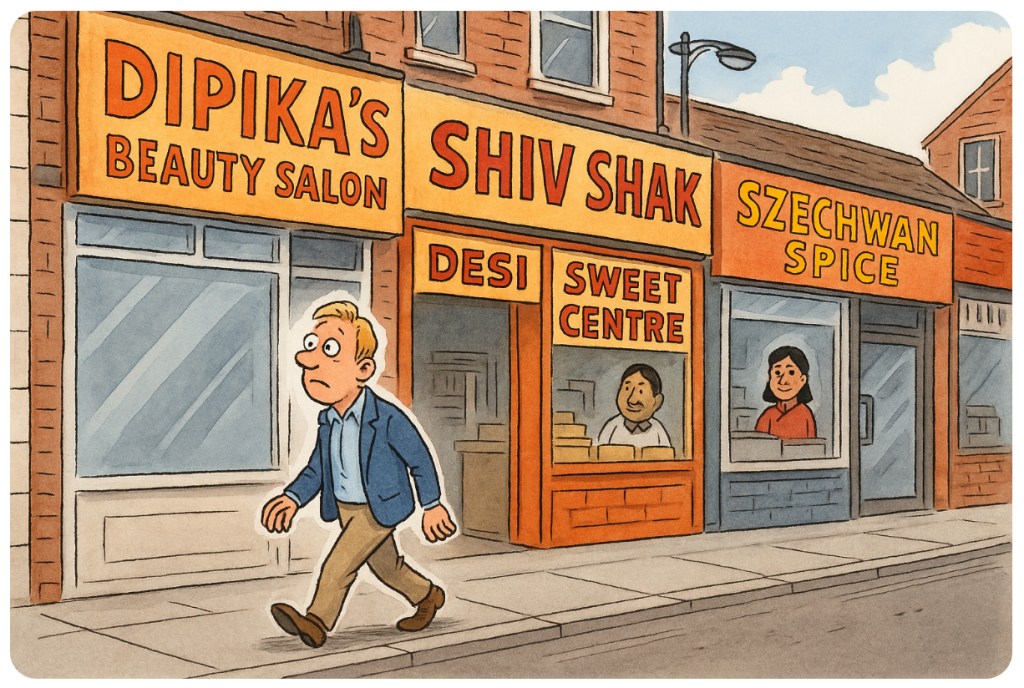
Step aside, “multicultural Britain”—we may have crossed into unrecognisable Britain. A casual stroll through North Evington, Leicester, reveals a town where the Queen’s English has gone on permanent sabbatical. With 43% of locals unable to speak the national language, you might need Google Translate just to buy a bag of crisps.
🏝️ Welcome to the United Nations of Leicester – No Passport Required
Your first clue that you’re not in Kansas anymore? Good luck ordering fish and chips. Here, it’s all samosas, paneer rolls, and chicken momos as far as the eye can see. Forget Greggs—try Szechwan Spice for breakfast. Dipika will thread your eyebrows while Shiv Shak slings street food from three time zones away.
And let’s be clear: this isn’t “cultural diversity” in the Paddington Bear sense. This is full-on linguistic fragmentation. Local councillors can’t speak to their constituents without an interpreter, shopkeepers raise an eyebrow at the word “receipt,” and asking for directions in English gets you blank stares or Bollywood-level confusion.
It’s not about race. It’s about integration—or the spectacular lack thereof. At what point does multiculturalism stop being a celebration and start becoming a Balkanisation? Is it still “community” if no one can understand each other?
There’s a difference between a vibrant melting pot and a linguistic landfill—and North Evington might be edging toward the latter. When the local high street feels like a layover in Dubai and Mumbai, you start wondering if the national identity has been quietly replaced with coriander and confusion.
🧠 Challenges 🧠
What does it really mean to be British if whole neighbourhoods feel like cultural enclaves with no bridge back? Does this level of disconnection actually serve anyone—including immigrants themselves?
💬 Say your piece in the blog comments, not just Facebook! Is this a story of community or chaos? Should speaking English be expected, or is that just old-school thinking in a world of “global Britain”?
👇 Comment, like, share, and tell us—have you ever felt like a tourist in your own town?
The boldest, sharpest, and most painfully accurate takes will get featured in the next issue. 📣📝


 Chameleon Magazine
Leave a comment