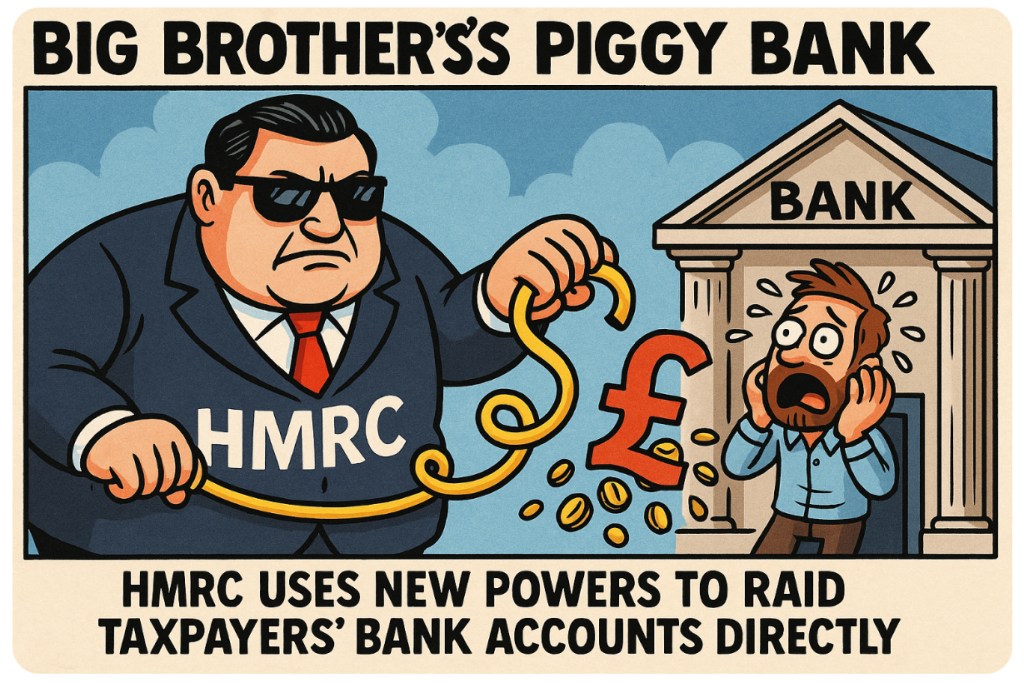
HMRC can now take money straight from bank accounts for debts over £1,000 — and people are already wondering whether the state just turned their savings into fair game.
⚠️ The Taxman’s Direct-Access Debit — Efficient Policy or Trust-Breaker?
Because nothing screams “fair play” like the taxman helping himself straight from your bank account, HMRC now has the power to raid balances if you owe more than £1,000. No awkward letters, no long-winded negotiations — just a silent shuffle from your pocket into the Treasury’s. Think of it as a direct-debit mugging, only with more paperwork and less balaclava.
The official spin? It’s all about “efficiency” and targeting those who “refuse to pay.” The reality? A debt threshold so low it could trap ordinary people who missed a payment, filed late, or got tangled in HMRC’s famously labyrinthine bureaucracy. Imagine logging in to check your balance and realising your rainy-day fund just got stormed by the taxman. ☔➡️💀
And let’s be blunt: HMRC’s systems aren’t infallible. Miscalculations happen, appeals get delayed, and human error is a thing — now with immediate financial consequences. Meanwhile, billion-pound corporations keep dancing around loopholes with teams of accountants. But if you’re an individual who falls behind on a grand, brace yourself for an HMRC smash-and-grab.
🔒 Trust, Banking, and the New Flight of Funds
This isn’t just about one-off seizures — it’s a trust wound that will fester. People will start asking: can I trust my bank balance to be mine? And when the answer feels shaky, behaviours change. Expect more cash withdrawals, splitting accounts, moving money into joint accounts or credit unions, or simply asking banks tough questions about legal protections. Some will scan headlines and consider riskier options — a worrying sign that faith in financial institutions and the rule of law is fraying.
Important note: taking steps to hide money to evade legitimate debts or legal process is illegal and risky. The predictable and lawful responses are the ones that help keep you safe: contact HMRC, dispute incorrect charges, negotiate a Time-to-Pay arrangement, or get independent financial or legal advice. But even those sensible steps don’t stop the headline impact — a government that can sweep accounts by statute erodes confidence, and confidence is the oil that keeps markets and high-street banking running. 🧾⚖️
🔥 Challenges 🔥
This is the part where you get loud — and practical:
- Are we comfortable with a system that can remove someone’s entire safety net without a court order?
- Will this push ordinary people towards risky workarounds or undermine saving and investing?
- Is this efficient debt collection or a shortcut that punches holes in civil liberties and public trust?
👇 Tell us your plan: fight, cajole, or lawyer up? Share real stories, practical tips (legal ones!), and your angriest hot takes below. 💬🔥
The best, sharpest and most useful comments will be featured in the next issue of the magazine. 🎯📝


 Chameleon Magazine
Leave a comment