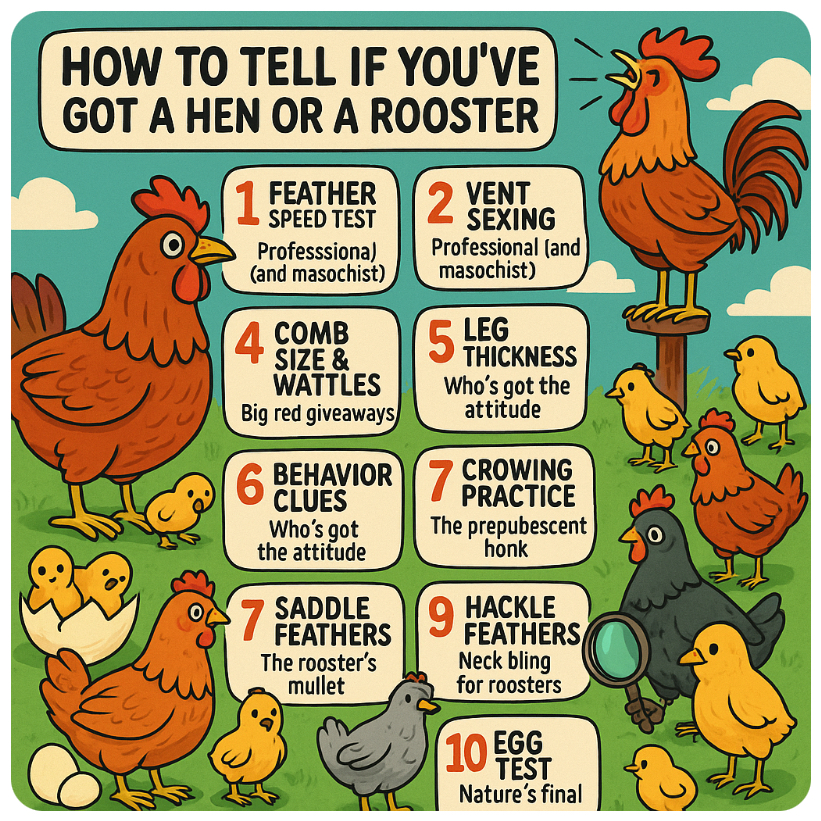
Sexing chickens: it’s not as risqué as it sounds, but it is one of the most hilariously underrated mysteries of modern poultry farming. Want to know whether your fluffy chick is the egg-layer of your dreams or the next 4 AM wake-up call? Strap in. We’re about to go full CSI: Coop Scene Investigation.
🐓 The Feathered Gender Reveal Party No One Asked For
Forget balloons and pink cupcakes — chicken sexing is part art, part science, and mostly just peering at fluffy butts while pretending you know what you’re doing.
Whether you’re a backyard hobbyist or the Elon Musk of egg production, knowing if your chick will crow or lay is crucial. No pressure, right?
Here’s how to separate the hens from the he-hens — no fortune cookie required:
1. Feather Speed Test – Nature’s Gender Fast-Track
✂️Chicks of certain breeds grow wing feathers at different rates. Females often sprout primary feathers faster, while males lag behind like they forgot their homework. You’ll need a good eye and a steady hand — or just a lot of spare time and a magnifying glass.
2. Vent Sexing – For Professionals (and Masochists)
🍑This is the full-throttle, licensed-pro method. It involves flipping the chick over and inspecting the vent (cloaca) for microscopic anatomical differences. Warning: unless you’re a trained expert, you’ll either misidentify 50% or traumatize the chick and yourself.
3. Color Sexing – Chickens with Built-In Gender Coding
🎨Some hybrid breeds are “sex-linked,” meaning boys and girls hatch with different down colors. It’s like Pokémon — but messier and with more peeping.
4. Comb Size & Wattles – The Big Red Giveaways
🔻As chicks grow, boys usually develop larger, redder combs and wattles earlier than the girls. Think of it as puberty on fast-forward — complete with awkward crowing and questionable fashion choices.
5. Leg Thickness – Chicken Gym Bro Test
🏋️Males often have thicker, meatier legs. Hens are daintier, more refined… until they start chasing you for snacks like velociraptors.
6. Behavior Clues – Who’s Got the Attitude?
😤Cockerels (young males) start to square off, puff out chests, and play-fight. Hens tend to be calmer, more focused on scratching around like they’ve lost their car keys.
7. Crowing Practice – The Prepubescent Honk
📢If your chick starts making sounds like a broken trumpet at 6 weeks, congrats — you’ve got a future alarm clock. Hens never crow… unless you really confuse them (true story).
8. Saddle Feathers – The Rooster’s Mullet
💇♂️By 10-12 weeks, males grow long, shiny, pointed saddle feathers near the tail. It’s the chicken version of leather jackets and bad decisions.
9. Hackle Feathers – Neck Bling for Roosters
🧣Roosters have narrow, glossy neck feathers called hackles. Hens? More rounded, subtle. It’s less “peacocking” and more “practical pecking.”
10. Egg Test – Nature’s Final Answer Key
🥚Still unsure? Wait a few months. If it lays an egg, it’s a hen. If it jumps on the hen and then crows? Mystery solved.
🐔 Challenges 🐔
Ever tried to sex a chick and got it totally wrong? Think you had a hen until it crowed at sunrise? Or maybe you’re still staring at your chick whispering, “Show me your secrets”? You’re not alone.
💬 Drop your hilarious chicken-guessing fails, your go-to sexing tricks, or the name you gave that rooster you swore was a girl in the blog comments.
👇 Hit comment, like, and share — especially with friends who think all chickens are just “chickens.”
The best chicken tales will be featured in the next issue of the magazine. 🐣📣


 Chameleon Magazine
Leave a comment