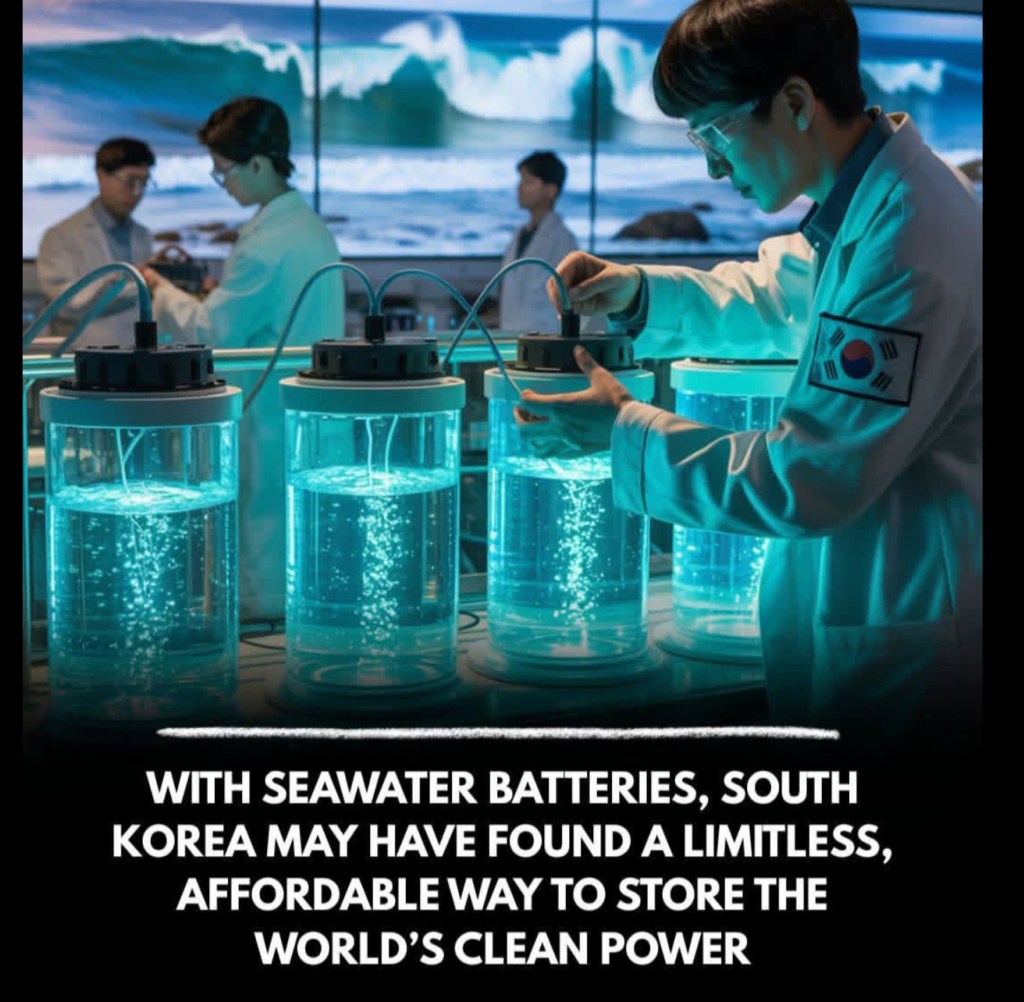
Forget oil rigs, lithium mines, and the Elon Musk fan club. South Korea just announced a seawater-powered battery that could make fossil fuels look like VHS tapes in a Netflix world. By siphoning sodium ions straight out of the sea, they’ve basically turned the planet’s biggest swimming pool into a giant power bank.
🐟 Batteries, But Make It Salty
Here’s how it works:
- Step 1: Filter seawater through a fancy ceramic membrane.
- Step 2: Grab sodium ions like Pokémon.
- Step 3: Store them in a graphite cathode, spit out electricity, and voilà — free power with a side of salt spray.
Right now, the prototype powers streetlights and drones. Tomorrow? Whole cities, fishing villages, maybe even your electric kettle. Imagine sipping a seaside brew boiled by the same water it came from. ☕🌊
And unlike lithium-ion batteries, this isn’t built on child labour in cobalt mines or rare-earth hoarding. It’s the ocean. Unless we somehow run out of seawater (spoiler: we won’t), this tech could run forever.
🌍 From Ports to Resorts
The brilliance is in the setting:
- Island resorts ditching noisy diesel generators.
- Fishing towns storing wind and solar like it’s nothing.
- Ports recycling their waste heat to supercharge ion extraction — pollution turned into power.
This isn’t just green tech. It’s cheeky, clever, and democratises energy access for places that don’t want to rely on imported fuels.
🔥 Challenges 🔥
If seawater batteries scale up, who loses? Oil cartels, lithium miners, Elon Musk’s Twitter stock portfolio?
Would you trust your home running on salty power, or are you sticking with overpriced lithium bricks?
👇 Drop your verdict in the comments: future of green energy or another wet lab experiment? 💬🔥
The sharpest takes will feature in the magazine. 🎯📝


 Chameleon Magazine
Leave a comment