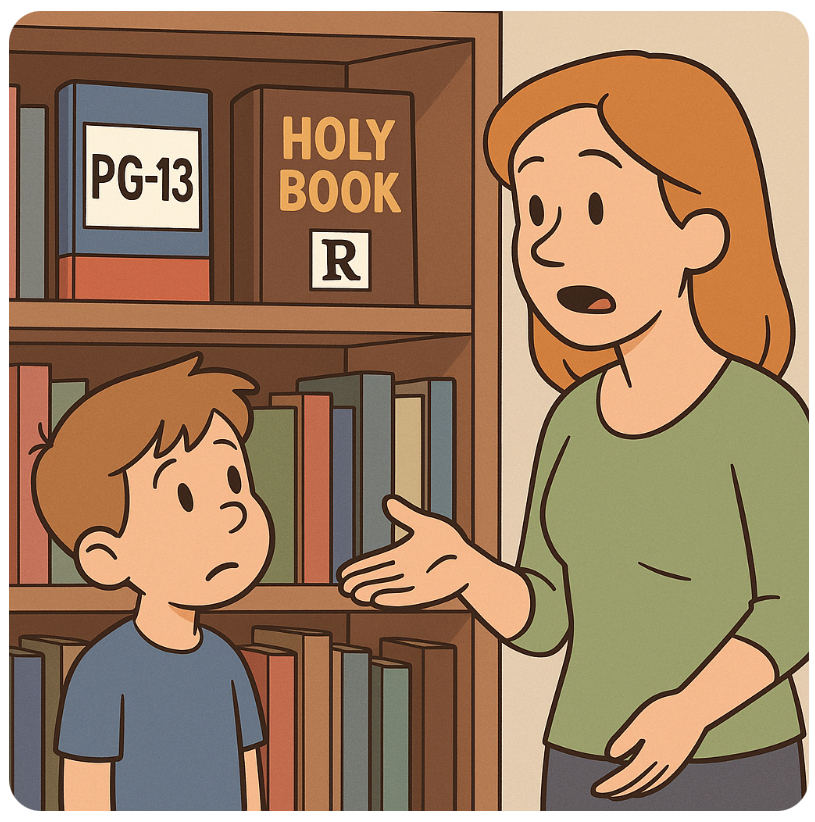
🎬📖We panic if a superhero film shows too much blood — yet hand our children books where humanity’s worst acts are described as sacred history. We demand content warnings on cartoons, but not on scriptures that tell tales of floods, famines, wars, and divine wrath. Something doesn’t add up.
⚖️ The Cultural Double Standard
When we put “religious” in front of anything, society gives it a free pass. Violence becomes “moral lesson.” Oppression becomes “context.” Suffering becomes “test of faith.” But at what age does a child really understand that metaphor? Should a 9-year-old be absorbing stories about betrayal, mass death, and eternal punishment without any framing?
It’s not about mocking the texts — it’s about how we present them. These books were written in eras of tribal warfare and survival, not streaming subscriptions. Treating every story as literal truth rather than historical allegory does children no favors.
🧠 Understanding vs. Indoctrination
Modern educators rate content to protect developing minds. But when it comes to holy texts, that same concern vanishes. Maybe the answer isn’t banning scripture — it’s teaching it with context. We need to say, “Yes, this story is sacred, but it’s also symbolic of a time when survival shaped morality.”
We can’t evolve as a species if we keep shielding our kids from conversation while handing them complex theological material with no explanation.
🪞 What “Parental Guidance” Could Really Mean
A “PG” label for a holy text wouldn’t be censorship — it would be a sign of respect for understanding. It would mean:
- 🧩 Read this with guidance, not in isolation.
- 💬 Discuss what the violence means, don’t just memorize it.
- ⚡ Recognize when lessons from the past no longer fit today’s reality.
That’s not blasphemy — it’s responsibility.
🔥 Challenges 🔥
Why do we guard kids from fictional violence but not from sacred violence? Is belief stronger when questioned — or weaker? Drop your insights, your contradictions, and your fire in the comments. Let’s debate what “holy education” should look like in the modern world. 💬🔥
👇 Comment, like, and share this if you think faith and reason can coexist without fear.
The most thought-provoking voices will be featured in the next issue of the magazine. 📝🌍


 Chameleon Magazine
Leave a comment