💰⚖️Two men. Two worlds of excess. Two trails of allegations that read like morality-play horror scripts. Sean “Diddy” Combs and Jeffrey Epstein both sit at the crossroads where wealth meets wrongdoing — and suddenly, justice starts speaking in investment terms.
💼 Crimes of the Rich Come with Concierge Service
For ordinary people, accusation means arrest, mug shot, and a lifetime of Google results. For the ultra-rich? It means a statement through PR, a fleet of attorneys, and a “no comment while litigation is ongoing.”
Epstein built an empire of influence — a hedge-fund mystic surrounded by presidents and princes. Diddy built one of sound and swagger — a mogul whose every party blurred the line between luxury and lawlessness. Both learned the same secret handshake: when you have enough zeros in your bank account, accountability arrives on tiptoe, apologizing for the inconvenience.
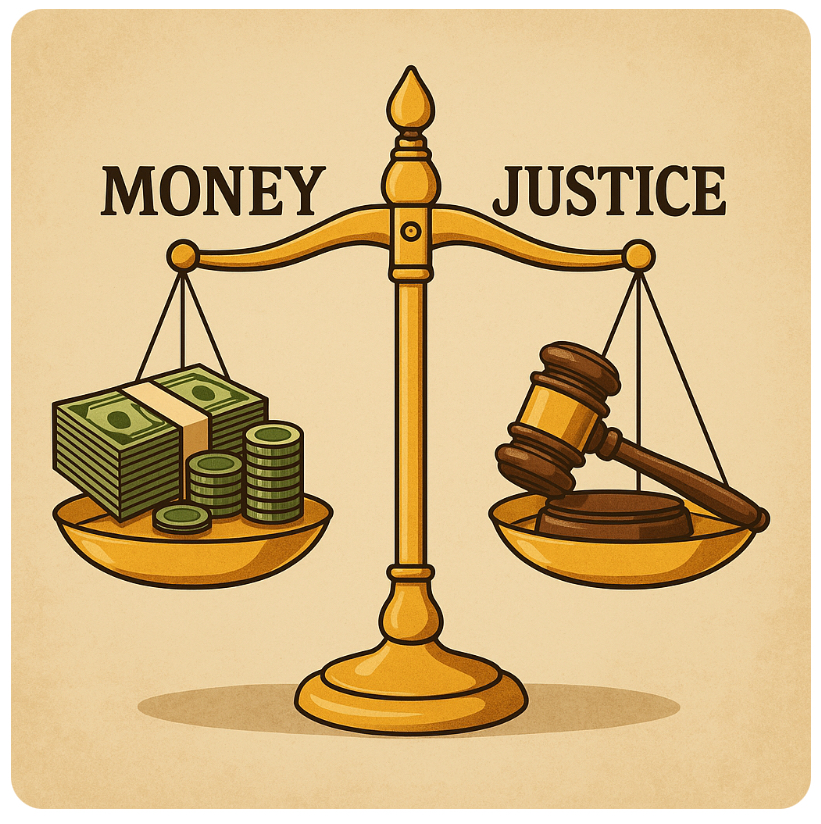
Money doesn’t erase crime; it just buys better lighting. The same acts that would destroy an average person become “complex situations,” “alleged misconduct,” or “civil matters.” The criminal code suddenly develops a sliding scale that measures guilt by net worth.
🌟 Do Good Deeds Outweigh the Darkness?
This is where public conscience gets confused. If someone builds schools, launches charities, or funds scholarships, can that offset exploitation or abuse? History keeps trying to balance this moral equation — from industrial tycoons who poisoned rivers but built museums, to modern moguls who mix philanthropy with power games.
Money doesn’t just cushion crime; it repackages it. We turn billionaires into saints with marketing budgets. The public likes redemption stories more than accountability, because redemption makes us feel hopeful while punishment reminds us we’re powerless.
Maybe the question isn’t whether the good cancels the bad — but why we’re so eager to let it.
🕴️ The Public’s Double Vision
We treat these men like mythic opposites — one dead in disgrace, the other still dancing in the spotlight — yet both expose the same structural flaw: the richer you are, the more optional morality becomes. Justice is supposed to be blind; in reality, she just wears designer sunglasses.
🔥 Challenges 🔥
Can philanthropy ever wash away exploitation?
Does fame earn forgiveness — or just a louder microphone?
Share your take in the comments. 💬🔥
👇 Comment, like, and share — because silence is the most expensive accessory of all.
The most cutting replies will appear in the next issue of the magazine. 📝💡


 Chameleon Magazine
Leave a comment