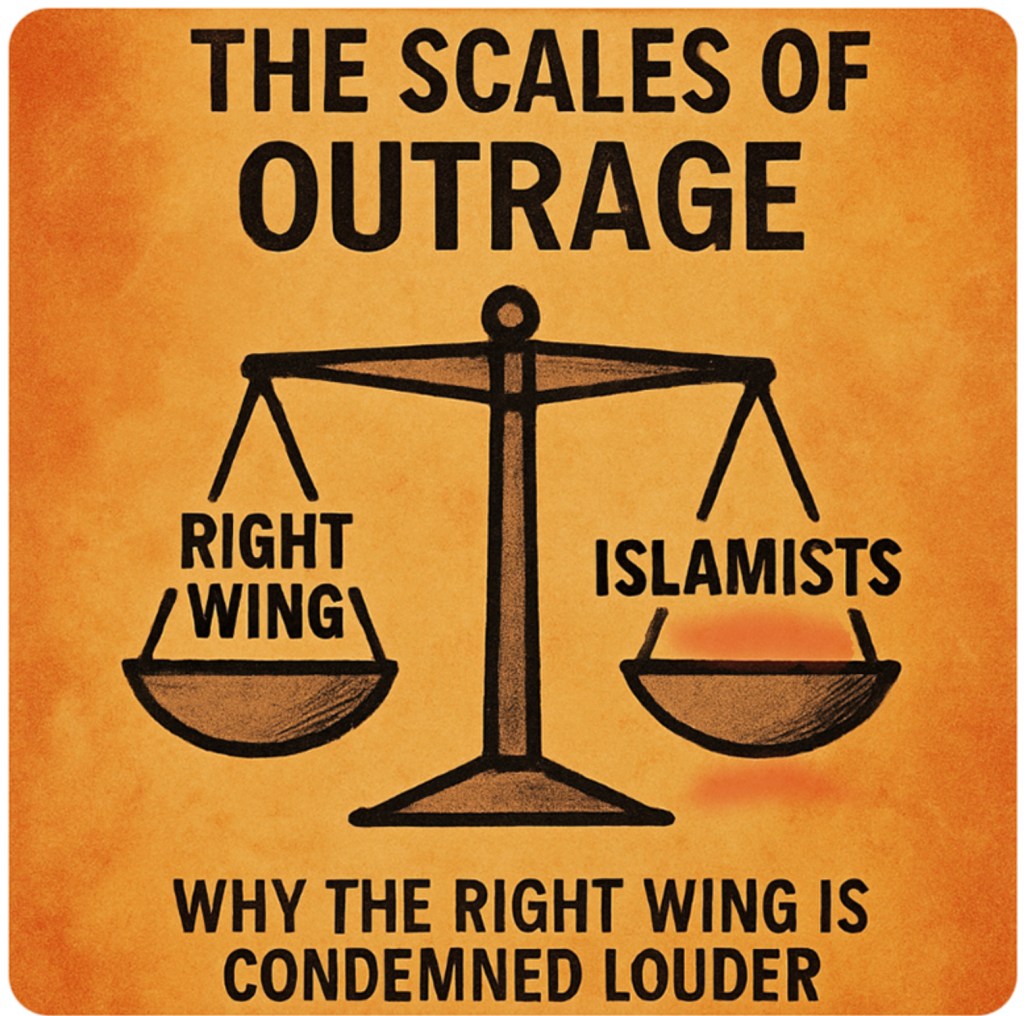
In the last decade, Britain’s outrage has become strangely uneven. When someone linked to the far right says or does something hateful, condemnation is instant and absolute. The news cycles for days, public figures rush to distance themselves, and the moral lines are drawn loud and clear.
But when Islamist extremists commit acts of mass murder, the reaction often arrives slower and wrapped in hesitation. Words are softened, motives are blurred, and headlines shift to talk of “community cohesion” instead of the brutality of the act itself.
Right-wing extremism exists — but in the last ten years, it has caused very few deaths in the UK. In contrast, Islamist extremism has been responsible for dozens of deaths over the same period.
These include the Manchester Arena bombing (2017), where 22 people — many of them children and teenagers — were killed while leaving a concert; the London Bridge and Borough Market attacks (2017), which left eight dead; the Reading stabbings (2020), where three people were murdered in a park; and the murder of MP Sir David Amess (2021), stabbed to death by an ISIS sympathiser.
Even more disturbingly, there have been knife attacks in which young children were among the victims — allegedly carried out by individuals influenced by Islamist propaganda or grievance-driven ideology. There have also been recent violent incidents targeting Jewish individuals, not by far-right actors, but by Islamist extremists radicalised online.
Yet the reaction remains inconsistent. When violence comes from the far right, the outrage is clear, loud, and sustained. When it comes from Islamists, it’s often muted, cautious, or reframed through endless caveats.
Why the imbalance?
There are three main reasons:
1. Political comfort zones — Condemning the far right fits comfortably within mainstream politics. It’s socially safe. No one loses friends, followers, or votes for denouncing it. Condemning Islamist extremism, on the other hand, risks accusations of Islamophobia, even when the target is terrorists, not Muslims. So people self-censor.
2. Media framing — News outlets fear backlash. They soften language to avoid appearing biased, turning terrorism into “incidents” and ideology into “background factors.” The desire to sound neutral ends up sounding evasive.
3. Tribal fear — Outrage has become tribal. People measure their reactions based not on morality but on which side of the political or cultural divide they stand. The result? Moral clarity gets replaced by performance.
The cost of selective outrage
When we raise our voices louder against words than against bombs, something vital is lost. Fairness dies. Courage dies. Truth dies.
Every extremist ideology — whether political or religious — deserves equal condemnation. Every innocent life deserves the same defence. The principle is simple: outrage should be measured by the harm done, not by the identity of the killer.
Until we restore that balance, the scales of outrage will remain broken — and so will our sense of justice.


 Chameleon Magazine
Leave a comment