Tired of giving 70% of your hard-earned royalties to Amazon or Kobo?
You’re not alone. Every year, thousands of indie authors pour months of work into writing, editing, formatting, and designing their eBooks—only to watch platforms take the lion’s share of the sales.
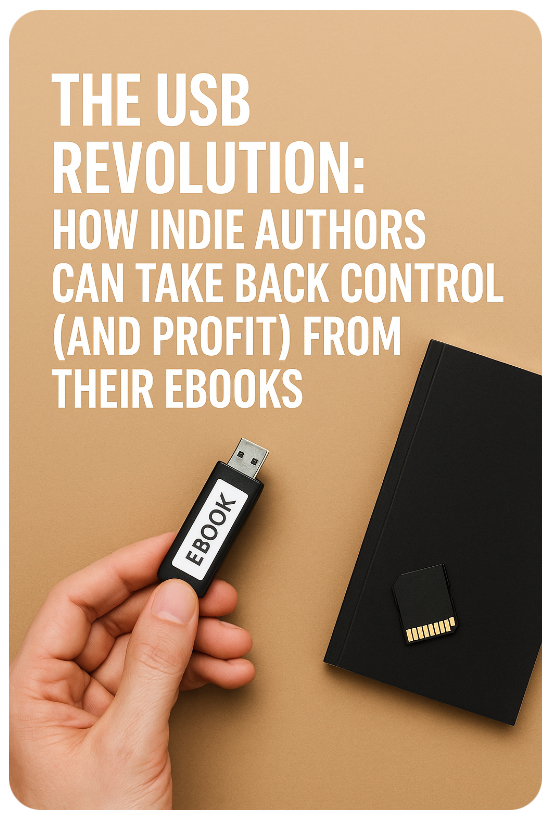
But there’s another way. A quieter, more personal, and surprisingly profitable route: selling your eBook directly on USB sticks or memory cards.
🔌 Why Go Physical in a Digital Age?
- No middlemen.
You set the price. You keep 100%. No commissions, no “exclusive agreements,” no algorithms deciding your fate. - Reader ownership.
Your audience gets a real, tangible copy they can plug in, store, and treasure. It feels more personal—like a signed book rather than another file lost in a Kindle library. - Built-in privacy.
No DRM, no tracking, no corporate servers scanning your content. It’s just you and your reader. - Creative packaging.
A USB can be more than storage—it can be a keepsake. You can design labels, include bonus artwork, music, behind-the-scenes notes, or even an HTML “start page” that opens like a digital experience.
💡 How to Do It (Step by Step)
1. Format your eBook
Save your book as a clean .epub, .mobi, and .pdf version so readers can choose what they prefer. Include your cover image and optional extras in a folder.
2. Create a simple start screen
Design an HTML page (index.html) that opens automatically when the reader plugs in the USB.
It can include:
- Your book cover
- A “Read Now” button linking to each file
- Author bio and links to your website or socials
- Optional: background music or images for atmosphere
3. Load the USB stick or memory card
Even 1GB sticks can hold hundreds of books and extras. You can find them in bulk for under £2 each.
4. Brand and package them
Print small labels, add a card sleeve or mini box with your artwork and contact info. You can even hand-sign the inside. It gives a collector’s feel.
5. Sell directly
Use:
- Your own website with PayPal or Stripe
- Craft fairs, book events, or local shops
- Mail-order via email (just post the USB stick in a padded envelope)
You set the price — £9.99 for a signed edition, £4.99 for standard, or more for deluxe bundles.
💷 Why It Makes Sense Financially
- Selling a £9.99 USB book costs you around £2 in materials and postage.
- That’s £7+ profit per sale, compared to maybe £2.80 on Amazon (if you’re lucky).
- And every reader becomes part of your real audience — no algorithm required.
You can even include a QR code linking to your next release, your newsletter, or bonus chapters.
🧠 The Future of Indie Publishing Is Personal
We’ve reached the point where writers can bypass the digital middlemen entirely.
It’s about authentic connection, ownership, and independence.
Imagine signing a small stack of USB drives for a local fair, each loaded with your story, art, and a short note to the reader. That’s not mass-produced—it’s crafted. And in an age of disposable content, that’s what stands out.
This isn’t old-fashioned.
It’s post-platform publishing.
It’s the USB Revolution.


 Chameleon Magazine
Leave a comment