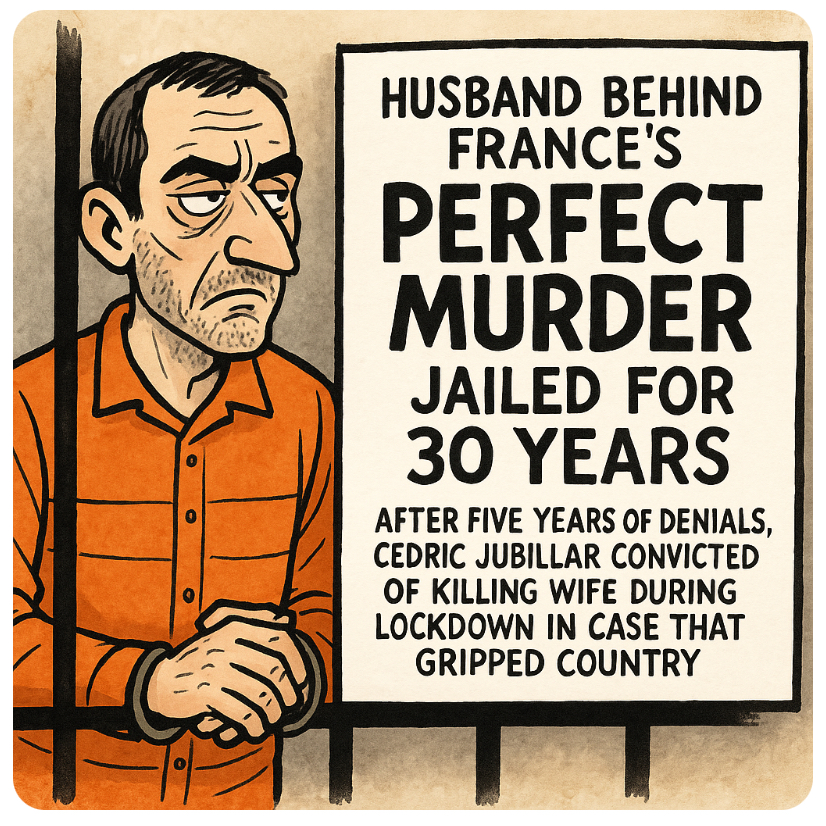
⚖️🇫🇷For five years, France was hooked on the macabre mystery of Cédric Jubillar, the plasterer from the sleepy town of Cagnac-les-Mines who thought he could get away with the “perfect murder.” His wife, Delphine Jubillar, a 33-year-old nurse and mother of two, vanished during the pandemic lockdown in December 2020—into thin air, as he would have it. But after years of denials, media frenzy, and a police investigation that peeled back every layer of his “perfect” façade, a jury finally delivered the verdict: 30 years behind bars.
So, not exactly a triumph in criminal innovation. The “perfect” crime turned out to be as watertight as a paper umbrella in a French thunderstorm. ☔🔍
🔍 From Domestic Bliss to CSI: Toulouse
The story reads like a grim lockdown soap opera—complete with marital tension, secret affairs, and an overconfidence that could fuel ten seasons of true crime podcasts. When Delphine disappeared, Cédric did what every innocent husband definitely shouldn’t do: he changed his story, mocked the police, and cracked jokes about her whereabouts.
Detectives, however, weren’t laughing. They found inconsistencies in his timeline, suspicious phone data, and traces of behaviour that screamed guilt louder than an unpaid speeding ticket in Marseille. 🚨📱
Delphine, by all accounts, was a devoted mother and nurse, working night shifts and trying to rebuild her life amid a collapsing marriage. She had reportedly been preparing to leave Cédric—a fact investigators believe became the fatal spark. What began as a lockdown quarrel spiraled into tragedy, covered up with the kind of amateur theatrics only a man convinced of his own genius could attempt.
By the time the trial began, France had split into camps—those who clung to his innocence, and those who saw him as a chilling case study in narcissism. But when the verdict came, it was clear: the only thing “perfect” was his self-delusion.
🧩 The Myth of the Perfect Crime
Criminals love to believe they’re smarter than the system—until reality slaps them with a 30-year sentence. The truth is, the “perfect murder” doesn’t exist. You can hide a body, but you can’t hide digital footprints, text messages, and late-night searches that read like a confession in Google form. 🖥️💀
The Jubillar case has become a modern parable about arrogance, misogyny, and the delusion of control. Cédric thought he could script his way out of suspicion, but justice—slow, methodical, relentless—caught up with him.
France, meanwhile, is left mourning Delphine, a woman who deserved far better than to become a headline.
🔥 Challenges 🔥
Can there ever be such a thing as a “perfect crime”? Or are they all doomed to unravel under the weight of human ego and digital breadcrumbs? Share your verdict in the blog comments below. 💬⚖️
👇 Hit comment, hit like, hit share—before someone tries to write their own “perfect” ending.
The sharpest and most thought-provoking takes will be featured in the next issue of the magazine. 📰💥


 Chameleon Magazine
Leave a comment