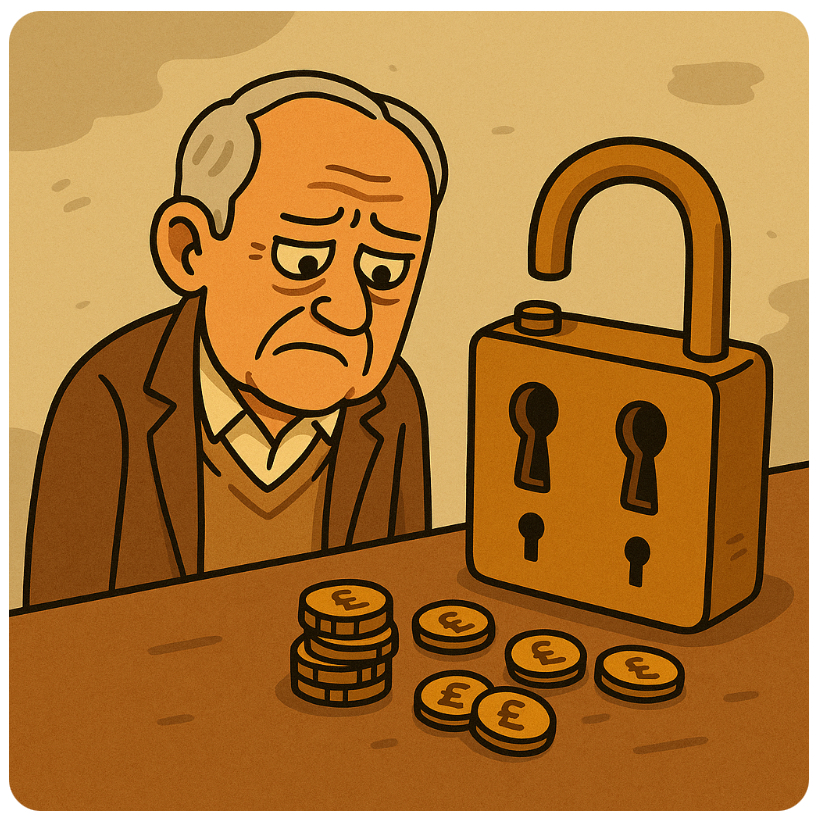
💃💷The Institute for Fiscal Studies has spoken — and they’re basically telling Rachel Reeves to take the triple lock out back and quietly “retire” it. For years, this shiny political promise has guaranteed pensioners a raise based on whichever is higher: inflation, wage growth, or a solid 2.5%. Sounds generous, right? It is. So generous it’s now helping the richest retirees line their pockets while the rest of us are still trying to afford butter.
💸 Pension Power Plays: Gold-Plated Fairness for the Silver-Haired
Ah, the triple lock — the sacred cow of British politics. Every election, politicians parade it like it’s the Holy Grail of compassion, terrified of upsetting the 12 million voters who’ve mastered the fine art of writing letters to the Daily Mail. Meanwhile, younger workers? We’re just out here collecting anxiety like Nectar points.
Let’s be honest: this system was created when life expectancy didn’t resemble a Netflix box set. Now, the average pensioner can expect 25 years of retirement bliss while the public finances collapse faster than a Poundland deckchair. And when the IFS says the triple lock “benefits richer pensioners the most,” that’s polite economist-speak for “you’re paying for someone’s third cruise.” 🚢🍸
Reeves is stuck in a political Catch-22: ditch it, and she’s accused of hating grandma. Keep it, and the Treasury turns into an overdraft with a flag. Maybe the answer is simple — tie it to earnings, but only after the working-age population gets an actual pay rise that doesn’t come with a side of depression.
Until then, the triple lock remains Britain’s most expensive loyalty card — for people who no longer shop. 🧓💳
🔥 Challenges 🔥
Should the triple lock finally be retired? Or is this just another excuse to squeeze the middle while pretending to protect the old? Drop your fiery take in the comments — we’re ready for the generational showdown. 💬⚔️
👇 Hit comment, smash like, and share your spiciest pension hot take.
The sharpest, sassiest replies will be featured in the next issue of the magazine. 📝🔥


 Chameleon Magazine
Leave a comment