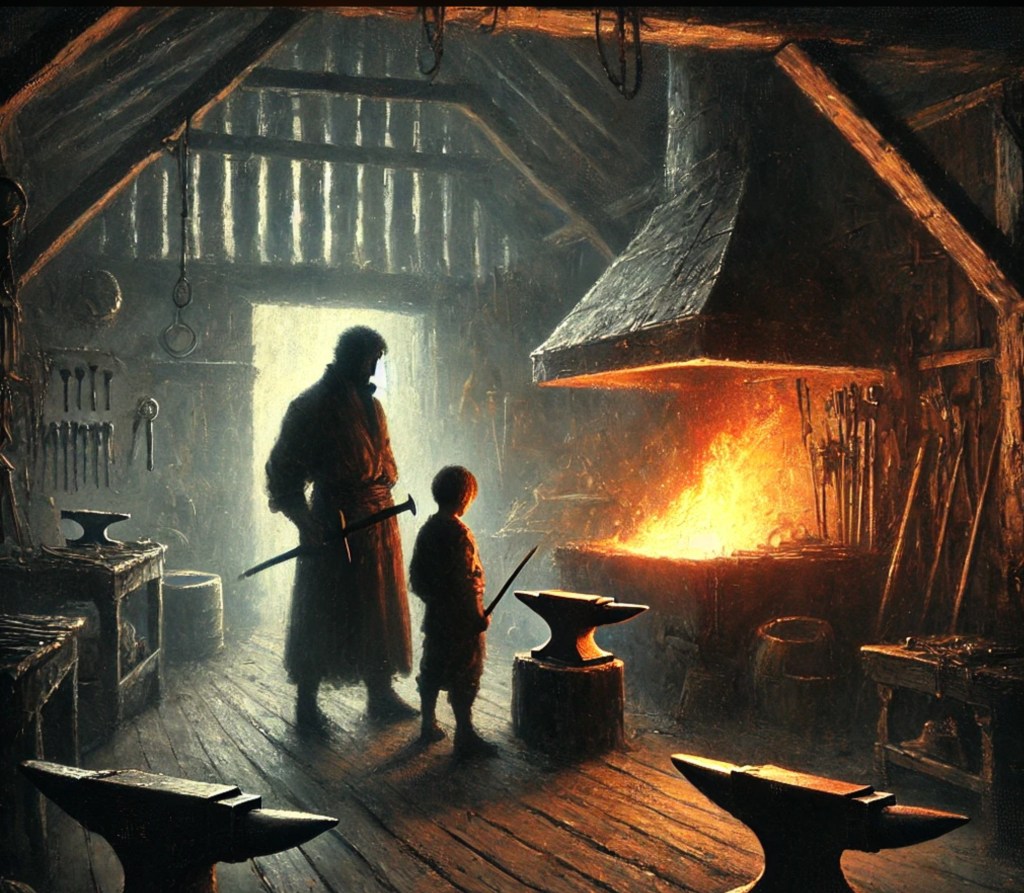
In the quiet town of Emberfield, there lived a blacksmith named Garron. He was known for his strong arms and silent nature, and for the boy who shadowed him—his only son, Ren.
Ren had his father’s strength but none of his patience. He took joy in breaking what others built, testing edges, testing people. When Garron saw the boy twist nails into cruel shapes or throw stones at the market hens, he would only grunt and say, “He’s learning the ways of the forge. Fire makes tempers sharp.”
But the fire grew wild.
By seventeen, Ren had crafted blades not for work but for harm. Neighbors whispered that he had buried them beneath the house. Garron heard this and went down into the dark one night. He found them there—the metal gleaming like sleeping snakes.
He could have melted them, but instead he covered them again with straw and dust. “He’ll grow out of it,” he murmured, as if words could cool molten iron.
Months later, one of those blades found its way into another man’s heart. And when the townspeople gathered, they asked Garron, “Did you not know?”
The smith said nothing. His hands, so strong, hung useless at his sides. His silence was the anvil upon which his guilt was forged.
Years passed, and the forge grew cold. No one brought him work, for no one trusted hands that could shape evil and say nothing. And so, Emberfield learned a quiet rule that parents whispered to each other like prayer:
“He who refuses to temper his own child’s fire will one day be burned by its flame.”
To ignore the shaping of a soul is to share in whatever shape it takes.


 Chameleon Magazine
Leave a comment