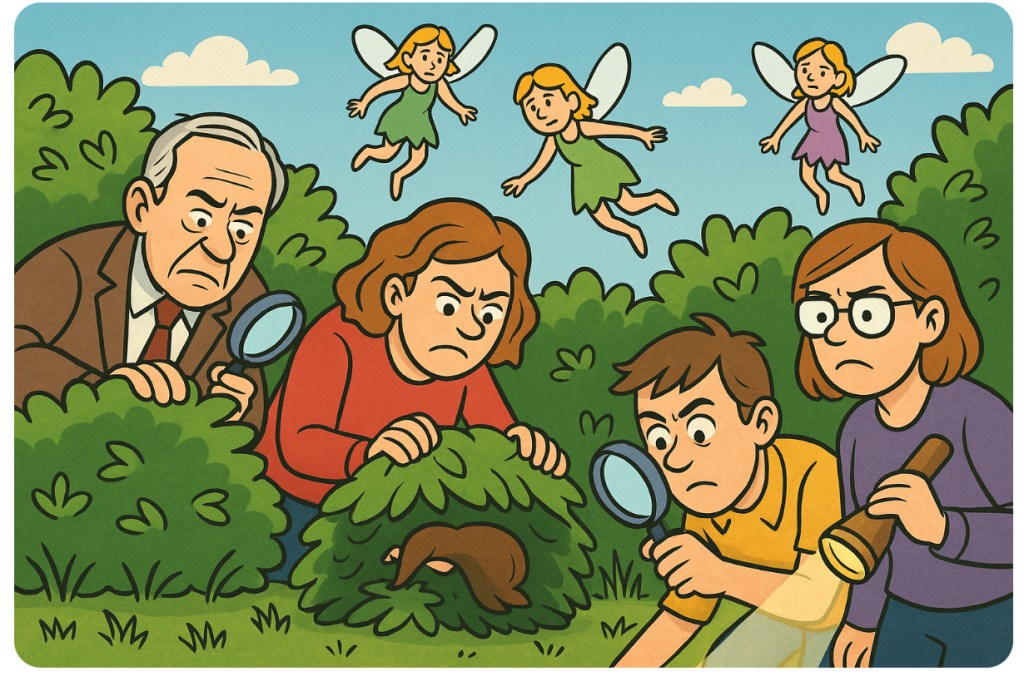
Ah yes—the great British boogeyman: a “Right Wing” so terrifying, so powerful, so omnipresent… that no one can ever seem to find it outside a Guardian comment section. According to some, it’s practically a Nazi Death Star. According to others, it’s more like an elderly man shouting at pigeons outside a Wetherspoons. Either way, the mythology is stronger than the movement itself.
🧂 The Great British Specter Hunt: Liberals vs. Imaginary Fascists
Here’s the thing: Britain does have people who lean right. It has conservatives, libertarians, grumblers, doomscrolling uncles, and folks who simply think “maybe taxes shouldn’t feel like a mugging.” But a unified, jackboot‑polished, torch‑marching Nazi revival? Please. If there were a Fourth Reich in Britain, they’d miss every meeting because the trains were late.
Yet every time someone says, “I’m not sure I like this policy,” a certain brand of liberal springs into action like they’ve spotted Voldemort at Tesco.
He disagrees with me? Ah! A fascist!
The overreaction is so intense you’d think the nation was one Greggs sausage roll away from authoritarian collapse.
This doesn’t mean real far‑right extremists don’t exist—they do, like mold in a student flat. But they’re fringe, disorganised, and spend more time arguing on Telegram than plotting world domination. The idea that every non‑left position is “Nazi-adjacent” is less political analysis and more bad fan fiction.
At the same time, pretending all criticism of left‑leaning politics is some heroic rebellion against “liberal lies” is just the mirror image in a slightly different shade of delusion. Britain’s political spectrum isn’t two armies—it’s a confused crowd all shouting different things about potholes.
🔥 Challenges 🔥
Why are we still treating political disagreement like a Marvel villain reveal? Why do some insist there’s a Nazi behind every lamppost, and others insist they’re lone geniuses resisting a liberal Matrix? Drop your sharpest, spiciest, most gloriously unhinged takes in the blog comments. 💬⚡
👇 Smash the comments. Smash the like. Smash the share.
The best rants, roasts, and reality checks will be featured in the next issue of the magazine. 📝🔥


 Chameleon Magazine
Leave a comment