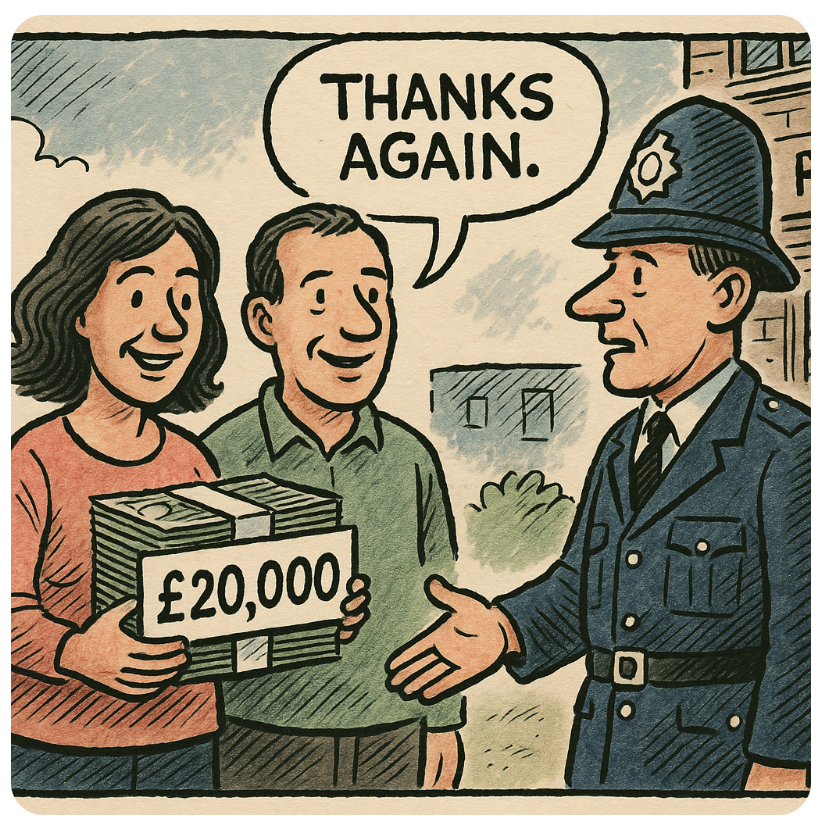
🏫🚓Two parents raised concerns about their daughter’s primary school via emails and a WhatsApp group—and wound up in handcuffs. Yes, really. Rosalind Levine and Maxie Allen criticised Cowley Hill Primary in Borehamwood, and the school’s response? Not a meeting. Not mediation. No, they called the police.
🤯 From PTA to PSA: “Complain and Get Cuffed!”
Six officers rolled up like it was a drug bust, arresting the couple in front of their child. Devices seized. Hours locked up. Allegations of harassment, “malicious communications”, and—bizarrely—causing a nuisance on school property (were they… chalking rude messages on the pavement?).
After 8–11 hours in custody, it turned out there was no actual evidence of any crime. Zip. Nada. Nothing to charge. But the damage was done. Their lawyers rightly asked: Was there really no better way to handle this than throwing parents in a cell for sending some angry texts?
Turns out: nope, there wasn’t. Hertfordshire Police eventually admitted the arrest was unlawful and handed over £20,000 in compensation. That’s £10K each for wrongful arrest and false imprisonment—plus a generous helping of “oh god, please don’t sue us further.” 💸
If you’re wondering whether this sounds like a police force treating school complaints like terrorism threats, that’s because it is. We’ve gone from “concerned parent” to “public enemy number one” in three emojis flat: 😠📱🚓
💥 Challenges💥
What world are we living in where you can’t even critique a school without ending up on a custody bench? Are we criminalising criticism now? And who’s next—someone who gives a one-star review on Ofsted?
Drop your outrage, snark, or dark humour in the comments below. Let’s talk overreach, parental rights, and whether the local constabulary should maybe chill out and try reading an email before calling for backup. 😤💬
👇 COMMENT. LIKE. SHARE. Let’s see if we can break the internet without getting arrested.
Top takes will feature in the next issue of the magazine. 📰🔥


 Chameleon Magazine
Leave a comment