For those who don’t know, I’ve been engaged in a long and exhausting battle with the Infected Blood compensation process — a system that was supposed to support those of us harmed by historic medical failures.
I contracted Hepatitis C through NHS treatment decades ago. It changed the course of my life. Physically, emotionally, financially — in ways that no amount of compensation could ever fully repair. And yet, even now, the burden is mine to prove. The system doesn’t rush to help. It waits. It questions. It delays. It deflects.
I am not asking for charity. I am not hoping for special treatment.
I am claiming what I — and so many others — are rightfully entitled to.
But the process hasn’t felt just. It has felt like another injury.
One wrapped in paperwork, policy language, and procedural evasion.
It has left me, more than once, questioning whether justice really exists for people like me.
And here’s what that feels like, inside:
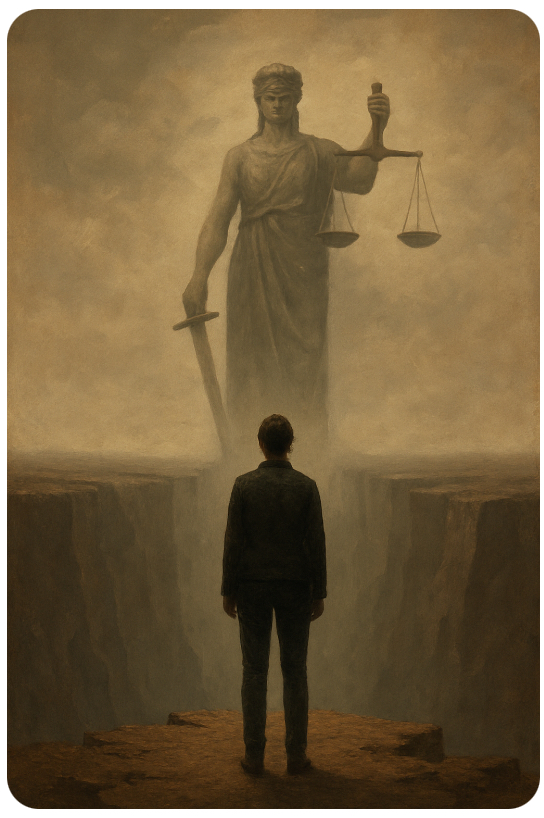
What It Feels Like to Stand on the Edge of Justice
I’ve learned not to expect much from people.
Not because I think I’m better than them — I’m not. I’ve made mistakes, and I’ve lived with the consequences. But I’ve always tried, in the end, to put things right. That has to count for something.
What wears me down isn’t that people fail — it’s that they don’t seem to care when they do.
The absence of remorse. The refusal to take responsibility. The way truth gets buried under excuses, procedures, and silence. That’s what corrodes faith.
I no longer believe that most people will do the right thing when it matters.
Not because they’re incapable — but because doing the right thing often costs more than they’re willing to pay.
And now, here I am — standing on the edge of justice.
Not afraid. Just… tired. Frustrated.
Frustrated by how hard it is to get even a sliver of truth acknowledged, let alone corrected.
Frustrated by the way systems protect themselves, not the people they harmed.
I don’t need heroes.
I just want honesty. Accountability. A sign that someone, somewhere, has a conscience that still works.
But I’ve stopped waiting for that.
I’ve learned to move forward without it — because if I don’t fight for justice, who will?
This is where I stand: not because I want a fight, but because I was given no choice.
Because silence is not an option.
Because when a system fails you, the only thing left is to speak — even if your voice is all you have left.
And so I will keep speaking.
Until someone listens.
Until justice, however slow, has no choice but to show its face.


 Chameleon Magazine
Leave a comment