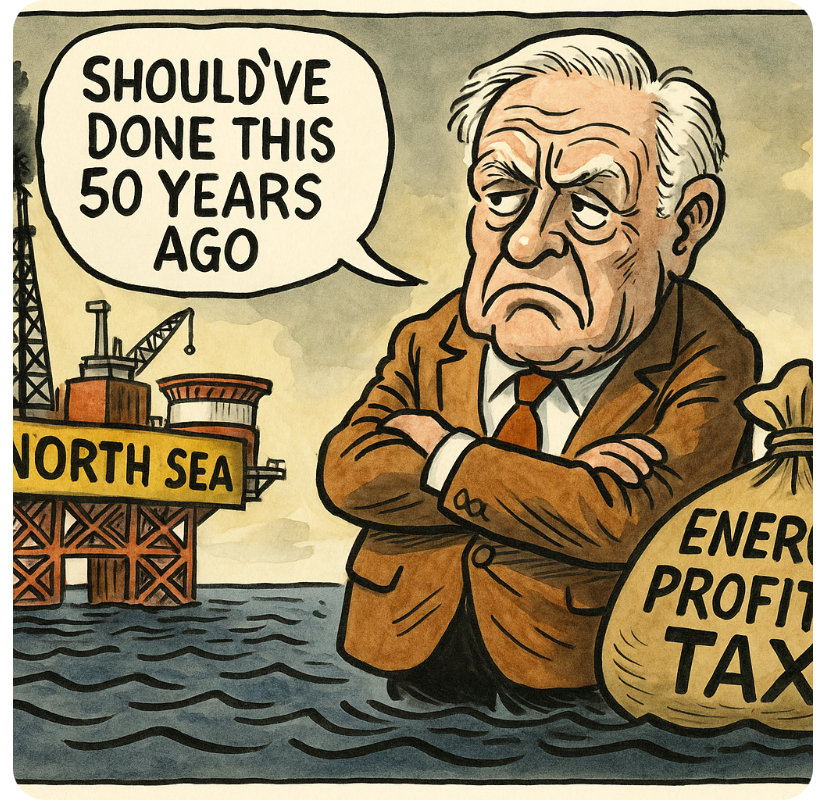
⛽📉UK energy giants are now frantically doing maths in the North Sea, claiming that reforming the 78% Energy Profits Levy (EPL) by 2026 instead of 2030 could unleash £15.7 billion in extra taxes over the next decade. Jobs saved! Projects unlocked! Energy secured!
Cool story, but where was this optimism in the 1970s, when Britain struck oil and fumbled it harder than a soggy Greggs bag in a wind tunnel?
📊 The Fantasy Math of “It Pays for Itself”
Let’s get this straight:
- £7.5bn in payroll taxes?
- £6.3bn in corporation tax?
- £4.6bn from a new price mechanism?
It sounds great — but so does every economic forecast from the same folks who sold gas to Europe while pretending we didn’t need storage.
They say the EPL reform will “pay for itself.”
Sure. So did Truss’ mini-budget.
🛢️ So… Why Now?
Simple:
They’re dangling shiny numbers to prevent the industry from flatlining under its own rusting rigs and political guilt.
Reforming the EPL now means:
- Big oil stays in UK waters
- Fewer job losses
- And ministers get to parade around pretending they’ve “balanced growth and net zero”
It’s a last-gasp effort to look responsible — while cashing in before the lights go fully green.
🧓 “Should’ve Done This 50 Years Ago” — Yes. But Also, Yes.
Let’s not forget:
- The UK squandered its North Sea wealth.
- Norway used its oil money to build a trillion-dollar sovereign fund.
- Britain used it to fund Thatcher’s tax cuts and sell off British Gas.
Now, we’re being asked to cheer a scheme that should’ve been locked in before Nirvana released their first album.
It’s like announcing a seatbelt law after the car has gone off the cliff.
🔥 Challenges 🔥
Is this smart reform or fossil fuel window dressing? Should we back the tax tweak — or just call time on North Sea roulette?
👇 Comment, like, share. Especially if you’ve got thoughts on how to actually balance oil profits and climate promises without needing a DeLorean.
The boldest takes will go in the next issue.


 Chameleon Magazine
Leave a comment