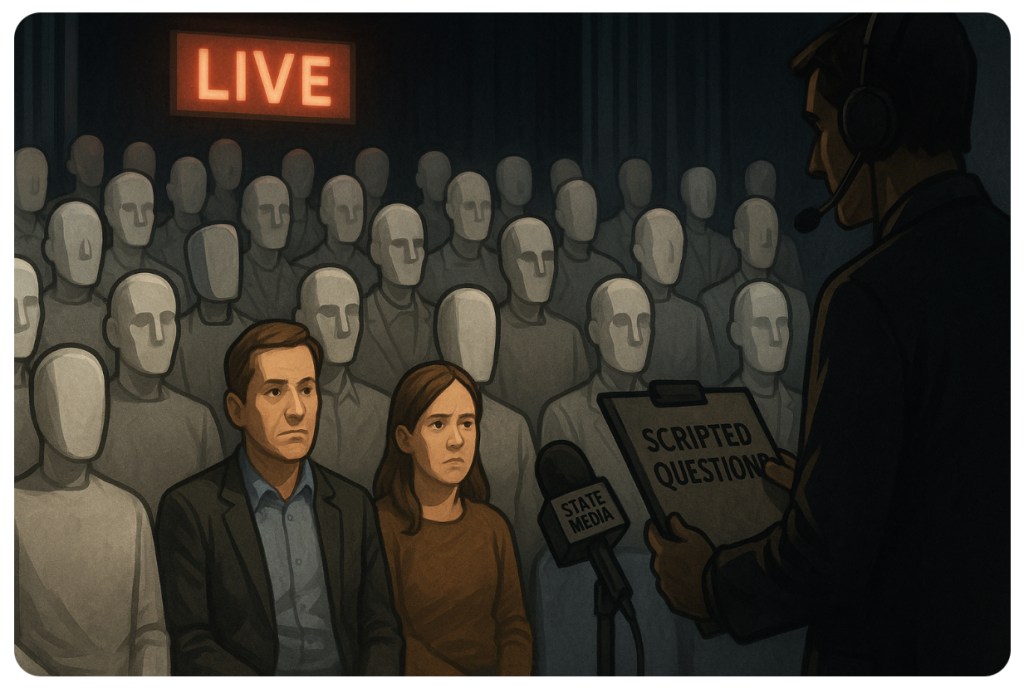
If you tuned into Question Time expecting balanced debate, you may have instead witnessed the BBC’s latest entry into the “subtle-as-a-brick activism” playbook. Viewers weren’t just annoyed — they were fuming, after Fiona Bruce casually admitted that “three or four” asylum seekers had been invited into the audience for a special on immigration. You read that right: not random audience selection — a carefully curated casting call.
🎭 When Debate Turns Into Stagecraft: The BBC’s Audience Circus 🎪
Fiona Bruce tried to dress it up: “We thought it would be helpful to have their voices in the room.” Translation? “We didn’t trust the public to say the right things, so we stacked the deck.”
And let’s be clear — no one’s saying migrants can’t have a voice. The outrage is about the deception, the scripted feel, and the BBC’s inability to stop acting like an activist theatre group disguised as a broadcaster.
The BBC didn’t just want a debate. They wanted a narrative. And that narrative doesn’t work when the crowd’s unpredictable — so better to handpick the emotion, shape the questions, and let the applause follow like clockwork. 👏🧠
Social media lit up with viewers shouting “Defund the BBC!”, with many questioning how this kind of editorial engineering is still being funded by mandatory licence fees.
Imagine if Nigel Farage held a debate and “invited” three of his own fans to shape the audience response. The BBC would be leading the 10 o’clock news with pitchforks. But when they do it? It’s “giving a voice.”
People aren’t stupid. They saw the sleight of hand, and they’re done paying for the illusion.
💥 Challenges 💥
Is it time to end forced licence fees for a broadcaster that curates audiences like it’s casting for a drama? Should we expect better than a glorified PR panel?
We want your thoughts, your fury, your sarcasm. Unload in the blog comments — not just on X. 🎯🔥
👇 Hit comment, hit share, tag someone who stopped watching years ago.
Best takes will get published in the next issue of the magazine.


 Chameleon Magazine
Leave a comment