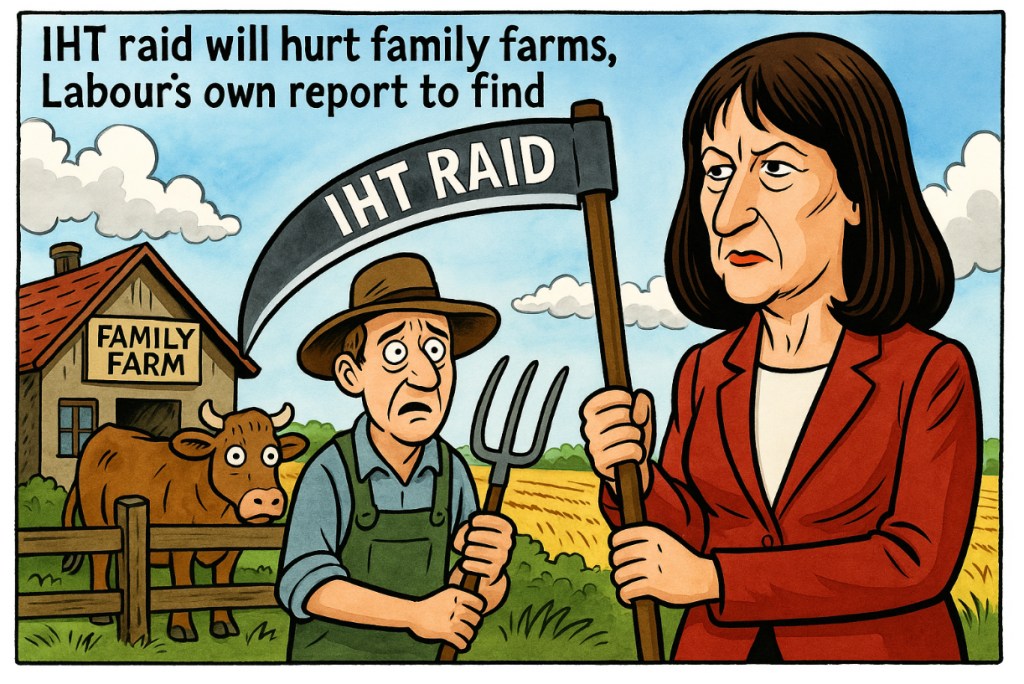
Labour’s own independent review is about to plough straight through Rachel Reeves’s inheritance tax (IHT) raid—revealing it could hammer the very people political leaflets love to romanticise: family farmers. That’s right, the party that claimed to champion the countryside is apparently preparing to gift-wrap it for the taxman.
🌾 Red Flags in the Fields: When Labour Harvests Hypocrisy
Imagine spending your life battling bad weather, Brexit chaos, and runaway supermarket chains—only to get steamrolled by Labour’s IHT maneuver. Farmers, once the salt-of-the-earth poster children for “hard work” and “British values,” are now just collateral damage in a spreadsheet revolution cooked up by Reeves and friends.
According to whispers from the Telegraph, Labour’s own commissioned review admits that this tax strategy could slap an extra burden on generational farms—just as families are trying to pass them down without having to sell half the livestock to pay the bill. It’s the kind of facepalm policy that makes you wonder: have they ever met an actual farmer, or just watched a Waitrose ad with acoustic guitar music and misty hills?
This isn’t just a hiccup—it’s Labour putting a combine harvester through their rural credibility. They might’ve aimed for “wealth redistribution,” but managed to hit “redistribute Granny’s pig farm to HMRC.” Add in some gleeful headlines from the right-wing press and you’ve got the makings of a countryside uprising, complete with tractors parked outside Parliament and organic eggs launched in protest.
Meanwhile, Reeves is out here defending the policy like it’s a gourmet tax soufflé: technically correct, completely unpalatable.
🧨 Challenges 🧨
Is Labour trying to win votes or torch them with a hay bale fire? Should inheritance tax reform bulldoze rural families while billionaires slip through with legal loopholes? We want your unfiltered, fertiliser-fueled takes in the blog comments. 🌾💥
👇 Slam that comment button, like the post, and share if you’ve had enough of urban economists drafting rural disasters.
The spiciest comments will be published in the next edition of the magazine. 🐄🔥


 Chameleon Magazine
Leave a comment